
Founded 1899
Published in Windlesora 21 (2005)
© WLHG
It is, on reflection, somewhat curious that England, in possession of Royal and Merchant Navies, which for centuries had pretty nearly ruled the waves of the world should, until just over 100 years go, have omitted to train young people from the earliest age, in seamanship. Midshipmen, of course, served in ships of the line and a variety of youths, for a variety of reasons, were impelled to ‘run away to sea’,
There are, indeed, instances on record of girls in disguise doing likewise and it is not surprising that for an island race, the magnetism of the sea should be strong. Millais’ evocative painting The Boyhood of Raleigh reflects such a spirit. Dr Johnson’s averment that ‘Putting to sea is being in jail with the chance of being drowned’ was no deterrent to adventurous adolescents with sea salt in their veins.
From 1852 a number of orphanages were founded under the auspices of The Naval Lads’ Brigade to cater for boys orphaned in the Crimean War, and staffed by sailors returning from that conflict. As to the lack of official training, however, it fell to Windsor to lead the move to fill the lacuna in naval needs, when in 1899 the first Sea Cadet Unit in Great Britain was founded. The impetus for this adventure ema- nated from the local branch of the Navy League, whose journal for June 1899 recorded ‘On May 10th a meeting was held at the Guildhall, Windsor, to consider a scheme promulgated by the Committee of the Windsor & Eton Branch of the Navy League. The idea is to purchase a barge, moor it somewhere in the river at Windsor, and use it as a club and training place for boys under the instruction of a naval pensioner.’ The boys would be drilled in the evenings and instructed in the rudiments of seamanship. Furthermore, those who showed aptitude and wished to go to sea would be helped to pass into the mercantile marine ‘in good ships’ or into the Navy. That the proposal was regarded as of some significance is evidenced by the report of this inaugural meeting occupying two full columns in the League’s influential Journal.
A number of Windsor’s leading citizens, including names still familiar in the town, played their part at this gathering, including the Mayor Councillor John Soundy, Rey. JHJ Ellison Vicar of Windsor, Rev. J Shepherd Vicar of Eton, Mr AA Somerville branch secretary, Major WA Ellison, Dr W Fairbank and Messrs GH Peters, H Caley, EC Durant, G Lowry, P Williams, and G New. Until the late arrival of Mr AH Thornton, chairman of the branch, the Mayor presided.
The Berks, Bucks and Middlesex Journal, which served a wide area, devoted no less than four columns to this occasion, commencing its prophetic report ‘An entirely new movement has been started in our midst, which should have very far reaching results’. It was explained that concern abounded that ‘Many of the navigating officers and men in our ships, especially merchant men, are foreigners’ and it was pointed out that this circumstance was ‘almost entirely due to the fact that for many years past the training of boys in the Merchant Navy has been practically discontinued with the result that there is an insufficient supply of British Seamen’. That these worries were of national dimension is borne out by a copy of a letter dated 28th February 1899, conveniently published on 30th May in the same local paper, wherein WL Ainslie, Chairman of the Manning Committee of the Navy League, robustly took to task the Rt Hon CT Ritchie President of the Board of Trade (and subsequently Chancellor of the Exchequer) for the dismissive manner in which he and the First Lord of the Admiralty had received a deputation for the Navy League on that very subject at the beginning of the year.
The concluding salvo in Mr Ainslie’s letter reads ‘Lastly, we cannot understand how you reconcile your answer to the deputation with your statement in the House of Commons that “In case of war, the National Reserve would be called out and the result would be that instead of British ships being partially manned by foreigners, they would be altogether manned by foreigners and that if any suggestions can be made to remedy this state of things, we would do wrong not to consider the suggestions”’. Anyone who has experienced the duplicity of politicians will sympathise with Mr Ainslie’s frustration.
The newspaper continued ‘The Windsor & Eton Branch of the Navy League now stepped into the breach’. Favourable comparisons were drawn with the Church Lads’ Brigade of which there were at that time several strong companies in Windsor, numbering between sixty and seventy boys and there was some discussion as to whether the new scheme might divert members from the Brigade. However, this was thought unlikely as their members considering a service career tended towards the Army. The Mayor reflected the feelings of the meeting in observing that ‘There were many lads running about our streets’ for whom such a scheme would be of great benefit, enabling them to begin a sea career with some knowledge of what they were about.
The attention of the meeting then focused on the acquisition of a suitable vessel. Edward Cecil Durant was a local solicitor, as his father, Benjamin Durant, had been before him. Apart from his legal practice, be became Town Clerk of Windsor and was active in many charities and other organisations in the town. He was himself an amateur yachtsman. To his colleagues he reported that, at the request of the Navy League Committee, he had made enquiries as to an available barge in the course of which he had contacted a friend connected with Thames lighters and barges, through whom he had visited the West India Docks and inspected a barge ‘well adapted for their purpose’ for which the asking price was £80.
Having applied his obviously not inconsiderable negotiating skills, Mr Durant was available to report that he had obtained an option to be kept open for a fortnight to complete the purchase for the sum of £65. Discussion ensued as to the requisite additional finance, including £50 for fitting out mainly on redecking. The total expected expenditure amounted to about £150. Optimism – a worthy Victorian trait – was expressed that this sum could, with determination, be raised. The ad hoc meeting then pragmatically turned attention to the annual cost of the barge’s maintenance and general upkeep, which was estimated at between £40 and £50. Again, no doubts were entertained that this yearly finance would be forthcoming.
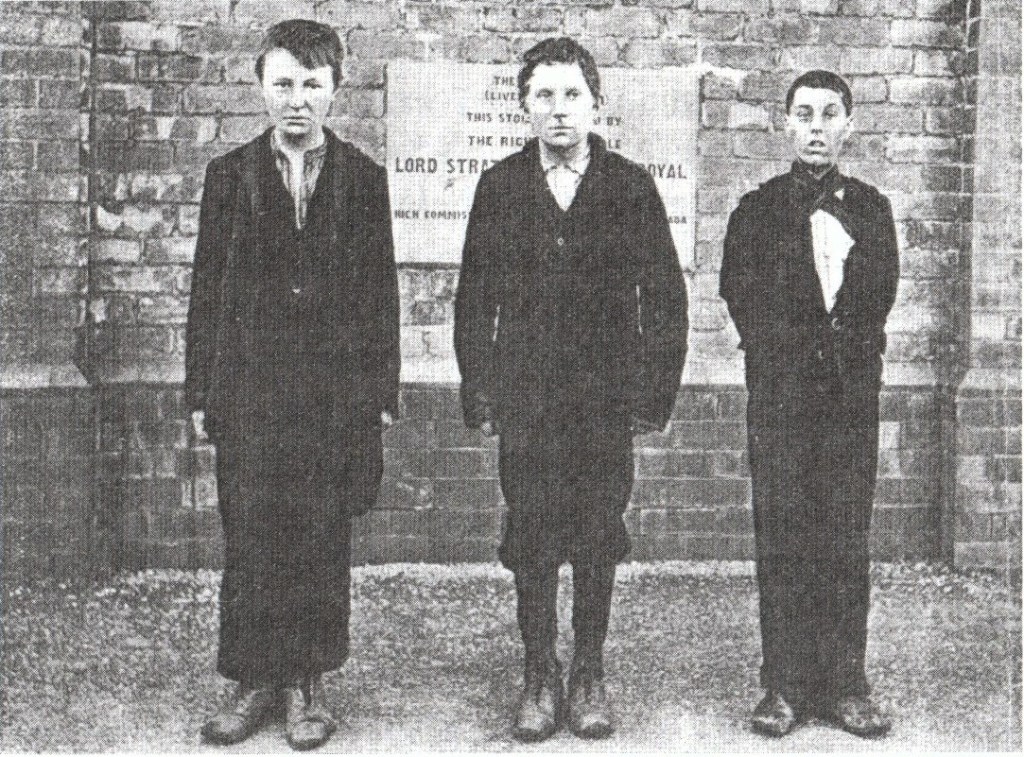
Further discussion followed, the Vicar of Windsor enquiring firstly as to whether the Navy League had any experience of any such venture or whether it was ‘An entirely new departure’ and secondly as to what, in practice, the boys would be taught. Mr Ellison was informed that Windsor would be the first branch to inaugurate such a scheme and that the Navy League was ‘extremely pleased’ about the project. As to the actual activities, these would include splicing and knotting of ropes, navigation, including compass reading and rigging with the possibility of instruction in cutlass drill, a supply of cutlasses probably being available from the Admiralty. It was agreed on Mr Durant’s suggestion that two classes of boys should be taught, the elementary school boys on certain nights of the week and the poorer boys on the other nights. It was further proposed by the Vicar, that ‘better class boys’ should pay a weekly contribution similar to that of the boys of the Church Lads’ Brigade.
Alderman Dyson opined that ‘It was one of the best schemes ever promoted in Windsor and if the poorer boys — who now loafed about at street corners and at the railway stations’ could be brought in, he considered it would do an immense amount of good. He added, optimistically, if present trends are anything to go by, that the Town Council might make a grant out of the rates. Not to be outdone in wishful thinking, Mr Somerville hoped that the County Councils of Berkshire and Buckinghamshire would give something out of the Technical Education Fund and explained that the barge had two cabins, one of which it was proposed to set up as a Boys’ Club and library, ‘with suitable papers for them to read’.
That Cecil Durant played so pivotal a part in the birth of the Sea Cadet movement and with Sir George Long, Mayor in Queen Victoria’s Diamond Jubilee Year, continued generous support for the Unit, represents a circumstance of curious continuity: both, with Mr Philip Lovegrove, were partners successively in the legal firm of Lovegrove & Durant, which the author joined some half a century later. To complete the historical connection, the author became Patron of the Unit in succession to the late Sir David Hallifax, Governor and Constable of Windsor Castle, in 1992.
On 21st October 1899, there appeared in the Windsor & Eton Express, a letter from Mr Somerville reporting progress. The Thames sailing barge had been purchased and fitted out at a total cost of £175 and Mr G Moore RN, ‘a zealous and efficient instructor, late of the Training Ship Worcester’, had been engaged. The vessel arrived in Windsor at the beginning of August and Mr WJ Haway and Sir George Long had arranged moorings in the ‘backwater just below the Great Western Railway Bridge at a convenient spot for boys to come on board’. A start had been made with 12 boys under instruction and this number had now expanded to 24, nearly all of whom intended to make the sea their career.
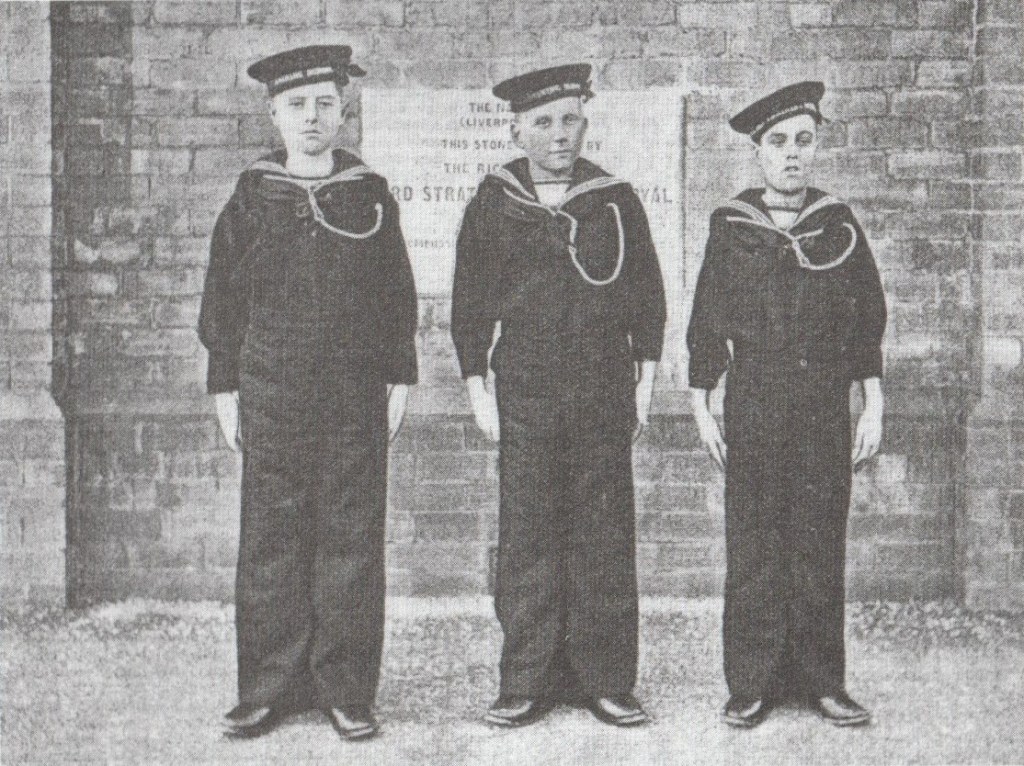
Vindicating earlier confidence, the Windsor District Technical Instruction Committee, had granted £25 but as is the case with all ambitious ventures, a further sum, in this case between £75 and £100, was needed. Mr Somerville’s letter included an appeal to the Windsor community at large for additional support. In the advertisement columns of the same issue of the Express, appeared a list of the 52 contributors to date, together with the Navy League and its Windsor and Eton Branch. Prominent amongst the Windsor personages were Sir Francis Tress Barry MP for Windsor, the Mayor, most of the committee, together with Messrs AW Shipley, EC Austen Leigh, EL Churchill, R Durnford and AM Goodhart. Besides the aforementioned vicars of Windsor and Eton, no less than six other clergymen were.amongst the contributors.
On 4th December 1899 Queen Victoria donated £10 towards the new project and Sir Frances Tress Barry ‘with that kindness of heart which is characteristic of him’ gave £30 to the funds and invited ‘all the lads’ to a party at his mansion on St Leonard’s Hill.
At a public meeting in the Guildhall on 15th March 1900, which was attended by the town’s leading citizens and at which Lt Knox, late of the Royal Navy, delivered a lecture on ‘the Navy and the War’, hearty tributes were again paid to the new Unit, 30 of the boys being present in uniform.
By July of 1900 the Navy League Journal was able to report that the numbers of boys under training had increased to 77, four boys having already gone to sea, two to the Warspite Training Ship, one to HMS St Vincent and one to an Orient line. Additional subjects taught embraced the Rule of the Road at Sea, Signalling and the use of life saving apparatus. The latest article was accompanied by photographs of the training barge ‘kindly taken and presented to the Navy League Journal by Messrs Hills & Saunders, Photographers of Eton’.
In 1901 a further six boys adopted sea-faring careers and moves were afoot to emulate Windsor’s initiative in Sunderland, Reading, Richmond and Oxford. Later that year the Unit suffered a severe loss in the sudden death of Mr Moore while on his way to a training exercise. The Navy League Journal carried an appreciation of Mr Moore, wherein it observed ‘his selection out of a large number of applicants in August 1899 to being an instructor of the lads belonging to the Navy League Barge was a very happy one as he was especially fitted to this post. It is not too much to say that the boys of the Navy League Barge were extremely fond of their instructor and delighted to be under such a fine old sailor … The members of the Navy League who came into contact with Mr Moore regarded him as a splendid type of the British Sailor and by his death they have lost a capable officer whilst the boys of the training vessel – the two classes number about 70 – will miss a true friend. Some 30 of the boys on the training vessel attended the funeral.’
Mr Moore was succeeded by Mr C Wakeman RNR, who again proved a capable choice. A while after this the Unit was visited by Prince Edward of Wales, later King Edward VIII. The following year boys from the barge in charge of Purser New joined the Royal Albert Institute excursion from Windsor to Portsmouth which was partly in aid of the HRH Princess Christian’s District Nurses’ Fund (which amongst other aspects of the munificence of the late Princess Christian in Windsor is currently being researched by Miss Kathie Whelan, of the Windsor Local History Group).
The Unit continued to prosper and The Navy magazine for June 1908 recorded that no less than 156 Windsor boys had in consequence made the sea their careers. After 13 years the old barge was seen to be unsound and on 16th October 1912 ataceremony attended by the Mayor and Corporation ‘in State’, a replacement training brig was named King George by Lady Evelyn Mason, wife of the then MP for Windsor. At the same time the new vessel was declared ready for service by the Mayor, Alderman Augustus Harris. On this occasion, an announcement was made that King George V proposed to give £10 per annum towards the upkeep of the new training ship. Contemporaneously with this event, yet another sea training scheme was being implemented in Norwich.
By the outbreak of WW1 in 1914, there were 34 Units, but the conflict postponed official recognition by the Admiralty until 1919, when a system of annual inspections was introduced and the Sea Cadet appellation was adopted. No records seem to have survived about the Unit’s activities during the Great War but the November 1921 issue of The Navy included a paragraph describing the inspection of the Navy League Sea Cadets of Windsor and Eton at the Baldwin Institute in Eton by the national head of the Naval Cadet Corps. The 37 boys on parade ‘presented a smart and disciplined appearance’. Two of the original founders, Messrs AA Somerville, and EC Durant were present.
In 1929 the Windsor Unit suffered the ignominy of withdrawing of official recognition for a period, probably on account of a diminution of numbers, but it appears to have been thriving again during WW2. In 1945 parades were held at the Royal Free School on Bachelors’ Acre, the Commanding Officer being Lt Antrobus, one of whose Petty Officers, Mr Moody, subsequently himself commanded the Unit, to which the Antrobus family later presented Colours. The King George had, by then, left the scene and the Unit had use of an old naval gun boat named The Marelly moored at Bath Island. The Eton College gymnasium was made available once a week and a frequent visitor was Commander Walters of the Admiralty Compass Observatory at Ditton Park. After a second decommissioning period, the Unit was re-established in 1964, when it was provided with a classroom in the Victoria Barracks. Subsequently the cadets were offered by Captain Courage the use of the Courage Bond Warehouse situated by the river, behind the Theatre Royal. The ship’s company rapidly increased to about 50 cadets, having use of a whaler, a naval cutter and a Bofors gun. In addition, a drum and bugle band was formed and the Unit, complete with band marched every month to the Parish Church.
The Unit’s President at this time was Sir Nicholas Cayzer, Chairman of the Union Castle and Clan shipping lines. He not only made a number of presentations to the top cadets; he also invited a party to visit RMS Windsor Castle, when the ship docked in Southampton and also presented the Unit with a painting of the liner.
Each year the Royal Naval inspections were passed with credit, and pennants awarded to the most efficient Units were awarded to Windsor in the four years from 1964 to 1967. In the latter year, Sir Nicholas chartered a splendid twin screw, 100-foot motor yacht, The Lillian. Built in Stockholm, this vessel had been used by both the Swedish and Dutch Royal Families. She was bought up river from Richmond and moored by the Donkey House pub near Romney Lock. The Lillian was fitted with staterooms, cabins and a magnificent saloon with a dumb waiter which travelled up from and down to the galley below. Many of these rooms were converted to classrooms and the vessel was repainted naval grey, but although it was ideal for training and the envy of other Units, security concerns, condensation which affected the uniforms, corrosion and escalating costs eventually defeated the Committee, and The Lillian regretfully sailed away to other waters. She is still afloat, well restored and moored once more at Richmond.
Thereafter the Unit retreated firstly to church rooms, then to Combermere Barracks and lastly to a room at St Stephen’s School. The conditions were not conducive to satisfactory training and when the Royal Navy inspection took place that year, the prospect of disbandment again rose over the horizon. However, the spirit of Lord Nelson must have been hovering over Windsor, for Mr Millward, the then Chairman, was able to obtain two Portacabins from the Institute of Marketing at Cookham. These were erected close to Windsor Swimming Club and a new headquarters was dedicated in 1981. The Unit once more began to flourish. Recruiting quickly improved and a Girls’ Nautical Training Section increased the numbers still further. The Unit regularly won sailing, boat handling and guard contests, and with the arrival as Chairman of Mr Neville Hallifax, a relative of Admiral Sir David Hallifax, Constable and Governor of Windsor Castle and subsequently Patron of the Unit, an era of progress and ever rising confidence in the future began. On 28th October 1984 at a ceremony involving all the Berkshire Sea Cadets, HRH Prince Philip, Duke of Edinburgh, presented new colours in The Quadrangle of Windsor Castle.
Shortly after this Royal recognition, a brief cloud sailed across the Unit’s euphoric heaven in the form of a local authority decision to build a Leisure Centre, which although on the one hand destined to replace the Portacabins with a new, permanent building, presaged on the other a demand for £2,200 per annum in rent. Energetic representations were made to the Council, which declined to budge on the rent but eventually offered us an alternative, a thirty year lease at a premium of £22,000. At this crucial point in the Unit’s fortunes, Neville Hallifax was elevated to the Presidency and David Maurice became Chairman of the Committee with his wife as Secretary. ‘When one has no money one must work to earn some,’ exclaimed the Italian Princess Cristina Beliojoso and this, precisely, is what the Committee, headed by these three leaders, achieved by raising this daunting sum within eighteen months.
The HQ was opened by the late Lady Palmer, wife of Sir Gordon Palmer the Lord Lieutenant of Berkshire. Support from the Prince Philip Trust Fund for the Royal Borough of Windsor and Maidenhead was acknowledged by a reception at the Guildhall in honour of the Duke of Edinburgh, when he was presented with a painting of two yachts, subsequently hung aboard the Royal Yacht Britiannia. From the Royal Albert Institute Trust the Unit has received sufficient donations to fund the acquisition of band instruments. The Windsor Sea Cadet Band is now a leader in the quality of its music and is frequently heard in the town, notably at the annual Armistice Day Parade.
On 25th June 1999 the initiative and inspiration shown by the founders of the Unit at that meeting in the Guildhall on 10th May 1899 was handsomely recognised when the Queen attended the centenary celebrations. Besides the Lord Lieutenant and his wife, the Mayor and Mayoress, Windsor’s MP and many other dignitaries, the National Sea Cadet Movement was strongly represented and the 25th June is now celebrated annually as National Sea Cadet Day. For these week-long festivities an old Thames sailing barge The Wivenhoe, built in 1898, was brought up river from St Katherine’s Dock and moored below Windsor Bridge. In the saloon was mounted a first class exhibition of memorabilia, also inspected by Her Majesty on what was a very memorable day.
The Unit has been fortunate in the quality of its most recent Commanding Officers, Lt Cdr Edward Roe (who sadly died suddenly on holiday in the West Indies). Lt Roy Ketch and currently Lt John Gathergood and the Training Ship Windsor Castle in 2004 proudly perpetuate the vision displayed by those eminent Windsorians over 104 years ago.
As to the future, perhaps, from her book Enchanted Cornwall, Daphne Du Maurier, that great lover of the sea, may be allowed the last word, ‘Yesterday is within us. We are part of what we were once and what we are yet to become in successive generations’.
JE Handcock, CVO,DL
Acknowledgements
The author is grateful to Messrs Neville Hallifax and David Maurice for their co-operation in providing information and documents.
 Windsor Local History Group