
Published in Windlesora 34
© WLHG 2018
In May 1958, being one of the main Travel Agents for Trans-Canada Airlines, I received an invitation to join their pre-inaugural flight for the Hudson Bay Route to Vancouver. There were 49 passengers made up of VIPs, and journalists from different sectors of the British media. One of the more interesting passengers was Chris Chataway, who in 1954 broke the world records for the 4 miles and the 3 miles races.
During my stay in Canada, the Lieutenant Governor of British Columbia invited us to a luncheon with all the VIPs. As I sat quietly enjoying my lunch, I noticed several television crews behind me. Attracting my attention they asked if I was ‘Mr. Try from Windsor, England’. After confirming that I was, they asked for an interview to go out on television. I agreed, and 1-2-3-4 you are now live’. After the usual niceties they asked:
Mr. Try what do you think about the curse put on the Totem Pole that is being given to the Queen?
The ground did not open up and swallow me, despite my plea for it to do so as I had no idea what they were talking about. I tried to skilfully hide my ignorance, so said a few words. Then they explained that the Queen had not invited Chief Mungo Martin to England to see the installation of the Totem Pole that he had spent many months carving, as a present to Her Majesty from the people of Canada.
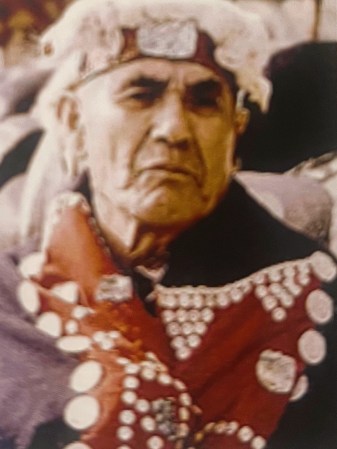
The most important part of this ceremony was his presence so that he could place his “copper” or ‘soul’ (a personal Chief Mungo Martin was a major contributor to Kwakwaka’wakw art, especially in the realm of wood sculpture and painting. He had said:
Chief Mungo Martin of the Kwakwaka’wakw plaque of beaten copper) underneath the Totem.
It was the greatest thing that a man can do, to carve from a giant tree, a Totem Pole.
I realised that this was an important spiritual event, so sprang into action.
I visited Mungo Martin who gave me chippings from his carving and showed me the Totem Pole in progress. Speaking with several local business people, together we found the money for him to travel to Windsor to see the placing of his magnificently carved Totem Pole
Now at Wick Pond, Virginia Water, in Windsor Great Park, it stands as a splendid symbol of the relationship between the UK and Canada, a gift to Queen Elizabeth to commemorate the 100th birthday of British Columbia. Named by Queen Victoria, it was proclaimed a Crown Colony in November 1858, and is now the Pacific Coast Province of Canada. Carved from a single log of Western Red Cedar that had grown on Queen Charlotte Island for over 600 years, and weighing 27,000 pounds, the Totem Pole stands at 100 feet high (30 metres) with each foot representing one year of British Columbia’s centenary.

The figures on the pole reading from the top are, Man with large hat, Beaver, Old Man, Thunderbird, Sea Otter, The Raven, The Whale, Double headed Snake, Halibut Man and Cedar Man. Each figure represents the mythical ancestor of a clan.
On 30th May 1959, the brightly painted Totem Pole was loaded onto the steamer Pacific Unity in Vancouver, for a 3 week journey to London. On 19th July 1959, the Totem Pole was erected at the head of an avenue of North American trees at Wick Pond, Windsor Great Park. The trees were planted at the end of the First World War to commemorate Canadian troops who had lost their lives.
Now some 60 years later, Chief Mungo Martin has passed away and his Totem Pole is reaching the end of its life. It is deteriorating rapidly and traditionally when it falls it is buried with the copper. Windsor Great Park authorities realise what an iconic piece of history the Totem Pole is, and are looking at ways of preserving it.
 Windsor Local History Group