
of Windsor and Massachusetts U.S.A.
Published in Windlesora 11 (1992)
© WLHG
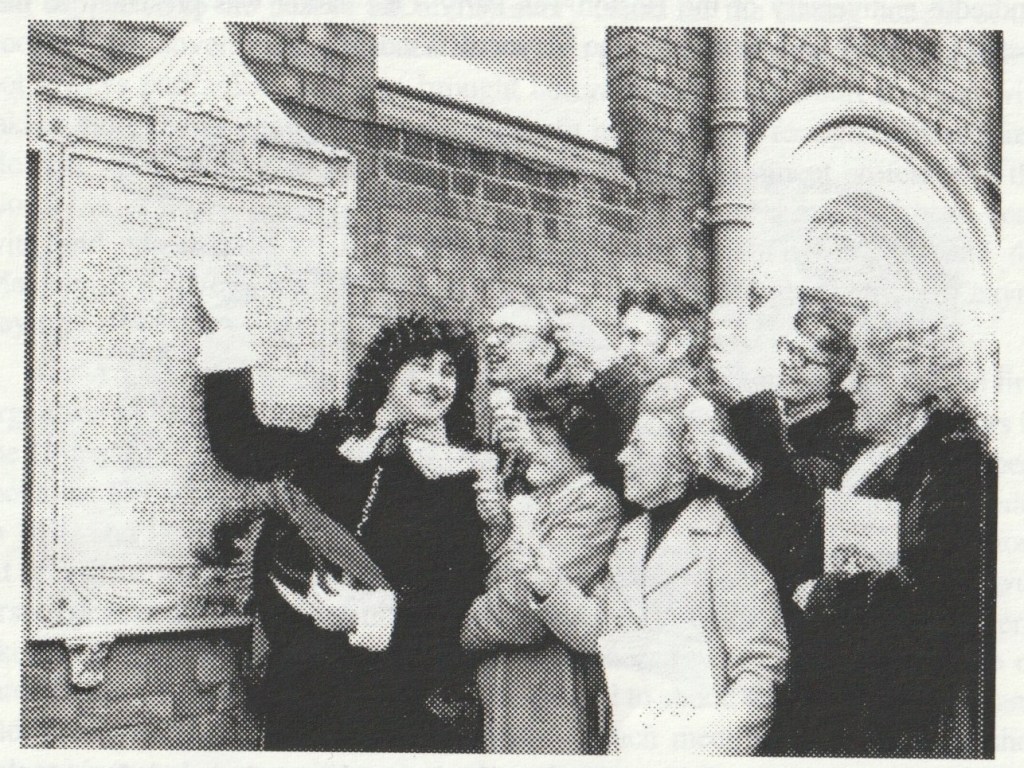
The weather-beaten bronze plaque in River Street, Windsor commemorates Robert Keayne, son of John Keayne, a butcher, who was born in the house that stood on the site from Tudor times until it was demolished in 1903 and rebuilt as it now exists. It is visited by American tourists, especially those from Boston, Mass. where he founded the Honorable Artillery Company of Massachusetts in 1638. According to the Windsor, Eton and Slough Express reports of July 1912, the plaque was made in Newburyport, Mass. for the Ancient and Honorable Artillery Company of Massachusetts who brought it to Windsor with a contingent of some 50 officers and men to be inaugurated on Friday, 12th July. The plaque was unveiled by the American Ambassador, Mr. Whitelaw Reid, attended by the detachment of the American H.A.C. and the London Honorable Artillery Company — who were celebrating their 375th anniversary, having been founded in 1537.
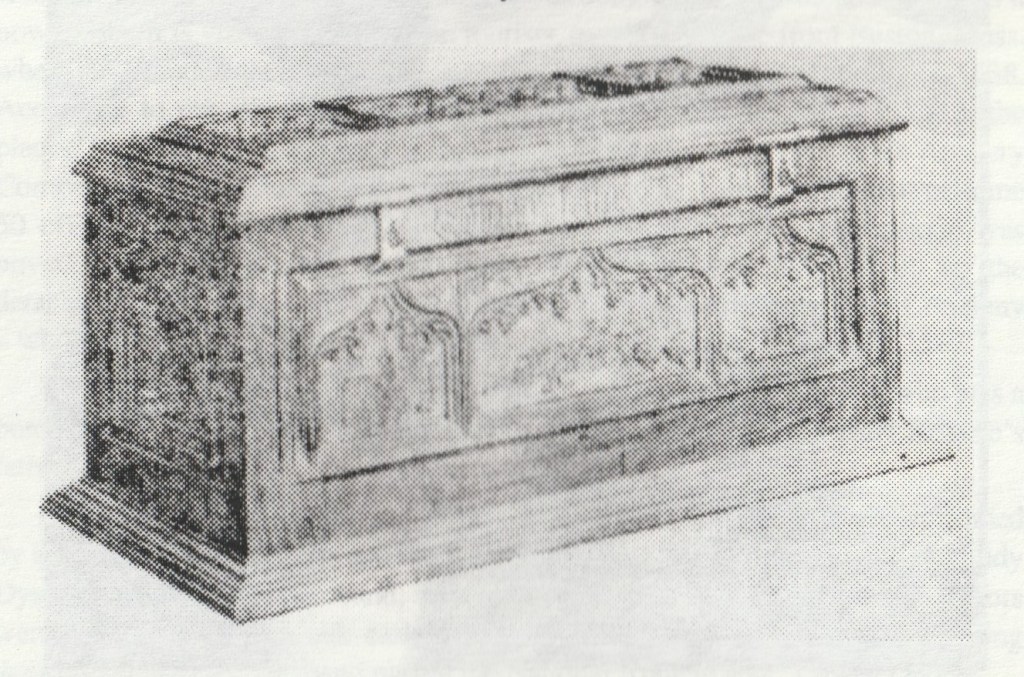
The Corporation was led by the Mayor, Alderman Augustus Harris, who was a butcher and whose premises were on the same site as that of Robert Keayne’s father, 28 Thames Street, to which the plaque was attached. On arrival, by special train, at the Central station, both Companies were welcomed by the Mayor and Mayoress and the Deputy Mayor (Sir Frederick Dyson) and Lady Dyson. Led by the H.A.C. band, they marched to the Guildhall where the visitors were presented with an oak casket made from a beam saved from the building demolished in 1903. The band played the National Anthem and ‘Yankee Doodle’.
“The blue trousers and red tunics of the American Company and the uniforms and bearskin caps of the London artillery and infantry detachment together with the band and colour parties made a splendid picture.’ records the Windsor, Eton and Slough Express. Toasts were drunk to the Sovereign, King George V and to the President of the United States of America, and accorded full artillery ‘fire’ which consisted of some half dozen cries of “Zat!’’. In the American rank and file were three interesting figures — a veteran from the American Civil War (1861-1865), Sergt. W.B. Lucas with 52 years service in the Corps, Major Maynard, another Civil War veteran, and a little scout who was the grandson of Captain Appleton who commanded the American Company, which was in the charge of Colonel Sydney Hedges.
Colonel Hedges, addressing the assembly at River Street recalled that the history of the Ancient and Honorable Company practically started at the very spot were Robert Keayne was born. He went on to relate the story of Robert Keayne’s life and involvement with the H.A.C. and invited the American Ambassador to unveil the plaque which was covered with the colours of the Union Jack and the Stars and Stripes. The Ambassador then read the inscription for the benefit of those at a distance. After lunch at the White Hart Hotel the company went to London for further celebrations.
In 1903, Councillor J. P. Hollis saved a beam from the original Tudor house which was eventually used to make two caskets which were carved in co-operation with Alderman A.T. Barber and Mr. A.Y. Nutt the artist and designer who worked in Windsor Castle. The carving was done by Mr. C. Deacon and the caskets were made in Messrs Hollis and Sons workshops by Mr. A. Beal. The Arms of the Ancient and Honorable Artillery Company appear on the lid flanked on either side by the Arms of England and of the Royal Borough of New Windsor. The front has Windsor Castle in olden times in the centre panel, showing the old wooden bridge and Curfew Tower with the old lantern roof; on either side are carvings of Windsor Town Hall and the first ‘Town House’ of Boston. Two mottoes — ‘God with the Fathers, so with us’ and ‘For what avail the plough or sail, or land or life, if freedom fail’ appear on the front and back respectively above the carved panels. The mottoes are taken from R.W. Emerson’s poem entitled ‘Boston’ which was read at the Faneuil Hall, Boston, the headquarters of the Massachusetts Artillery Co. on 16th December 1873, the hundredth anniversary of the Boston Tea Party. One casket was presented to the Boston Company and the other to the Mayor of Windsor.
Robert Keayne learned the trade of a tailor in London, and was admitted to the Merchant Taylors Company on April 17th 1615, having left Windsor to be apprenticed to John Heyfield on 9th March 1606, when he was eleven years old — a record disputed by the Merchant Taylors whose rules required apprentices to be at least 14 years old. However, the 1563 Statute of Labour and Apprentices only required a boy in a market town (such as Windsor) to be at least ten years old. However the date of his freedom is not in doubt — 17th April 1615 ‘By Servitude’. He joined the Honorable Artillery Company in London in 1623.
In 1620 the Pilgrim Fathers sailed in the Mayflower from Plymouth to North America and landed in Massachusetts and founded the New Plymouth colony on December 21st. Robert Keayne was attracted to join the Puritans, a much larger (1,000 strong) body of non-separatist religious reformers from England, who in 1629-30 founded and settled the Massachusetts Bay colony based at Boston. He emigrated in 1635 and spent the first few years in Boston importing goods for sale. He took a leading part in the earliest town meetings and became Deputy to the Great and General Court. He acquired a large property and ‘was distinguished for his piety and benevolence’. His public spirit and liberality were evidenced in many ways. His name appears as patron on every plan for improvement including church and college buildings. He gave £250 to Harvard University and the same sum to the town library. He paid another £250 for the introduction of pure water and supported to the best of his ability every cause for the lasting benefit of the people. The Government rewarded him with a grant of 400 acres of land. He was not always puritanical, and was brought before the General Court charged with taking more than sixpence in the pound profit in the sale of foreign commodities. He was sentenced to pay a £200 fine, but as he was ‘an eminent professor of the Gospel, a man of eminent parts, wealthy with but one child and had been dealt with and admonished by friends’ a difference between the Deputies and the Magistrates regarding the amount he should pay was finally settled with Keayne paying £100 — a considerable sum in those days.
The Ancient and Honorable Artillery Company of Massachusetts was the first organised military body in America and the germ from which sprang all others in the United States. At first they were trained bands, as in London. Three members including Robert Keayne had emigrated in 1635 and Keayne was elected Commander in 1639 and his son Benjamin was enrolled as Major Benjamin Keayne, Boston. At first there were 58 members in the Boston Company, but when the Militia was first organised in 1644 no less that 245 were enrolled. A unit of part-time volunteers, like the H.A.C. of London they assembled once or twice a fortnight for two or three hours drill but, ‘as all could not be expected to shoot, the cost of powder and shot being so great, two or three members at each meeting should have a shot apiece, in turn.” Ammunition was salvaged from the butts against which they practiced, for reuse.
Artillery originally included all kinds of offensive weapons, and when Robert Keayne made his will in 1653 he mentioned both small artillery (firearms) and great artillery (cannons). The will — all in his own handwriting — filled 150 folio pages. The bequests included ‘two heifers or cows to the captain and officers of the first Artillery Company to be kept as a stock constantly, and the increase or profit of these cows yearly to be laid out in powder or bullets’.
Robert Keayne does not seem to have returned to England, and his final resting place is in King’s Chapel burial ground, Boston. When he was born in 1595, Queen Elizabeth I was 58 and in the 33rd year of her reign. She was fond of Windsor although the streets were so ‘noysome and foul’ and damaged by carriages to and from the Castle, that an Act was required whereby frontagers had to repair and pave along their holdings. There was neither sewerage nor water supply, and refuse of all kinds tended to be disposed of in the street. The year of Elizabeth’s death was a plague year in Windsor and the usual number of three to five burials a month recorded in the parish register shot up to an average of over 26. Not until the bye-laws of 1635-6 were pigs stopped from running loose in the streets. No doubt the young Robert Keayne made his contribution to the busy life in the streets of Windsor. He would have seen James I who came to Windsor in 1604, and heard about the plot to blow up King and parliament in 1605, shortly before he left for London.
The butchers shop with its slaughter house at the rear bordered the marshy wastes along the river frontage of the parish of Clewer — the shop was just outside Windsor parish. The ancient wooden bridge to Eton and the adjacent busy wharf with its windlass would have been well known to Robert. The common fields to the east were used for grazing. Washing was sometimes taken towards Datchet, as recorded by Shakespeare in The Merry Wives of Windsor, which was written in 1600-01 while the author was staying at the Garter Inn a few yards up the hill from Keaynes establishment.
Would any of the townspeople of his day have dreamed that Robert would be remembered centuries later by a memorial plaque from far across the Atlantic? He was only the little son of John Keayne the butcher, who, as Shakespeare relates disposed of barrows of offal into the Thames, a practice which eventually led to the rejection of Thames water for the Castle in favour of new wells on Romney Island, which are still in use.
Gordon Cullingham
(Web editor’s note: This story features on the cover of this edition of Windlesora)
References
RAIKES, Captain G.A. History of the Honourable Artillery Company (2 vols.) 1878
Cuttings book of Alderman Augustus Harris (1911-1948)
SOUTH, Raymond Royal Castle, Rebel Town 1981
LEE, Albert The Story of Royal Windsor 1905 Windsor, Eton and Slough Express
 Windsor Local History Group