
(1938-2004)
Published in Windlesora 21 (2005)
© WLHG
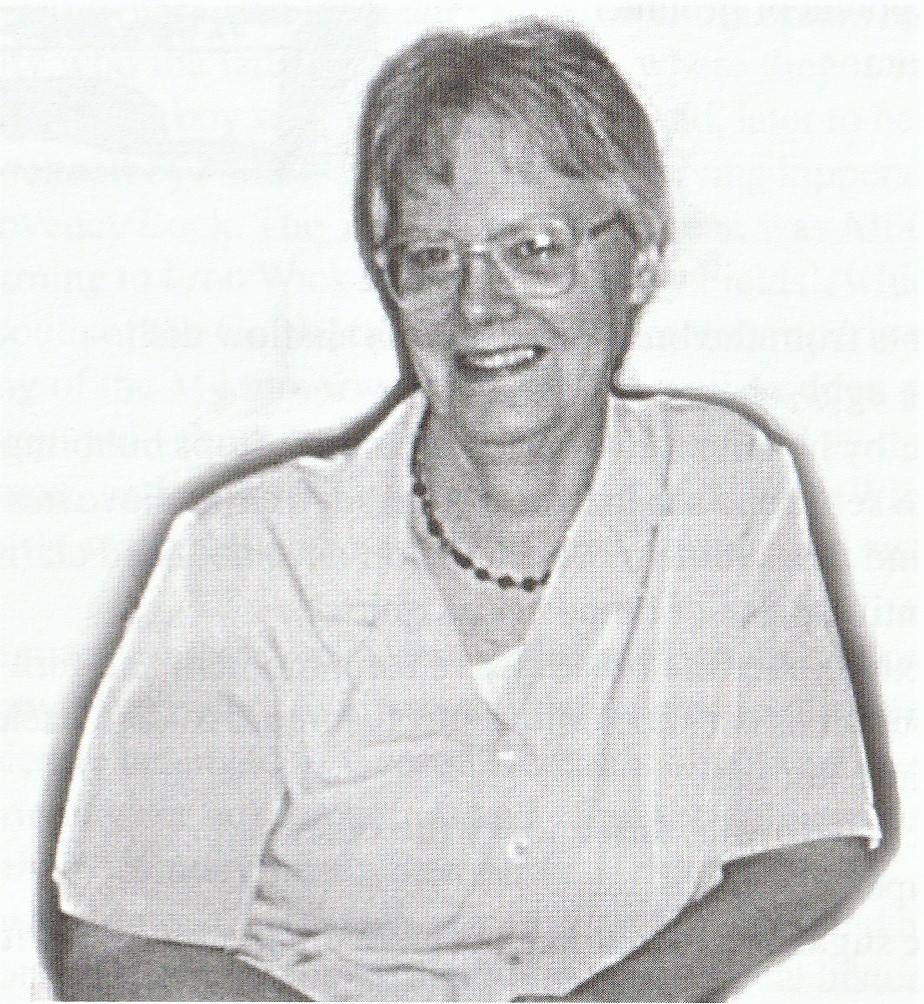
With the great experience and knowledge she built up over the years, her infectious enthusiasm, dedication and perfectionism, Judith Hunter became the doyenne of local historians, respected throughout Berkshire and beyond. To the Windsor Local History Group she meant much more however: she was our founder, our first chairman, a friend, adviser and inspiration to all.
It was after she came to live in Slough in 1966 with her husband Rip and two young daughters that Judith, with a BSc in Geography, became involved in local history. From 1969 she led a series of WEA classes on the theme of ‘Discovering Windsor’, believing that while the history of Windsor Castle was very well documented, that of the town of Windsor was not. From this course a group of like-minded people emerged who decided to meet additionally, pool information and publish it. A first meeting took place on 14 January 1976 with Judith as chairman, and the Windsor Local History Publications Group was created, with the aim of ‘combining scholarship with readability’. (It has continued ever since, three of the original eight founder-members still active.) Our first publication, The Changing Face of Windsor: The Beginnings, chronicling the town’s history up to 1350, was written by Judith with group support. Illustrated with line drawings and maps, it attracted much attention. The Group went on research and write The Streets of Windsor & Eton, with Judith contributing two of the sections: it has been our most successful publication, reprinted several times and reissued in 2003 in an updated and expanded version. In 1982 a journal was launched, Windlesora, to which Judith contributed many items (her recipe for ‘The Poor Knights of Windsor’ is reprinted on from Windlesora 3).
Over the years Judith continued with her WEA teaching, gave numerous lectures, enjoyed introducing children to their local history, and published many books, pamphlets and articles. She became involved with other history-based societies such as the Berkshire Local History Association of which she was a founder member, Vice President and for a time Chairman. Her book The Story of a Village: Eton Wick 1214-1977 led to the founding and her Presidency of the Eton Wick History Group. Among other of her publications are The Story of Slough, The History of the Bath Road, Victorian Childhood in Windsor and Windsor: Castle, Town and Park (with Beryl Hedges). In 1989 Judith registered at Reading University for a doctoral thesis on the history of the licensing trade, and we shared pride in her success when the degree was awarded in 1994. This was followed in 1995 by A History of Berkshire, in Phillimore’s Darwen County History Series; crisply written and plentifully illustrated it distils a huge amount of information and presents it in a readable way.
In 1977 Judith was appointed Honorary Curator of the Royal Borough Museum Collection, then housed and displayed in the Guildhall. It was a distress both to Judith and the Group when in 1982 the Council decided that it should be removed for ‘temporary’ storage at Tinkers Lane depot. But she was determined that if gone, the collection should not be forgotten. She fought successfully for greater space at the depot and started support groups, the Friends of the RBMC and the Volunteers, among whom were many of our members. She catalogued the Collections artefacts, drawing on the material to stage annual summer exhibitions at the Guildhall about Windsor’s past. An outstanding one was that of 1991 which celebrated the bicentenary of the birth of Charles Knight. The last of them in 1999, ‘Windsor a Hundred Years Ago’, curated with the help of Norman Oxley, made use of photos of the 1890s by George Henton newly-acquired for the Collection. Such exhibitions allowed Judith to exercise another of her talents, that of display; all were attractively presented as well as meticulously researched. She was also responsible for the permanent Heritage display at the Town and Crown Information Centre.
For three years before her retirement in 2000 Judith became the official Curator of the RBMC and worked very hard to enter all the records on computer to enable the Collection to achieve official museum status; she also produced a history of Windsor’s Guildhall. It was by a cruel blow of fate that not long after her retirement celebrations she was diagnosed with breast cancer. But she refused to allow the operation and the gruelling treatments which followed to prevent her from carrying on with her research and writing, and she contributed the first section of the Group’s millennium publication, Windsor: A Thousand Years. She was commissioned to write histories of Colnbrook and Burnham Beeches, and joined with her husband Rip to discover the work of the naval press gangs in Reading. This was the kind of original research that she most enjoyed, detective work, telling the Windsor Express that the ‘most wonderful thing…is when you find out something for the first time and nobody else knows, or when you handle a document and no-one else has examined it’.
With great delight we heard that in the New Years Honours List of 2004, Judith had been awarded an MBE for ‘services to museums’ (the word, especially the plural, made her smile). No honour could have been more richly deserved, yet it was typical of Judith that she should modestly suggest that it was an award for ‘everyone’ engaged in Windsor local history. Sadly she had become ill again, though she was brave enough to continue with her engagement to speak on Charles Knight at the Group-sponsored WEA class on Georgian Windsor, a course which she had helped to plan. Thus she ended her career as a local historian in the way that she had begun. She received her award at Buckingham Palace on 10 March and, maintaining her fighting spirit, answered the Queen’s remark about her involvement with ‘museums’ with the comment ‘We haven’t got a museum in Windsor, ma’am’. A video of the occasion shows how well and happy she looked that day, but thereafter she went downhill rapidly and died in the Thames Valley Hospice less than a month afterwards.
Irreplaceable Judith! We mourn her loss greatly, but also salute achievements which ensure her own place in the history of Windsor.
Hester Davenport
 Windsor Local History Group