
Published in Windlesora 34
© WLHG 2018
What the author H.G.Wells had famously termed ‘the war to end all wars‘ ended at 11.00 am on Monday, 11th November 1918, when hostilities ceased on all fronts. After four years of stalemate on the Western Front, the momentum of the Allied advance since the summer of 1918 was unstoppable, and victory was in sight when the German Hindenburg Line was breached in late September. In early October, the German government made appeals to the American President, Woodrow Wilson, for an immediate armistice and an exchange of messages followed. In a sign that the war was lost, the German High Seas Fleet mutinied on 29th October. The final collapse followed swiftly, with Germany’s allies concluding separate ceasefires: Turkey on 30th October and Austria-Hungary on 3rd November. The Kaiser was forced to abdicate on 9th November and fled to Holland to avoid arrest. After several days of negotiations, a German Armistice was signed at Compiègne, France, at 5.00 am on November 11th, to be effective from 11.00 am French time (which then coincided with British time).
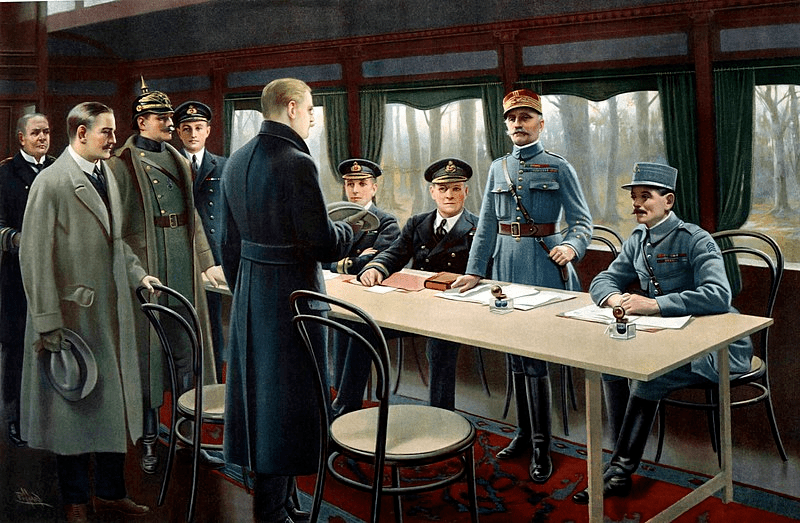
There had been speculation about peace talks for several weeks, and expectations were high. An editorial in the Windsor Express of 9th November, two days before the Armistice was signed, was full of hope:
The week we are passing through is one of the most momentous in history, and when men look back upon it they will wonder at the calmness displayed by the people of Great Britain. History is being made every day, and the maps of Europe will all have to be reprinted as the result of what is taking place now… When peace is declared there will be an outburst of pent-up feelings… Let us first of all offer up our thanks to God that He has brought us safely through the furnace of war, and then set to work to face the enormous problems which will confront us on the advent of peace…
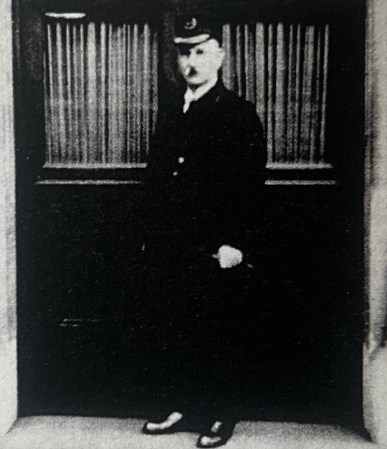
King George V was at Buckingham Palace when he received the news of the Armistice; this was quickly passed to other members of the Royal Family in London and Windsor. Samuel Maun, the Stationmaster of the Great Western Railway, was one of the first people in Windsor to hear the good news. On the morning of 11th November, Her Royal Highness Princess Alice, Countess of Athlone, told Maun that an armistice had been signed earlier that morning but he had to keep the news secret until it was officially announced at 11.00 am.
Rumours of peace reached London before the Armistice came into effect, and quickly spread across the country. There was celebration and rejoicing when the glad news was announced, and in Windsor the streets were filled throughout the day with cheering crowds. The flag of St George was flown from the Parish Church and the Union Flag at the Guildhall, but i was after 11.30 am before the Mayor, Cllr. William Carter was officially informed. He was sitting as Chief Magistrate at the Police Court when the message arrived.
A procession to announce the Armistice was hastily organised by the Mayor, and this was able to parade through the crowded streets of the town at midday. It was headed by the band of the 2nd Life Guards and the drums and fifes of the Coldstream Guards, and it consisted mainly of guardsmen and Windsor firemen. The Coldstream musicians proceeded to Combermere Barracks, where they joined the 2nd Life Guards band, and leading the procession was a Windsor Fire Brigade vehicle carrying the Mayor, Chief Fire Officer and Chief Constable.
Soon after noon, the procession left the barracks with the band playing Keep the Home Fires Burning, and at King Edward VII Hospital, wounded soldiers left their wards to go outside and cheer. The procession proceeded along St Leonard’s Road and up Peascod Street. They were cheered as they passed by, and flags were waved in the streets and from windows. The procession stopped in front of Queen Victoria’s statue, from where the Mayor addressed the crowd, whose ranks had been joined by a great many Eton College boys. After re-forming, the procession made its way back to Combermere Barracks by a different route.

This was followed in the evening by a torchlight procession in which the 2nd Life Guards again lent their services. The procession started from Windsor Fire Station at 9.00 pm and was led by four firemen bearing torches, followed by a car carrying the Mayor. The band marched behind, along with various local cadet and voluntary groups. After the procession had been to Eton and back, it stopped outside the Guildhall where the Mayor thanked everyone for taking part. There were large crowds in the streets to witness and cheer both processions, which were a great success despite being arranged at such short notice.
An editorial in the Windsor Express described ‘scenes of joyousness such as have not been witnessed in the Royal Borough for a decade‘. For this long-awaited joyous occasion, people could temporarily forget about the hardships of life on the home front, their sorrow at the loss of loved ones, and their fears about the Spanish flu epidemic sweeping the country.
The Times of November 12th reported that ‘The news was received at an early hour at Windsor Castle and communicated to the townspeople. Flags appeared everywhere as if by magic.‘
At midday, Eton College boys carrying flags marched round the ‘Burning Bush‘ in Eton High Street banging foot baths to celebrate. The Eton boys were granted a half-day holiday that day, and the following morning they attended a service of thanksgiving in the College Chapel to remember all the former pupils who died in the war. A total of 1,157 Old Etonians gave their lives.
Although Armistice Day was not an official public holiday, in many places work was suspended for the day and businesses and shops shut so that people could take part in the celebrations. Most of the local schools also closed for the day, although some of them were already closed because of the recent outbreak of Spanish flu.
A memorial Thanksgiving service was held at the Parish Church on the evening of November 11th. It was attended by a large congregation, which included Princess Alice, Countess of Athlone. Holy Trinity Church also held a special service of thanksgiving, as did the other churches in the area, most of them with larger-than-usual congregations.
The boys of Windsor Boys School reserved their rejoicings for the evening of Tuesday, November 12th, when they built a huge bonfire in the school grounds with the Kaiser as the guy on top. After an impressive display of fireworks, a few moments silence was called for in memory of those former pupils of the school who had laid down their lives for their country.
Wartime restrictions on the ringing of bells were lifted with immediate effect, and the bells of the Curfew Tower, Windsor Castle, rang out for the first time in over three years. The bells of the Parish Church were rung in celebration and at intervals throughout the day. Restrictions on the chiming of public clocks at night were also lifted.
It was announced that various concessions regarding theatre and hotel opening hours were to be allowed. The laws regarding the shading of lights in homes and shops, and the masking of street lamps, were to be withdrawn but the total number of lamps in use remained restricted because of the coal shortage. The regulations regarding lights on vehicles were under consideration, but for the time being, the existing rules were to remain in force.
The transition from war to peace began at once: recruiting under the Military Services Act stopped and all call-up notices, whether for medical examinations or service, were cancelled. Windsor’s Military Tribunal, which heard appeals for exemption from military service, was suspended, and all outstanding cases were dropped. An editorial in the Windsor Express on 16th November remarked:
The glorious news was flashed throughout the world on Monday that the Armistice had been signed by Germany, which practically prevents a renewal of fighting, and thus secures the attainment of all that we have struggled for during four arduous years… For us as a people, a spirit of thankfulness and humility must possess us that our ideals have come nearer realisation, and, as has been truly said, national unity won the war; national unity must win and safeguard the peace.
A further editorial in the same edition noted that:
With fervent gratitude the news that the greatest war in history had come to an end was received on Monday last, and there was everywhere tremendous enthusiasm. It was the greatest day that any of us living are likely to see… No sensible person will lack sympathy for the outburst of merry-making which took place throughout the country, but we must never forget, in the midst of all our joy, to be thankful to the men who have fought and bled and died for us… We shall always remember with gratitude those who have given their lives for us, and we cannot do too much for those who have been maimed and blinded in the fight for Freedom…
Around 600 men from Windsor were killed or died of wounds in the Great War and many more were injured or permanently maimed. The names of those who died are recorded on various war memorials in the town.
Derek Hunt
Sources
- Windsor and Eton Express
- Windsor in the Great War by Derek Hunt & Dr Brigitte Mitchell, published by Windsor Local History Group, 2014
 Windsor Local History Group