
Twenty of the UK’s Prime Ministers were educated at Eton College. Many of the names are instantly recognisable. For each, we have some key facts and created a timeline of major events in their life; references have been added too. We hope that this helps you with your studies.
| 1 | Sir Robert Walpole | 1721–42 |
| 2 | John Stuart, 3rd Earl of Bute | 1762–63 |
| 3 | George Grenville | 1763–65 |
| 4 | William Pitt the Elder, Earl of Chatham | 1766–68 |
| 5 | Frederick North, Lord North | 1770–82 |
| 6 | William Grenville, 1st Baron Grenville | 1806–07 |
| 7 | George Canning | 1827 |
| 8 | Arthur Wellesley, 1st Duke of Wellington | 1828–30, 1834 |
| 9 | Charles Grey, 2nd Earl Grey | 1830–34 |
| 10 | William Lamb, Viscount Melbourne | 1834, 1835–41 |
| 11 | Edward Smith-Stanley, 14th Earl of Derby | 1852, 1858–59, 1866–68 |
| 12 | William Ewart Gladstone | 1868–74, 1880–85, 1886, 1892–94 |
| 13 | Robert Gascoyne-Cecil, 3rd Marquess of Salisbury | 1885–86, 1886–92, 1895–1902 |
| 14 | Archibald Primrose, Earl of Rosebery | 1894–95 |
| 15 | Arthur James Balfour | 1902–05 |
| 16 | Anthony Eden | 1955–57 |
| 17 | Harold Macmillan, 1st Earl of Stockton | 1957–63 |
| 18 | Alec Douglas-Home, Earl of Home | 1963–64 |
| 19 | David Cameron | 2010–16 |
| 20 | Boris Johnson | 2019–22 |
As well as UK Prime Ministers, several household names have been educated at Eton College including: Tom Hiddleston, Damian Lewis, Eddie Redmayne, Hugh Laurie and Bear Grylls. And of course royalty too, including the Princes William and Harry.
Sir Robert Walpole
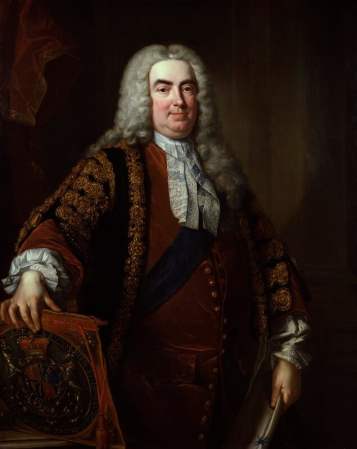
| Born: | 26 Aug 1676 |
| Died: | 18 Mar 1745 |
| Affiliation: | Whig |
| PM: | 3 Apr 1721 to 11 Feb 1742 |
| Length: | 20 years, 314 days |
| Title: | 1st Earl of Offord |
| At Eton: | 1690 to 1696 |
| Timeline: | 1676: Born in Houghton, Norfolk, England, into a wealthy and politically connected family. 1690: Entered Eton College. 1696: Entered King’s College, Cambridge, but left in 1698 without taking a degree after his older brother died, making him the heir. 1701: Elected Member of Parliament (MP) for Castle Rising, soon transferring to represent King’s Lynn, a seat he holds for life. 1708: Appointed Secretary at War, beginning his rise in government under the Whig administration. 1710: Dismissed from office when the Tories came to power; later impeached and briefly imprisoned in the Tower of London in 1712 over accusations of corruption, which boosted his popularity among Whigs. 1714: The Hanoverian succession brings George I to the throne; Walpole returns to government in influential roles. 1715: Became First Lord of the Treasury and Chancellor of the Exchequer under the Whig government. 1720: Played a key role in handling the fallout from the South Sea Bubble, helping to stabilise the British economy and government. 1721: Officially became First Lord of the Treasury again, widely considered the start of his tenure as Britain’s first Prime Minister. 1727: Continued in power under King George II, maintained royal favour and control over Parliament. 1730s: His dominance is at its height; he focused on peace abroad and prosperity at home, avoiding European wars. 1739: Opposition grew over his reluctance to go to war with Spain. Britain eventually entered the War of Jenkins’ Ear. 1742: Forced to resign due to declining popularity and mounting political opposition. Created Earl of Orford and moved to the House of Lords. 1745: Died aged 68. |
| Notable: | Considered Britain’s first de facto Prime Minister. Master of political patronage and parliamentary management, overseeing a period of political stability and economic growth. Commissioned Houghton Hall, a symbol of Whig aristocracy. His son, Horace Walpole, became a famous writer and art historian. |
| Sources: | History of the UK Government The National Archives Britannica Eton College BBC History National Portrait Gallery Museum of Prime Ministers Wikipedia |
| Windlesora: | ‘The Beautiful Lady Waldegrave‘, by Sheila Rooney, in Windlesora 17 |
John Stuart
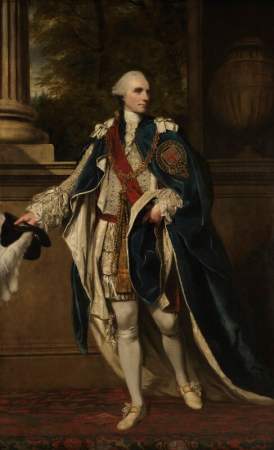
| Born: | 25 May 1713 |
| Died: | 10 Mar 1792 |
| Affiliation: | Tory |
| PM: | 26 May 1762 to 8 Apr 1763 |
| Length: | 317 days |
| Title: | 3rd Earl of Bute |
| At Eton: | Probably 1724 to 1729 |
| Summary: | 1713: Born in Edinburgh to James Stuart, 2nd Earl of Bute, and Lady Anne Campbell. 1723: Inherited the title of 3rd Earl of Bute after his father’s death. 1730s–1740s: Educated at Eton and the University of Leiden (Netherlands). 1736: Married Mary Wortley Montagu, daughter of the famed letter writer Lady Mary Wortley Montagu. 1737: Elected a Scottish Representative Peer in the House of Lords. 1747–1750: Associated with Prince Frederick, Prince of Wales, became a trusted advisor. 1751: After Prince Frederick’s death, Bute became a close confidant and tutor to his son, the future King George III. 1760: George III becomes King, and Bute became his chief advisor. 1761: Appointed Secretary of State for the Northern Department, a senior cabinet position. 1762: On 29th May, became Prime Minister, succeeding the Duke of Newcastle. 1763: Oversaw the signing of the Treaty of Paris, ending the Seven Years’ War. Introduced an unpopular tax on cider. 1763: On 8th April, resigned due to intense political opposition and public unpopularity. 1763–1780s: Remained influential behind the scenes but held no formal political office. Focused on personal affairs, science, and botany. 1780: Built a grand mansion and botanical garden at Luton Hoo in Bedfordshire. 1792: Died at his estate in Hampshire, aged 78. |
| Notable: | He was the first Scottish-born Prime Minister after the 1707 Acts of Union. His tenure was controversial and short, largely due to his Scottish heritage and perceived favouritism from the King. He had a keen interest in botany and helped establish Kew Gardens as a royal botanical site. |
| Sources: | History of the UK Government The Victorian Web Britannica Eton College National Portrait Gallery Museum of Prime Ministers Wikipedia |
| Windlesora: |
George Grenville
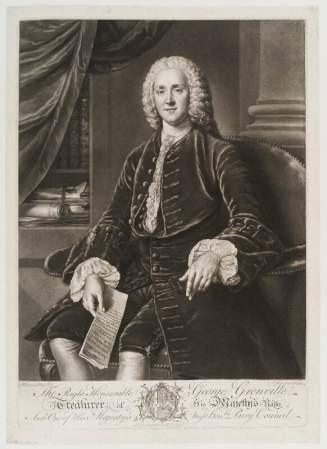
| Born: | 14 Oct 1712 |
| Died: | 13 Nov 1770 |
| Affiliation: | Whig |
| PM: | 16 Apr 1763 to 10 Jul 1765 |
| Length: | 2 years, 85 days |
| Title: | Unusually didn’t receive a peerage |
| At Eton: | Probably 1725 – 1728 |
| Summary: | 1712: Born in Wotton Underwood, Buckinghamshire, into an influential political family. His father was Richard Grenville MP, and his brother was Richard Grenville-Temple, 2nd Earl Temple. 1725: Entered Eton College. 1729: Entered Christ Church, Oxford. 1735: Began legal studies at Lincoln’s Inn. 1741: Elected MP for Buckingham, holds it for life. 1744: Appointed a Lord of the Admiralty under the Pelham government. 1747: Became a Lord of the Treasury. 1754: Appointed Treasurer of the Navy, a post he holds until 1761. Gains a reputation for fiscal expertise. 1761: Briefly served as Leader of the House of Commons under Lord Bute. 1762: Appointed Secretary of State for the Northern Department, then First Lord of the Admiralty. 1763: After the resignation of Lord Bute, Grenville became First Lord of the Treasury and Prime Minister on 16th April. 1763: Prosecution of John Wilkes for seditious libel sparked public outcry; Grenville’s government was accused of suppressing liberty. 1763: The Proclamation of 1763 was issued, restricting colonial settlement west of the Appalachian Mountains after the Seven Years’ War. 1764: Introduced the Sugar Act, aimed at raising revenue from the American colonies. 1765: The Stamp Act was passed, the first direct tax imposed on the American colonies, leading to widespread protest and unrest and the term ‘taxation without representation‘. 1765: Dismissed by King George III after disagreements over royal prerogative, the handling of political appointments and rioting in London. 1765–1770: Remained active in Parliament as a leading opposition voice, particularly on American colonial policy and financial matters. His supporters were called ‘Grenvillites’. 1770: Died in London at age 58. |
| Notable: | George Grenville came from a family of politicians. Known for his rigid fiscal discipline and legalistic approach to governance. His Stamp Act became one of the key catalysts for the American Revolution. Remembered as a capable administrator, but lacked political tact and struggled to manage both Parliament and the King’s favour. His son, William Wyndham Grenville, later served as prime minister. His sister Hester married William Pitt, later a prime minister. |
| Sources: | History of the UK Government The Victorian Web Britannica Eton College National Portrait Gallery Museum of Prime Ministers Wikipedia |
| Windlesora: |
William Pitt the Elder
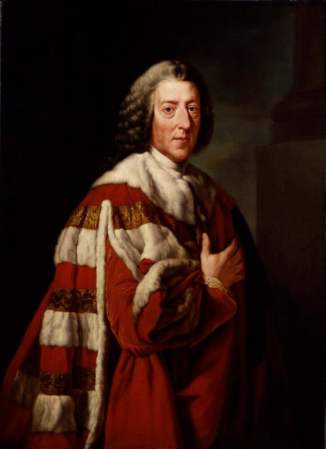
after Richard Brompton based on a work of 1772
NPG 259 © National Portrait Gallery, London; CC BY-NC-ND 3.0
| Born: | 15 Nov 1708 |
| Died: | 11th May 1778 |
| Affiliation: | Whig |
| PM: | 30 Jul 1766 to 14 Oct 1768 |
| Length: | 2 years, 76 days |
| Title: | 1st Earl of Chatham |
| At Eton: | 1719 to 1726 |
| Timeline: | 1708: Born in Westminster to Robert Pitt of Boconnoc and Harriet Villiers on 15th November. Grandson of Thomas “Diamond” Pitt, a wealthy East India Company merchant. 1719–1726: Attended Eton College. 1726–1727: Studied at Trinity College, Oxford; left without taking a degree due to gout. 1727–1728: Embarked on the Grand Tour of Europe, even attending Utrecht University. 1735: Made MP for Old Sarum, a ‘rotten borough’, by his elder brother Thomas, who had won two seats. 1736–1737: Gained attention in the House of Commons with speeches advocating war against Spain and opposing Prime Minister Robert Walpole. 1737: Dismissed from a military post for criticising the government, but gained popularity as a “patriotic” Whig. 1746: Appointed Paymaster General, a lucrative office he administered with rare honesty, refusing customary financial kickbacks. 1756: Appointed Secretary of State during the early years of the Seven Years’ War. 1757: Formed a coalition with the Duke of Newcastle; became de facto head of government (though not officially Prime Minister). 1757–1761: Directed British military strategy during the Seven Years’ War. Under his leadership, Britain captured Canada from the French (Battle of Quebec, 1759) and gained India, West African, and Caribbean territories. 1760: King George II died; George III ascended, who was less favourable to Pitt. 1766: On 30th July, became Prime Minister and First Lord of the Treasury. 1766: Created Earl of Chatham and elevated to the House of Lords, losing touch with Commons-based political support. 1766–1768: His government was weak, not united, and was plagued by his absence due to illness. 1768: In October, he resigned as Prime Minister due to ill health and political instability. 1768–1778: Remained politically active in the House of Lords, warning against coercive policies toward the American colonies. 1778: In April, he collapsed in the House of Lords during a speech opposing the recognition of American independence and died a month later, being buried in Westminster Abbey with national honours. |
| Notable: | Known as ‘The Great Commoner‘ for his early career and the defence of popular interests. Architect of the British imperial expansion during the Seven Years’ War. Father of William Pitt the Younger, future Prime Minister. Revered for his oratory, integrity, and vision, though his leadership style was autocratic and occasionally erratic. Popular in America, many places are named after him, including Pittsburgh. |
| Sources: | History of the UK Government The Victorian Web Britannica Eton College National Portrait Gallery Museum of Prime Ministers Wikipedia |
| Windlesora: |
Lord Frederick North
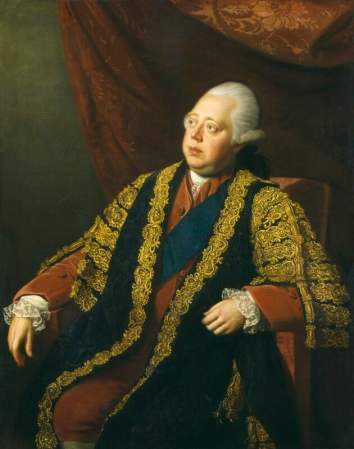
| Born: | 13 Apr 1732 |
| Died: | 5 Aug 1792 |
| Affiliation: | Tory |
| PM: | 28 Jan 1770 to 27 Mar 1782 |
| Length: | 12 years, 58 days |
| Title: | 2nd Earl of Guildford, 8th Baron North (Lord North) |
| At Eton: | 1742 to 1748 |
| Timeline: | 1732: Born in Piccadilly, to Francis North, 1st Earl of Guilford, and Lady Lucy Montagu. 1742: Educated at Eton College. 1748–1750: Attended Trinity College, Oxford; became a fellow. 1754: Elected MP for Banbury, a seat he held until 1790. 1759: Appointed Lord of the Treasury, marking his entry into government. 1766: Became Chancellor of the Exchequer under Prime Minister William Pitt the Elder (also served under the Duke of Grafton). 1770: January was appointed Prime Minister following the resignation of the Duke of Grafton. 1773: Oversaw the Tea Act, which led to the Boston Tea Party. 1775–1783: The American Revolutionary War occurred during his premiership. 1781: The British defeat at the Battle of Yorktown effectively ended the war in favour of the American colonies. 1782: On 27th March, he resigned as Prime Minister after loss of support and war failures. 1783–1790: Served in various roles, including Home Secretary and Secretary of State for the Home Department, briefly part of the Fox–North Coalition. 1790: Succeeded his father as 2nd Earl of Guilford, entered the House of Lords and left the Commons. 1792: Died at age 60. |
| Notable: | He was remembered by history as ‘the man who lost America’. Often criticised, but also recognized for loyalty to King George III and administrative skill. |
| Sources: | History of the UK Government The Victorian Web Britannica Eton College National Portrait Gallery Museum of Prime Ministers Wikipedia |
| Windlesora: |
William Wyndham Grenville, 1st Baron Grenville
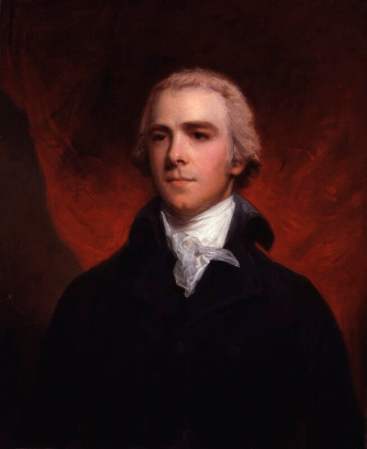
| Born: | 25 Oct 1759 |
| Died: | 12 Jan 1834 |
| Affiliation: | Whig |
| PM: | 11 Feb 1806 to 25 Mar 1807 |
| Length: | 1 year, 42 days |
| Title: | 25 Nov 1790 – 12 Jan 1834: 1st Baron Grenville |
| At Eton: | Probably 1770 to 1776 |
| Timeline: | 1759: Born in Wotton Underwood, Buckinghamshire. Youngest son of George Grenville, former Prime Minister. 1770s: Educated at Eton College, then Christ Church, Oxford gaining a degree in the Classics. Later studied law at Lincoln’s Inn. 1782: Entered Parliament as MP for Buckingham. He began his political career under the patronage of his cousin William Pitt the Younger. 1784: Appointed Paymaster of the Forces and sworn into the Privy Council. 1790: Appointed Foreign Secretary (1791–1801), playing a major role in European diplomacy during the French Revolutionary Wars. 1799: Created Baron Grenville, entering the House of Lords. 1806: In February, he became Prime Minister (1806–1807) of the “Ministry of All the Talents”, a coalition government including Charles James Fox and other Whigs. 1807: Oversees the passage of the Slave Trade Act 1807, which abolished the British transatlantic slave trade — his most lasting achievement. 1807: On 31st March, the Government fell over the Catholic emancipation issue; Grenville resigned as Prime Minister. 1807–1834: Remained an active member of the House of Lords, generally in opposition. Advocates for Catholic emancipation, education reform, and foreign policy restraint. 1834: Died at Burnham, Buckinghamshire, aged 74. |
| Notable: | Grenville succeeded in passing legislation to abolish the slave trade, which was a historic achievement. He was an advocate for Catholic emancipation. |
| Sources: | History of the UK Government The Victorian Web Britannica Eton College National Portrait Gallery Museum of Prime Ministers Wikipedia Hansard (1803–2005) |
| Windlesora: |
George Canning
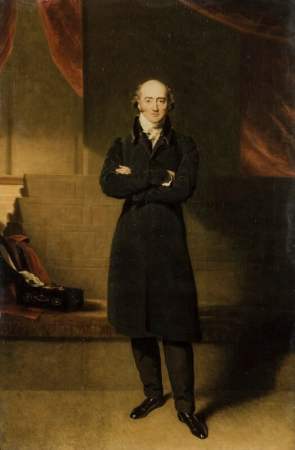
| Born: | 11 Apr 1770 |
| Died: | 8 Aug 1827 |
| Affiliation: | Tory |
| PM: | 12 Apr 1827 to 8 Aug 1827 |
| Length: | 119 days |
| Title: | |
| At Eton: | 1782 to 1787 |
| Constituencies: | 24 Jul 1802 – 17 Nov 1806: Tralee 3 Nov 1806 – 7 May 1807: Newtown 5 May 1807 – 6 Oct 1812: Hastings 9 Oct 1812 – 24 Dec 1812: Petersfield 16 Oct 1812 – 15 Feb 1823: Liverpool 5 Nov 1812 – 5 Apr 1813: Sligo 10 Feb 1823 – 12 Jun 1826: Harwich 13 Jun 1826 – 24 Apr 1827: Newport 20 Apr 1827 – 5 Sep 1827: Seaford |
| Timeline: | 1770: Born in Marylebone, to George Canning Sr. and Mary Ann Costello. Father dies shortly after his birth; he was raised in modest circumstances but aided by a wealthy uncle, Stratford Canning. 1782: Attended Eton College, became a gifted classical scholar and debater. 1787–1791: Studied at Christ Church, Oxford; won multiple academic prizes. 1793: Became MP for Newtown, Isle of Wight (age 23), backed by William Pitt the Younger. 1796: Appointed Under-Secretary of State for Foreign Affairs. 1800: Married Joan Scott, with whom he had four children. 1804–1806: Served as Treasurer of the Navy. 1807–1809: Appointed Foreign Secretary in the Portland ministry. Played a key role in the British attack on Copenhagen (1807) to prevent the Danish fleet from falling into Napoleon’s hands. 1809: Forced to resign after a duel with Lord Castlereagh, due to tensions over the conduct of the Peninsular War. 1812–1820: Served in various minor roles; briefly, Ambassador to Portugal. 1822: Returned as Foreign Secretary and Leader of the House of Commons under Prime Minister Lord Liverpool. Promoted a liberal foreign policy, supporting independence movements in Latin America and opposing intervention by European monarchies. 1827: On 10th April, following the death of Lord Liverpool, Canning is appointed Prime Minister and First Lord of the Treasury. 1827: Died in office, aged 57, after just 119 days as Prime Minister — the shortest-serving Prime Minister to die in office. |
| Notable: | Regarded as a liberal Tory, supporting Catholic emancipation and resisting reactionary European alliances. One of Britain’s most skilled Foreign Secretaries, promoting British influence in Latin America. Noted orator and writer – highly respected even by political opponents. Was part of a group of four friends – John Frere, Robert Smith, John Smith, and himself – who wrote ‘The Microcosm’, a collection of essays, poems, and other writings, aiming to provide insights into the social and intellectual life of the time. It was printed by Charles Knight in 1787. |
| Sources: | History of the UK Government The Victorian Web Britannica Eton College National Portrait Gallery Museum of Prime Ministers Wikipedia Hansard (1803–2005 ) |
| Windlesora: |
Arthur Wellesley, 1st Duke of Wellington
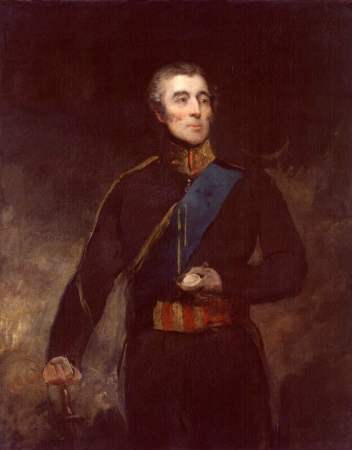
| Born: | 1 May 1769 |
| Died: | 14 Sept 1852 |
| Affiliation: | Tory |
| PM: | 22 Jan 1828 to 16 Nov 1830 17 Nov 1834 to 9 Dec 1834 |
| Length: | 2 years, 320 days |
| Title: | 4 Sep 1809 – 14 Sep 1852: Baron Douro of Wellesley 4 Sep 1809 – 14 Sep 1852: Viscount Wellington of Talavera and of Wellington 28 Feb 1812 – 14 Sep 1852: Earl of Wellington 3 Oct 1812 – 14 Sep 1852: Marquess of Wellington 11 May 1814 – 14 Sep 1852: 1st Duke of Wellington |
| At Eton: | 1781 to 1784 |
| Constituencies: | 1 Apr 1806 – 4 Nov 1806: Rye 15 Jan 1807 – 12 May 1807: Mitchell 21 May 1807 – 27 Jul 807: Tralee |
| Timeline: | 1769: Born in Dublin to the Anglo-Irish aristocratic Wellesley family. 1781: Attended Eton College, but did not excel academically. 1786–1787: Studied at the Royal Academy of Equitation in Angers, France, preparing for a military career. 1787: Commissioned as an Ensign in the British Army. 1794–1795: Served in the Flanders Campaign during the French Revolutionary Wars. 1796–1805: Served in India: fought in 1799 in the Fourth Anglo-Mysore War, helped defeat Tipu Sultan, and in 1803 won the Battle of Assaye during the Second Anglo-Maratha War. Gained fame as a brilliant commander. 1805: Returned to Britain as a Major-General. 1807: Briefly appointed Chief Secretary for Ireland. 1808–1814: Leads British forces in the Peninsular War (part of the Napoleonic Wars). Major victories at Vimiero, Talavera, Salamanca, Vitoria, and others. Forced Napoleon’s allies out of Spain and into France. 1814: Napoleon abdicated. Wellesley is made the Duke of Wellington. 1815: Commanded allied forces at the Battle of Waterloo, defeating Napoleon once and for all. 1815–1818: Served as British ambassador to France and then Commander-in-Chief of the Army. 1828–1830: Served as Prime Minister. Known for his reluctance to reform, but ultimately oversaw the Catholic Emancipation Act (1829). Faced major unrest and opposition to his resistance to parliamentary reform. 1830: Resigned after defeat on a parliamentary reform motion. 1834: Briefly served as Interim Prime Minister following the fall of Lord Melbourne’s government. 1842–1852: Served as Commander-in-Chief of the British Army again. 1852: Died at Walmer Castle, aged 83. Buried with full national honours in St Paul’s Cathedral. |
| Notable: | He was a Military Hero whose victory at Waterloo ended the Napoleonic Wars. He was a key supporter (though reluctantly) of Catholic emancipation and a symbol of conservative stability and national pride. |
| Sources: | History of the UK Government The Victorian Web Britannica Eton College National Portrait Gallery Museum of Prime Ministers Wikipedia Hansard (1803–2005 ) |
| Windlesora: | ‘The Road to Waterloo‘, by Dr Brigitte Mitchell, published in Windlesora 31 |
Charles Grey, 2nd Earl Grey
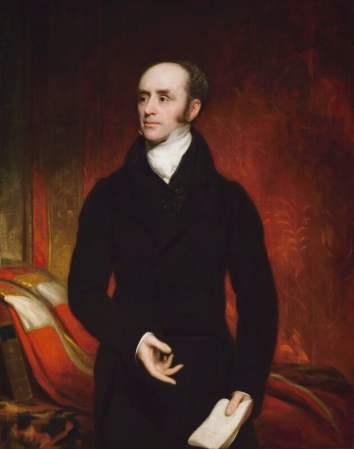
| Born: | 13 Mar 1764 |
| Died: | 17 Jul 1845 |
| Affiliation: | Whig |
| PM: | 2 Nov 1830 to 9 Jul 1834 |
| Length: | 3 years, 229 days |
| Titles: | 14 Nov 1807 – 17 Jul 1845: Baron Grey of Howick 1 Nov 1807 – 17 Jul 1845: 2nd Earl Grey 14 Nov 1807 – 17 Jul 1845: Viscount Howick |
| At Eton: | 1773 to 1778 |
| Timeline: | 1764: Born in Fallodon, Northumberland, into an aristocratic family. 1773-1778: Educated at Eton College. 1781-1784: Went to Trinity College, Cambridge (but did not complete a degree). He spent most of the next three years travelling around Europe on his Grand Tour. 1786: Elected as MP for Northumberland at age 22. 1788–1789: Gained national attention for supporting parliamentary reform and opposing royal influence in government. 1792: Became one of the founders of the Society of the Friends of the People, advocating for reform and wider suffrage. 1794: Married Mary Elizabeth Ponsonby; they would have 16 children. 1806–1807: Served as First Lord of the Admiralty, then Foreign Secretary in the short-lived “Ministry of All the Talents” under Lord Grenville. 1807: Became 2nd Earl Grey after the death of his father; moved from the House of Commons to the House of Lords. 1807–1830: In opposition during years of Tory dominance, he became leader of the Whigs in the Lords, consistently arguing for Catholic emancipation and parliamentary reform. 1830: In November became Prime Minister after the fall of the Duke of Wellington’s Tory government. 1832: Oversaw passage of the historic Reform Act 1832, which abolished many “rotten boroughs”. He extended the franchise to middle-class men in towns, marking the beginning of modern British electoral reform. 1833: Led the passage of the Slavery Abolition Act, which abolished slavery throughout most of the British Empire. 1834: In July, he resigned as Prime Minister, largely due to internal Cabinet divisions. 1834–1845: Retired from active politics, lived a private life at Howick Hall, Northumberland. 1845: Died at Howick, aged 81. |
| Notable: | Architect of the Reform Act 1832, oversaw Slavery Abolition Act 1833 and paved the way for modern British liberalism. The famous Earl Grey tea is named after him although the exact reason why is unknown but there is plenty of speculation. |
| Sources: | History of the UK Government The Victorian Web Britannica Eton College National Portrait Gallery Museum of Prime Ministers Wikipedia Hansard (1803–2005) |
| Windlesora: |
William Lamb, 2nd Viscount Melbourne
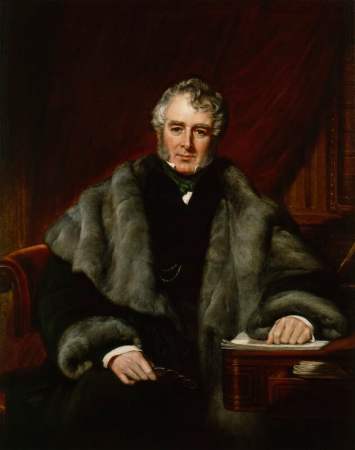
by John Partridge, 1844; NPG 941 © National Portrait Gallery, London; CC BY-NC-ND 3.0
| Born: | 15 Mar 1779 |
| Died: | 24 Nov 1848 |
| Affiliation: | Whig |
| PM: | 16 Jul 1834 to 14 Nov 1834 18 Apr 1835 to 30 Aug 1841 |
| Length: | 6 years, 255 days |
| Title: | 22 Jul 1828 – 24 Nov 1848: 2nd Viscount Melbourne |
| At Eton: | Possibly 1790 to 1795 |
| Constituencies: | 31 Jan 1806 – 1 Nov 1806: Leominster 24 Nov 1806 – 30 May 1807: Haddington 23 May 1807 – 24 Oct 1812: Portalington 16 Apr 1816 – 30 Nov 1819: Peterborough 29 Nov 1819 – 16 Jun 1826: Hertfordshire 24 Apr 1827 – 25 May 1827: Newport 7 May 1827 – 23 Jul 1828: Bletchingley |
| Timeline: | 1779: Born in London, son of Peniston Lamb (1st Viscount Melbourne) and Elizabeth Lamb. The family was part of the Whig aristocracy. 1790s: Educated at Eton College, then Trinity College, Cambridge (graduated 1799). 1805: Married Lady Caroline Ponsonby, who would later scandalize society with her affair with poet Lord Byron. 1806: Entered MP for Leominster. 1812–1829: Served as MP for Hertfordshire. Succeeded to the title of Viscount Melbourne in 1828 after the death of his father and elder brother, entered the House of Lords. 1830: Appointed Chief Secretary for Ireland under Prime Minister Earl Grey. 1834: In July, after Grey resigned, Melbourne became Prime Minister for the first time. 1834: In November, dismissed by King William IV, who asked the Duke of Wellington to form a government, then Robert Peel. 1835: In April, he returned as Prime Minister after Peel’s minority government failed. 1837: In June, he became Queen Victoria’s first Prime Minister upon her accession. He developed a close personal and political relationship with the young Queen, guiding her early reign. 1839: The Bedchamber Crisis occurred: Melbourne offered to resign, but Queen Victoria refused to replace her Ladies of the Bedchamber with Tory supporters, forcing Peel to decline forming a government. Melbourne remains PM. 1841: In August, lost the general election to Robert Peel’s Conservatives and resigned as Prime Minister. 1841–1848: Withdrew from politics but remains a respected elder statesman. Relationship with Queen Victoria cools slightly as Prince Albert takes on more advisory duties. 1848: Died at Brocket Hall, Hertfordshire, aged 69. |
| Notable: | He was known for moderate Whiggism and resisting radical reform. Beloved by Queen Victoria, who called him her “best friend“, he helped stabilize the early years of her reign. |
| Sources: | History of the UK Government The Victorian Web Britannica Eton College National Portrait Gallery Museum of Prime Ministers Wikipedia Hansard (1803-2005) |
| Windlesora: |
Edward Smith-Stanley, 14th Earl of Derby
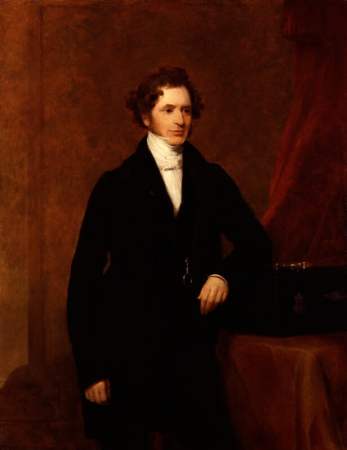
| Born: | 29 Mar 1799 |
| Died: | 23 Oct 1869 |
| Affiliation: | Tory and Whig |
| PM: | 23 Feb 1852 to 17 Dec 1852 20 Feb 1858 to 11 Jun 1859 28 Jun 1866 to 25 Feb 1868 |
| Length: | 3 years, 280 days |
| Title: | 14th Earl of Derby |
| At Eton: | Possibly around 1811 to 1817 |
| Timeline: | 1799: Born in Knowsley Hall, Lancashire, into the aristocratic Stanley family. 1811–1817: Educated at Eton College, then Christ Church, Oxford, where he gained a first-class degree in classics. 1822: Elected MP for Stockbridge as a Whig. 1824–1830s: Represented Preston, then Windsor in the House of Commons. Rapidly rose as a prominent Whig reformer. 1830–1833: Served as Chief Secretary for Ireland under Prime Minister Earl Grey. Introduced reforms in Irish education and administration. 1833–1834: Became Secretary of State for War and the Colonies, helping to implement the Slavery Abolition Act 1833. 1834: Broke with the Whigs over Irish Church policy and joined the Tories under Sir Robert Peel. His switch earned him the nickname “the renegade Stanley”. 1844: Succeeded his father as 14th Earl of Derby, entered the House of Lords. 1852: From February to December, he served his first term as Prime Minister (minority Conservative government). The administration failed to pass a budget and collapsed. 1858–1859: Second term as Prime Minister, leading another minority government. Passed the Government of India Act 1858, transferred the rule of India from the East India Company to the British Crown (following the Indian Rebellion of 1857). 1866–1868: Third term as Prime Minister. Successfully oversaw the passage of the Second Reform Act (1867), extending the vote to many urban working-class men in England and Wales. Though sceptical of reform, Derby supported it to preserve Conservative influence. 1868: In February, he resigned due to ill health and was succeeded by his protégé, Benjamin Disraeli. 1869: Died at Knowsley, aged 70. Buried in the family vault at Ormskirk Parish Church. |
| Notable: | Three-time Prime Minister, more than any other in the 19th century. Longest-serving leader of the Conservative Party (1846–1868). Oversaw the Second Reform Act 1867, a major step toward British democracy. Transitional figure between old Toryism and Disraeli’s modern Conservatism. |
| Sources: | History of the UK Government The Victorian Web Britannica Eton College National Portrait Gallery Museum of Prime Ministers Wikipedia |
| Windlesora: |
William Ewart Gladstone
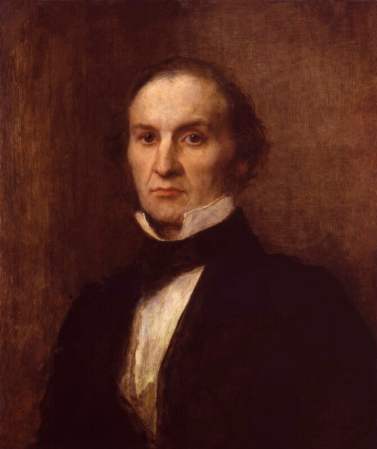
NPG 1126 © National Portrait Gallery, London; CC BY-NC-ND 3.0
| Born: | 29 Dec 1809 |
| Died: | 19 May 1898 |
| Affiliation: | Liberal |
| PM: | 3 Dec 1868 to 17 Feb 1874 23 Apr 1880 to 9 Jun 1885 1 Feb 1886 to 21 Jul 1886 15 Aug 1892 to 2 Mar 1894 |
| Length: | 12 years, 126 days |
| Title: | |
| At Eton: | 1821 to 1828 |
| Constituencies: | 10 Dec 1832 – 1845: Newark-on-Trent 29 Jul 1847 – 11 Jul 1865: Oxford University 11 Jul 1865 – 17 Nov 1868: Lancashire Southern 17 Nov 1868 – 31 Mar 1880: Greenwich 21 Mar 1880 – 13 Jul 1895: Edinburghshire 2 Jul 1886 – 20 Aug 1886: Leith District of Burghs |
| Offices: | 1834 – 1834: Whip 1835 – 1835: Under-Secretary 1841 – 1843: Vice-President of the Board of Trade 1843 – 1845: President of the Board of Trade 1845 – 1846: Secretary of State for the Colonies 1852 – 1855: Chancellor of the Exchequer 1859 – 1866: Chancellor of the Exchequer 1868 – 1874: Prime Minister 1873 – 1874: Chancellor of the Exchequer 1880 – 1885: Prime Minister 1892 – 1894: Prime Minister |
| Timeline: | 1809: Born in Liverpool to a wealthy merchant family involved in trade (including slavery interests, his later views would reject). 1821–1827: Attended Eton College. 1828–1831: Studied at Christ Church, Oxford, excelling in classics and mathematics. Wins the Newdigate Prize for poetry. 1832: Elected MP for Newark as a Tory under the patronage of the Duke of Newcastle. 1834–1835: Served as Junior Lord of the Treasury, then Under-Secretary of State for the Colonies under Sir Robert Peel. 1841–1846: Became President of the Board of Trade and later Colonial Secretary. Supported Peel’s repeal of the Corn Laws (1846), causing a rift in the Conservative Party. He was responsible for the Railway Regulation Act (1844). 1852–1855: Served as Chancellor of the Exchequer under Lord Aberdeen, implementing major financial reforms. 1859–1866: Again Chancellor of the Exchequer under Lord Palmerston and Lord Russell. Developed a reputation for brilliant oratory, economic liberalism, and moral seriousness. 1868–1874: Served his first term as Prime Minister: disestablished the Church of Ireland. Reformed education, voting, and the judiciary and passed the Elementary Education Act (1870). 1874–1880: In opposition. Published ‘The Bulgarian Horrors’ pamphlet (1876), opposing Disraeli’s foreign policy. 1880–1885: Second term as Prime Minister: focused on Irish reform, involved in imperial conflicts (e.g. Egypt and Sudan) and resigned after the death of General Gordon in Khartoum. 1886: Third term as Prime Minister: introduces the First Irish Home Rule Bill, which splits the Liberal Party and is defeated. Resigned after losing support. 1892–1894: Fourth and final term as Prime Minister (aged 82–84). Introduced Second Home Rule Bill (passed Commons but rejected by Lords). Retired in 1894 and was succeeded by Lord Rosebery. 1898: Died at Hawarden Castle, aged 88. Buried in Westminster Abbey. |
| Notable: | Four-time Prime Minister – a record. Architect of Victorian Liberalism: championed free trade, education, civil service reform, Irish Home Rule. Famous rival of Benjamin Disraeli. Known as the “Grand Old Man” of British politics. |
| Sources: | History of the UK Government The Victorian Web Britannica Eton College National Portrait Gallery Museum of Prime Ministers Wikipedia Hansard (1803-2005) |
| Windlesora: | ‘A Place in Life: The Clewer House of Mercy’, by Sheila Rooney, in Windlesora 11 |
Robert Gascoyne-Cecil, 3rd Marquess of Salisbury
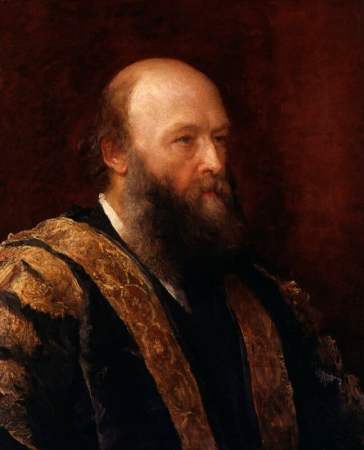
| Born: | 3 Feb 1830 in Hatfield, Hertfordshire |
| Died: | 22 Aug 1903 |
| Affiliation: | Conservative |
| PM: | 23 Jun 1885 to 28 Jan 1886 25 Jul 1886 to 11 Aug 1892 25 Jun 1895 to 11 Jul 1902 |
| Length: | 13 years, 252 days |
| Title: | 3rd Marquess of Salisbury |
| At Eton: | 1840 to 1845 |
| Timeline: | 1830: Born on 3rd February at Hatfield House, Hertfordshire, into the aristocratic Cecil family. 1840s: Educated at Eton College – disliked the harsh and intellectually stifling environment. 1847–1850: Studied at Christ Church, Oxford, earned a first-class degree in mathematics. 1853: Married Georgina Alderson, daughter of a judge. They had 8 children. 1853–1865: Enters Parliament as MP for Stamford (as Viscount Cranborne, his courtesy title). Initially conservative and critical of party leadership. 1866: Became Secretary of State for India under Prime Minister Lord Derby (his future father-in-law). 1867: Resigned over opposition to the Second Reform Act (which expanded the electorate). 1868: Succeeded his father as 3rd Marquess of Salisbury and entered the House of Lords. 1874–1878: Served again as Secretary of State for India under Benjamin Disraeli. 1878–1880: Appointed Foreign Secretary, played a key role at the Congress of Berlin to resolve issues from the Russo-Turkish War. 1881: Became leader of the Conservative Party in the House of Lords after Disraeli’s death. 1885 to 1886: Became Prime Minister for the first time after the fall of Gladstone’s government. Minority Conservative government; short-lived. 1886 to 1892: Returned to power for a second term after the defeat of Gladstone’s First Irish Home Rule Bill. Focused on imperial expansion, diplomacy, and resisting Irish Home Rule. 1895 to 1902: Third term, led the longest-lasting Conservative administration of the century. Also served as Foreign Secretary during most of his premiership. Oversaw the Second Boer War (1899–1902), the maintenance of British imperial power and domestic caution on social reform. 1902: On 11th July, he resigned as Prime Minister, succeeded by his nephew, Arthur Balfour. 1903: Died at Hatfield House, aged 73. |
| Notable: | Three-time Prime Minister serving as the longest consecutive tenure as Foreign Secretary in British history (13 years total). Opposed Irish Home Rule. Architect of “Splendid Isolation” – a foreign policy keeping Britain out of European alliances. Strengthened the British Empire while resisting democratic reform at home. |
| Sources: | History of the UK Government The Victorian Web Britannica Eton College National Portrait Gallery Museum of Prime Ministers Wikipedia |
| Windlesora: |
Archibald Primrose, Earl of Rosebery
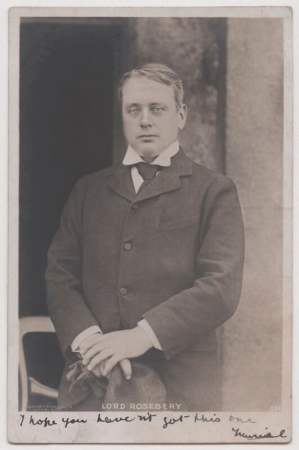
| Born: | 7 May 1847 in Mayfair |
| Died: | 21 May 1929 |
| Affiliation: | Liberal |
| PMs: | 5 Mar 1894 to 22 Jun 1895 |
| Length: | 1 year, 109 days |
| Title: | 5th Earl of Rosebery 1st Earl of Midlothian |
| At Eton: | 1860 to 1865 |
| Timeline: | 1847: Born in London into a Scottish aristocratic family. Styled Lord Dalmeny until he inherited the earldom in 1868. 1850s–1860s: Educated at Eton College. Later attended Christ Church, Oxford, but left without taking a degree. 1868: Inherited the title of 5th Earl of Rosebery after the death of his grandfather. Entered the House of Lords at age 21. 1878: Married Hannah de Rothschild, daughter of Baron Mayer de Rothschild – one of the richest women in Britain. Gained enormous wealth, boosting his political influence. 1881–1883: Appointed Under-Secretary of State for the Home Department in Gladstone’s second government. 1885: Briefly served as Lord Privy Seal and then as Secretary of State for Foreign Affairs under Gladstone. 1886: Resigned with Gladstone over Irish Home Rule crisis. Delivered a notable speech supporting Home Rule – a position that later contributed to his political isolation. 1892–1894: Returned as Foreign Secretary in Gladstone’s fourth (and final) government. 1894: On 5th March, became Prime Minister after Gladstone’s retirement, at age 46. 1894–1895: Served as Prime Minister for just over a year. His government suffers from a lack of support, especially over his vague stance on Home Rule and failure to control the divided Liberal Party. Resigned after defeat in a vote on army supplies. 1896: Officially resigned as leader of the Liberal Party and withdrew from active politics. 1900–1910s: Remained influential as a public speaker and writer. Chaired several public commissions and was considered a respected elder statesman. 1929: Died at The Durdans, his estate near Epsom, aged 82. Buried at Dalmeny, near Edinburgh. |
| Notable: | Advocate of British imperial expansion -wanted Britain to be a global power. Coined the phrase: “Empire must be the outer policy of Liberalism.” He said he was afraid of two people: Queen Victoria and Count Otto von Bismarck. He gambled heavily when he was younger, but as he got older he collected books, pictures and silver and to keeping racehorses. |
| Sources: | History of the UK Government The Victorian Web Britannica Eton College National Portrait Gallery Museum of Prime Ministers Wikipedia |
| Windlesora: |
Arthur James Balfour
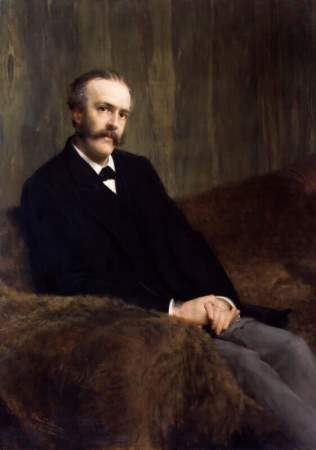
by Sir Lawrence Alma-Tadema, 1891; NPG 2949 © National Portrait Gallery, London; CC BY-NC-ND 3.0
| Born: | 25 Jul 1848 in Whittingehame, East Lothian |
| Died: | 19 Mar 1930 |
| Affiliation: | Conservative |
| PM: | 12 Jul 1902 to 4 Dec 1905 |
| Length: | 3 years, 146 days |
| Title: | 1922 – 19 Mar 1930: 1st Earl of Balfour 5 May 1922 – 19 Mar 1930: Viscount Traprain |
| At Eton: | 1859 to 1866 |
| Constituencies: | 31 Jan 1874 – 24 Nov 1885: Hertford 24 Nov 1885 – 12 Jan 1906: Manchester East 27 Feb 1906 – 14 Dec 1918: City of London 14 Dec 1918 – 5 May 1922: City of London |
| Offices: | 1878 – 1880: PPS 1885 – 1885: President of the Board of Local Government 1886 – 1887: Secretary for Scotland 1887 – 1891: Chief Secretary for Ireland 1891 – 1892: First Lord of the Treasury 1891 – 1892: Leader of the House of Commons 1895 – 1905: Leader of the House of Commons 1895 – 1905: First Lord of the Treasury 1902 – 1903: Lord Privy Seal 1902 – 1905: Prime Minister 1915 – 1916: First Lord of the Admiralty 1916 – 1919: Secretary of State for Foreign Affairs 1919 – 1922: Lord President of the Council |
| Timeline: | 1848: Born at Whittingehame House, East Lothian, Scotland, into a wealthy and politically connected family. Nephew of Robert Gascoyne-Cecil, 3rd Marquess of Salisbury (future Prime Minister and Balfour’s political mentor). 1859–1866: Educated at Eton College. 1866–1870: Studied at Trinity College, Cambridge, graduated with a degree in moral sciences (philosophy). 1874: Elected MP for Hertford as a Conservative – begins a long parliamentary career. 1878–1880: Served as Private Secretary to his uncle, Foreign Secretary and later Prime Minister Lord Salisbury. 1885–1906: Elected MP for Manchester East, then City of London. 1887–1891: Appointed Chief Secretary for Ireland under Salisbury — gained a reputation for firmness (nicknamed “Bloody Balfour” by Irish nationalists). 1891–1892: Became First Lord of the Treasury and Leader of the House of Commons. 1895–1902: Served as Leader of the House and First Lord of the Treasury under Salisbury. Effectively acted as Deputy Prime Minister. 1902: On 11th July became Prime Minister after Salisbury’s retirement. 1902–1905: As Prime Minister, oversaw the Education Act (1902) which modernised the education system, Entente Cordiale (1904), a diplomatic agreement with France and a Tariff Reform crisis (internal party conflict over free trade vs protectionism). 1905: In December, he resigned after losing support, failing to manage party divisions. 1906: Conservatives suffered a landslide defeat to Liberals; Balfour lost his seat but returned to Parliament via a by-election. 1911: Resigned as Leader of the Conservative Party. 1915–1916: Served as First Lord of the Admiralty under Prime Minister Asquith in WWI coalition government. 1916–1919: Appointed Foreign Secretary under Lloyd George. 1917: On 2nd November, the Balfour Declaration was issued, which established ‘a national home for the Jewish people’ in the Ottoman region of Palestine, now Israel – a pivotal moment in Middle Eastern history. 1919–1922: Served as Lord President of the Council and attended the Versailles Peace Conference. 1922–1929: Continued in various cabinet roles; elevated to the Earl of Balfour in 1922. 1930: Died in Woking, Surrey, aged 81. Buried in Whittingehame, East Lothian. |
| Notable: | Author of the ‘Balfour Declaration’ (1917)’. Known for philosophical writings like ‘The Foundations of Belief‘ (1895). Seen as an intellectual, cautious Conservative, more comfortable with ideas than party management |
| Sources: | History of the UK Government The Victorian Web Britannica Eton College National Portrait Gallery Museum of Prime Ministers Wikipedia Hansard (1803-2005) |
| Windlesora: |
Sir Anthony Eden, MC
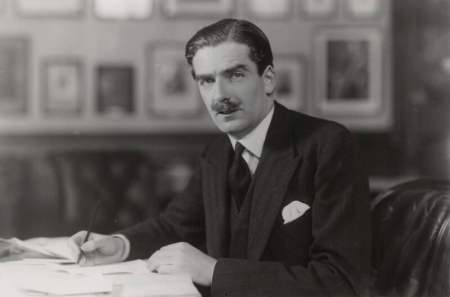
| Born: | 12 Jun 1897 in Rushyford, County Durham |
| Died: | 14 Jan 1977 |
| Affiliation: | Conservative |
| PM: | 6 Ap 1955 to 9 Jan 1957 |
| Length: | 1 year, 279 days |
| Title: | 1961 – January 14, 1977: 1st Earl of Avon 12 Jul 1961 – 14 Jan 1977: Viscount of Royal Leamington Spa |
| At Eton: | 1911 to 1915 |
| Constituencies: | 6 Dec 1923 – 11 Jan 1957: Warwick and Leamington |
| Offices: | 1924 – 1926: PPS 1926 – 1929: PPS 1931 – 1934: Parliamentary Under-Secretary of State 1934 – 1935: Lord Privy Seal 1935 – 1935: Minister of State 1935 – 1938: Secretary of State for Foreign Affairs 1939 – 1940: Secretary of State for the Dominions 1940 – 1945: Secretary of State for Foreign Affairs 1940 – 1940: Secretary of State for War 1942 – 1945: Leader of the House of Commons 1951 – 1955: Secretary of State for Foreign Affairs 1951 – 1955: Deputy Prime Minister 1955 – 1957: Prime Minister |
| Timeline: | 1897: Born Robert Anthony Eden on 12th June in County Durham, into an aristocratic family. 1911–1915: Educated at Eton College, where he excelled in classics and languages. 1915–1919 (WW1): Joined the King’s Royal Rifle Corps, fought in France and earned the Military Cross. At the age of 21, he became the youngest Brigade major in the British army. 1919–1922: Studied Oriental languages (Persian and Arabic) at Christ Church, Oxford. 1923: Elected MP for Warwick and Leamington at age 26. 1931–1933: Served as Under-Secretary of State for Foreign Affairs under Ramsay MacDonald. 1935: Briefly became Minister for League of Nations Affairs, then Foreign Secretary under Stanley Baldwin. 1935–1938: As Foreign Secretary, he criticised appeasement of fascist regimes. Resigned in 1938 in protest against Neville Chamberlain’s appeasement of Mussolini. 1940–1945 (WWII): Returned to office as Foreign Secretary under Winston Churchill. Played a major role in Allied diplomacy and wartime conferences. Built relationships with Roosevelt and Stalin. 1945: Conservatives lost the election; Eden went into opposition. 1951: Conservatives returned to power; Eden became Foreign Secretary again under Churchill. 1955: In April, Churchill retired and Eden became Prime Minister. Won the general election shortly after becoming PM, with a strong majority. 1956: The Suez Crisis: Eden authorised secret military action with France and Israel to retake the Suez Canal after Egypt nationalised it; the invasion is condemned by the United States, UN, and Soviet Union; international backlash forces a humiliating withdrawal. Eden’s health and credibility suffer greatly. 1957: On 9th January, resigned as Prime Minister, citing ill health. 1961: Published Full Circle, the first volume of memoirs. 1962: Created the Earl of Avon and Viscount Eden. 1977: Died in Wiltshire, aged 79. |
| Notable: | Remembered for his elegance and diplomatic skill, early resistance to appeasement and his leadership during Suez Crisis, which tarnished his reputation. |
| Sources: | History of the UK Government Britannica Eton College National Portrait Gallery Museum of Prime Ministers Wikipedia Hansard (1803-2003) |
| Windlesora: |
Harold Macmillan, 1st Earl of Stockton
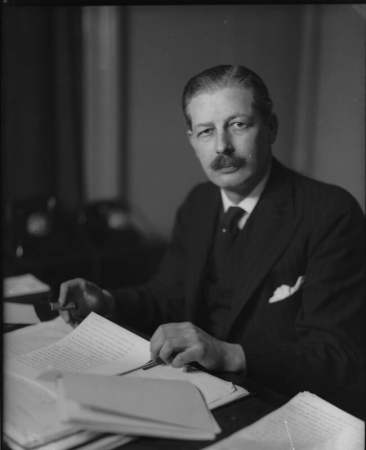
| Born: | 10 Feb 1894, London |
| Died: | 29 Dec 1986 |
| Affiliation: | Conservative |
| PM: | 10 Jan 1957 to 18 Oct 1963 |
| Length: | 6 years, 281 days |
| Titles: | 1 Jan 1984 – 31 Dec 1986: Viscount Macmillan of Ovenden 1984 – 29 Dec 1986: 1st Earl of Stockton Earl of Stockton February 24, 1984 – December 29, 1986 |
| At Eton: | Unknown and brief due to illness |
| Constituencies: | 29 Oct 1924 – 30 May 1929: Stockton-on-Tees 27 Oct 1931 – 5 Jul 1945: Stockton-on-Tees 14 Nov 1945 – 15 Oct 1964: Bromley |
| Offices: | 1942 – 1943: Under-Secretary 1942 – 1945: Minister 1945 – 1945: Secretary State for Air 1951 – 1954: Minister of Housing 1954 – 1955: Minister of Defence 1955 – 1955: Secretary of State for Foreign Affairs 1955 – 1957: Chancellor of the Exchequer 1957 – 1963: Prime Minister |
| Timeline: | 1894: Born Maurice Harold Macmillan on 10th February in Chelsea, London, to a wealthy publishing family (Macmillan Publishers). 1903–1910s: Educated at Summer Fields School and then Eton College. 1912–1914: Attended Balliol College, Oxford, studying classics. Studies were interrupted by World War I. 1914–1918 (WW1): Served in the Grenadier Guards and was seriously wounded three times in France. Returned home a decorated officer, shaped by the war’s trauma. 1920: Married Lady Dorothy Cavendish, daughter of the Duke of Devonshire. The marriage is politically advantageous but personally strained. 1924: Elected MP for Stockton-on-Tees. 1929: Lost his seat in a Labour landslide but regained it in 1931. 1930s: Took an unusual left-leaning Conservative stance by advocating public works to fight unemployment in the Depression. 1940–1945 (WWII): Served in Churchill’s wartime government as Parliamentary Secretary to the Ministry of Supply and later as Minister Resident in the Mediterranean. 1945: Lost seat again in a Labour landslide. 1951: Returned to government after Conservative victory under Churchill and was appointed Minister of Housing; pledged to build 300,000 homes a year. 1954: Promoted to Minister of Defence. 1955: Became Foreign Secretary, then Chancellor of the Exchequer under Eden. 1957: In January became Prime Minister after Anthony Eden resigned due to the Suez Crisis. 1957–1959: Restored Conservative confidence and economic optimism, coining the famous phrase: “Most of our people have never had it so good”. 1959: Won the general election with a large majority. 1960–1963: Faced major challenges such as decolonisation (began withdrawal from Africa and the Caribbean). The Wind of Change speech (1960) signals UK’s shifting stance on the empire. Attempted to join the European Economic Community (EEC) but was vetoed by France in 1963. Cold War diplomacy with Kennedy and Khrushchev. 1962: The “Night of the Long Knives” saw seven cabinet ministers sacked in a major reshuffle. 1963: In October, he resigned due to health issues (prostate problems) and pressure from scandals (e.g., the Profumo Affair). Succeeded by Alec Douglas-Home. 1964–1986: Wrote memoirs (6 volumes), remaining an elder statesman. Critical of Margaret Thatcher in the 1980s. 1984: Created Earl of Stockton. 1986: On 29th December, he died, aged 92. |
| Notable: | Guided Britain through post-Suez transition with stability and presided over economic prosperity and beginning of decolonization. Famous for: “You’ve never had it so good” and “Wind of Change” speech in Africa. Also known for his Conservative pragmatism and aristocratic poise. His nickname was ‘Supermac’. |
| Sources: | History of the UK Government Britannica Eton College National Portrait Gallery Museum of Prime Ministers Wikipedia Hansard (1803-2005) |
| Windlesora: |
Alec Douglas-Home, Earl of Home
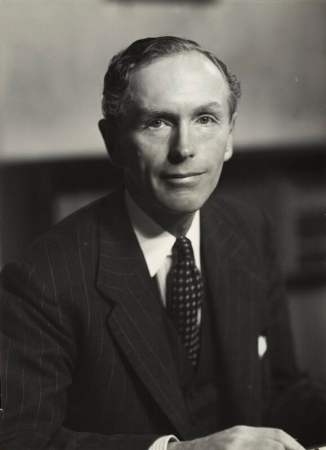
| Born: | 2 Jul 1903 in London |
| Died: | 9 Oct 1995 |
| Affiliation: | Conservative |
| PM: | 18 Oct 1963 to 16 Oct 1964 |
| Length: | 363 days |
| Title: | 1951 – 1995: 14th Earl of Home 1951 – 1995: Baron Douglas of Douglas 1963 – 1995: Earl of Home 1963 – 1995: Lord Home 1963 – 1995: Lord Dunglas 1974 – 1995: Baron Home of the Hirsel of Coldstream Other (Hansard): 1951 – 1995: Earl of Home 1951 – 1995 Lord Dunglas 1951 – 1995 Lord Home |
| At Eton: | c. 1916 to 1921 |
| Constituencies: | 27 Oct 1931 – 5 Jul 1945: Lanark 23 Feb 1950 – 11 Jul 1951: Lanark 7 Nov 1963 – 10 Oct 1974: Kinross and West Perthshire |
| Offices: | 1935 – 1940: PPS 1951 – 1955: Minister of State 1960 – 1963: Secretary of State for Foreign Affairs 1963 – 1964: Prime Minister |
| Timeline: | 1903: Born Alexander Frederick Douglas-Home in Mayfair, London, into an aristocratic Scottish family. Styled Lord Dunglass from 1918 until he inherited the earldom in 1951. 1910s–1920s: Educated at Ludgrove School, then Eton College. Studied history and politics at Christ Church, Oxford. He was a talented cricketer playing first-class cricket for Oxford University and Middlesex. 1924: Served in the Territorial Army as a lieutenant in the Lanarkshire Yeomanry, and was promoted to captain in 1928. 1931: Elected MP for Lanark. 1936–1940: Served as Private Secretary to Prime Minister Neville Chamberlain. Present during key moments leading up to WWII (including the Munich Agreement). 1940: Diagnosed with spinal tuberculosis; spends two years recovering in a plaster cast. Did not serve in WWII due to illness. 1945: Lost seat in post-war Labour landslide. 1951: Inherited his father’s title and became the 14th Earl of Home. Moved to the House of Lords. 1955–1960: Served in various roles, including Minister of State for Scottish Affairs and Secretary of State for Commonwealth Relations. 1960–1963: Appointed Foreign Secretary under Harold Macmillan. 1963: In October, following Macmillan’s resignation, the Queen appointed Home as Prime Minister. He was a controversial choice was seen as old-fashioned and aristocratic. 1963: On 23rd October, he renounced his peerage under the Peerage Act 1963 to sit in the House of Commons. Wins a by-election to become MP for Kinross and West Perthshire. 1964: In October, called a general election; Conservatives lost to Harold Wilson’s Labour Party. His term as Prime Minister lasted just under one year. 1964–1974: Remained an MP and senior Conservative figure. Returned as Foreign Secretary (1970–1974) under Edward Heath, helping to negotiate with Rhodesia (now Zimbabwe). 1974: Retired from the House of Commons. Re-entered the House of Lords as a life peer, Baron Home of the Hirsel. 1980s–1990s: Published his memoirs ‘The Way the Wind Blows‘ (1976) and lived quietly at The Hirsel, his estate in Berwickshire. 1995: Died, aged 92. |
| Notable: | Last Prime Minister from the House of Lords (though renounced title to govern from Commons) and was known for modesty, charm, and traditional aristocratic demeanor. Often underestimated, but respected across party lines. His premiership was the briefest of the 20th Century, lasting two days short of a year. He represented Britain at the funeral of assassinated US President John F. Kennedy in November 1963. |
| Sources: | History of the UK Government Britannica Eton College National Portrait Gallery Museum of Prime Ministers Wikipedia Hansard (1803-2005) |
| Windlesora: |
David Cameron
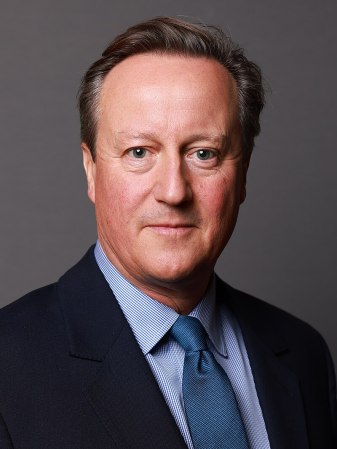
| Born: | 9 Oct 1966 in London |
| Died: | n/a |
| Affiliation: | Conservative |
| PM: | 11 May 2010 to 13 Jul 2016 |
| Length: | 6 years, 63 days |
| Title: | 2023 – present: Lord Cameron of Chipping Norton |
| At Eton: | 1979 to 1984 |
| Constituencies: | 1997 – 2024: Witney |
| Offices: | 2010 – 2016 Prime Minister |
| Timeline: | 1966: Born David William Donald Cameron in London to a wealthy upper-class family. 1979–1984: Educated at Heatherdown School, then Eton College (1979–1984). Excelled academically and socially. 1985–1988: Studied Philosophy, Politics, and Economics (PPE) at Brasenose College, Oxford. Graduated with a first-class degree. Member of the infamous Bullingdon Club. 1979–1984: Joined the Conservative Research Department. Briefly worked as a special adviser to Norman Lamont (Chancellor) and Michael Howard (Home Secretary). 1994–2001: Worked in corporate affairs at Carlton TV. 2001: Elected MP for Witney in Oxfordshire. 2003–2004: Worked as Director of Policy Coordination for the Conservative Party. 2005: Gained national attention at the Conservative Party Conference. Won leadership election, became Leader of the Conservative Party (age 39). 2010: In May, formed a coalition government with the Liberal Democrats and became Prime Minister at age 43 – the youngest since Lord Liverpool (1812). 2010–2015: Introduced austerity measures to reduce the budget deficit. Launched welfare reforms and education reforms. Legalised same-sex marriage (2013). Oversaw intervention in Libya (2011). Managed UK response to the Scottish independence referendum (2014) – Scotland narrowly voted to stay in the UK. 2015: In May, won outright majority in general election, ending the coalition. 2013: Pledged an EU referendum if Conservatives won the 2015 election. 2016: On 23rd June, the UK voted to leave the European Union (52% to 48%) in the Brexit referendum. 2016: On 24th June, he resigned as Prime Minister, having campaigned to remain in the EU. He was succeeded by Theresa May. 2016: In September, he resigned as MP for Witney and exited frontline politics. 2019: Published memoir ‘For the Record‘ – defended his legacy and explained the Brexit referendum. 2023: In November, returned to government as Foreign Secretary in Rishi Sunak’s cabinet. Granted a life peerage as Lord Cameron of Chipping Norton. |
| Notable: | Known for leading during austerity and coalition government, legalising same-sex marriage and calling the Brexit referendum. He attempted to modernise the Conservative Party (“Compassionate Conservatism“). |
| Sources: | History of the UK Government Britannica Eton College Museum of Prime Ministers Wikipedia UK Parliament |
| Windlesora: |
Boris Johnson

| Born: | 19 Jun 1964 |
| Died: | n/a |
| Affiliation: | Conservative |
| PM: | 24 Jul 2019 to 6 Sep 2022 |
| Length: | 3 years, 44 days |
| Title: | |
| At Eton: | 1977 to 1982 |
| Constituencies: | 1999 – 2008: Henley 2015 – 2024: Uxbridge |
| Offices: | 2016 – 2018: Foreign Secretary 2019 – 2022: Prime Minister |
| Timeline: | 1964: Born Alexander Boris de Pfeffel Johnson in NYC, USA. Held British and American citizenship (renounced latter in 2016). 1975–1981: Attended Ashdown House Prep School, then Eton College. Becomes School Captain (Head Boy) and excels in classics and debating. 1983–1987: Studied Classics at Balliol College, Oxford. Member of the Bullingdon Club. Elected president of the Oxford Union (1986). 1987: Began career at The Times, but was fired for fabricating a quote. 1989–1994: Worked as Brussels correspondent for The Daily Telegraph, known for mocking EU regulations. 1999–2005: Editor of The Spectator while also starting a political career. 2001: Elected MP for Henley. 2003–2004: Vice-Chairman of the Conservative Party; later dismissed over personal scandals. 2005–2008: Remained a high-profile backbencher and author/commentator. 2008: In May, elected Mayor of London, defeating Ken Livingstone. 2012: Re-elected as Mayor. Oversaw the 2012 London Olympics and the “Boris Bikes” scheme. 2015: Elected MP for Uxbridge and South Ruislip while still Mayor. 2016: In February, announced support for the Leave campaign in the EU referendum. 2016: On 23rd June, the UK voted to leave the EU (Brexit). Johnson was a key figure in the Leave campaign victory. The following month, appointed Foreign Secretary. 2018: In July, resigned over disagreement with the Brexit plan. 2019: On 24th July, became Prime Minister after Theresa May resigned. Promised to “Get Brexit Done“. 2019: In December, won a landslide general election victory with a pro-Brexit platform. 2020: On 31st January, the UK officially left the EU. 2020: In March, ordered a lockdown in UK as COVID-19 spread. 2020: In April, hospitalised in intensive care with COVID-19. 2021: Oversaw vaccine rollout and reopened strategy. 2021–2022: Faced growing backlash over “Partygate” regarding gatherings in Downing Street during the COVID-19 lockdowns. 2022: On 7th July, resigned as Prime Minister following mass cabinet resignations. Remained as caretaker until a successor was chosen. Liz Truss becomes Prime Minister. 2023: Resigned as MP after a parliamentary report found he misled Parliament over lockdown parties. Returned to writing and public speaking; published newspaper columns. Remains a significant but divisive figure in UK politics. |
| Notable: | Whilst at Eton, he was awarded a King’s Scholarship, a prestigious academic scholarship at Eton. He was President of the Oxford Union in 1986 Known for delivering Brexit and handling the COVID-19 pandemic. He has significant personal charisma and eccentricities, often creating controversy such as the “Partygate” scandal. |
| Sources: | History of the UK Government Britannica Eton College Museum of Prime Ministers Wikipedia UK Parliament |
| Windlesora: |
 Windsor Local History Group