
An Adventure in France
Published in Windlesora 35
© WLHG 2019
Windsor schoolgirl Emily Handcock, was in France at the outbreak of the First World War. She escaped with the French family she was staying with, and wrote an article detailing her ‘adventure’.
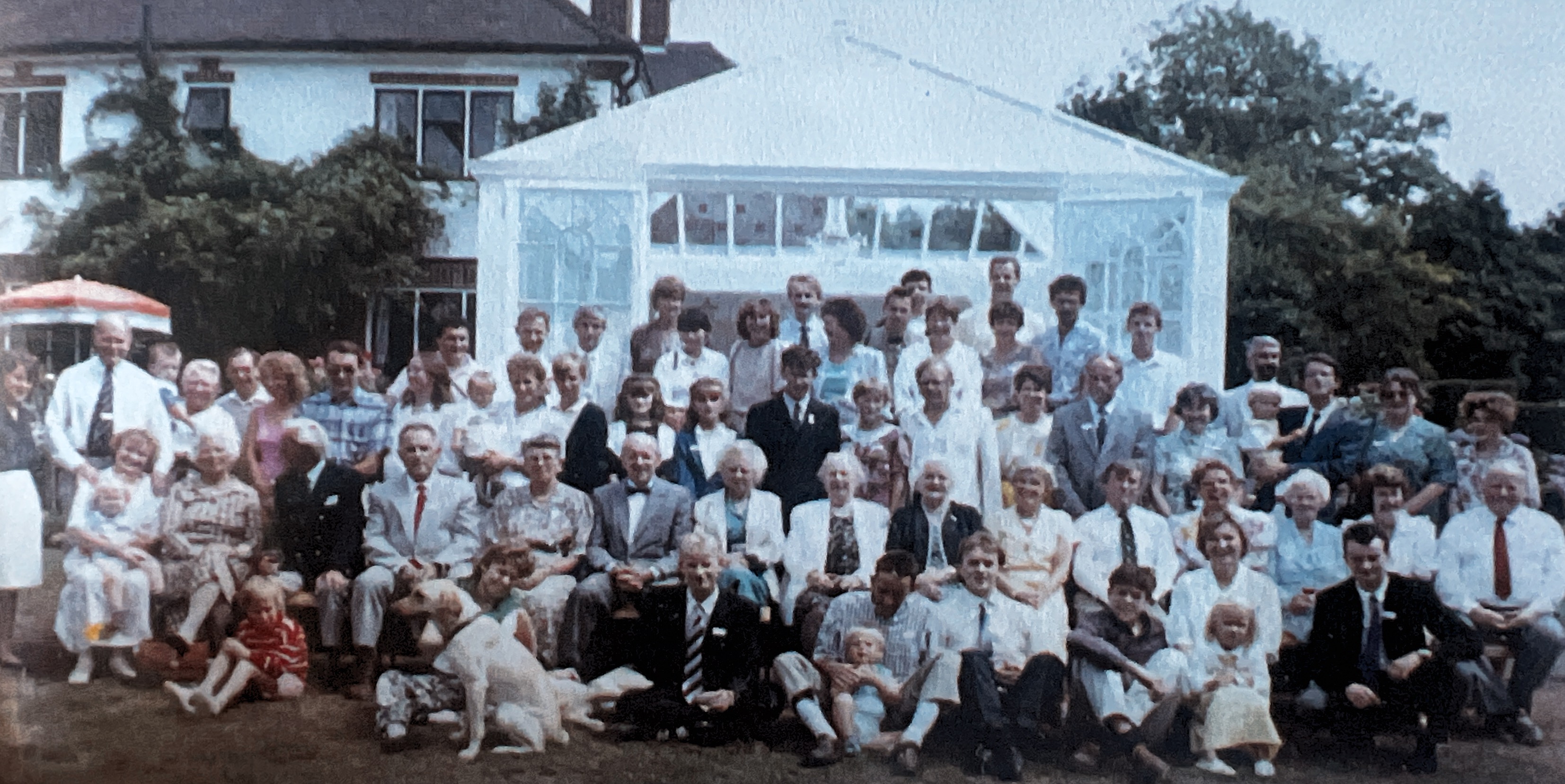
The two families – English and French have remained close friends ever since. Family members meet often, and over the years have organised large reunions.
This is Emily’s story in her own words.
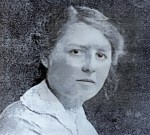
© John Handcock
Clermont is a small, though nevertheless an important town, about thirty-five miles north of Paris on a direct route from that town to the coast, or into Belgium. The family of whom this story is told, at the time of the declaration of war, consisted of the mother and father, the daughter and myself, an English girl staying there for my holidays.
At the outbreak of the war and indeed during the time that the great battle was raging in Belgium, this town was peaceful and uneventful enough, though its sad and anxious appearance kept one well aware of the terrible struggle taking place outside, in which four hundred brave sons of this little town were taking their part.
Soon, however, came the news of the rapid advance of the Germans in the north of France, yet the quiet of this little town was unchanged, until one morning, that of the last day of August, we were astonished to see French soldiers halting outside the house and calling for food and water. They were retreating, although they did not say so at the time, and all through that day the town was to Paris, and we were kept busy distributing all that we had to give, bread, wine, meat, fruits, chocolate, which they always welcomed, and even pencils and picture post cards, to enable them to write to their homes, in return for all of which we received souvenirs of the Germans. It was very interesting work for the soldiers were always gay and happy, although very tired and hot with marching under the terrible heat of the midday sun.
An interesting incident is related by Monsieur B. Early on this Monday morning he was talking to a French officer of the danger of staying in Clermont, and said, “Monsieur, I have heard the guns this morning,” but the officer replied, “It is not possible, Monsieur, and just as he had uttered these words we heard a “bang” in the distance. Whether the officer really believed that there was no danger, or whether he was anxious to reassure us, it is impossible to say, but it was the same with all the soldiers, they were certain of our safety.
The first news of urgent danger which reached our ears was brought by the daughter, a Red Cross nurse, who was returning to her family with the latest and truest news of the situation, on the evacuation of a hospital at St. Just. A great battle was expected to commence at six o’clock the next morning on a line some sixteen kilometres north of Clermont. If the Allies were victorious, all would be well, but if they were defeated, the Germans would certainly advance rapidly.
It was then about seven in the evening, and the soldiers now held the town, posting sentries at all its approaches, and it was necessary to go at once if possible, but the question was, how? There were no trains, no carriages, no motors and no bicycles, and the Mayor had said that no person could leave the town on the morrow. On going into the town, we found that all our friends had left early that day, and we had delayed our departure until it was too late. But the French, however excitable, are a people of determination, and somehow or other, we must leave that town before morning, even if we had to walk. There again we were confronted by another difficulty, for we had no passports: without these, we could not hope to pass the sentinels, and it was now too late to get them. Mademoiselle was a Red Cross nurse; however, an order which is above all respected by the French, and she determined to don her costume, and by that means pass the soldiers, saying that we were her family. So we prepared in the dead of night for our hasty flight.
Before long, however, we heard also of another belated family who were arranging to make their escape in a farm cart, and we agreed to accompany them south until we could get a train, which we expected would be at Creil. This settled, we went to snatch a few hours sleep, and awoke ready to start at two in the morning. It was, of course, quite dark, and, living on the very outskirts of the town, it was rather a gruesome sight as we locked up the house and proceeded with a lamp, wheeling our luggage in a wheelbarrow, to the house of our neighbours. We knocked and knocked, but received no answer. The house was in darkness, and there was no sound but the barking of the dog and the restless movements of the soldiers’ horses posted in every corner. Our friends had failed us.
Nothing was left to us but to set out on foot, and so it happened in the blackness of the night, we set out on our eventful flight from the German troops which entered the town later that day. Despite the sad thoughts of leaving our home to the mercy of the Germans, we were struck by the humorous side of the situation, as “Monsieur” and “Mademoiselle” toiled with the wheelbarrow in advance, whilst Madame and myself, each holding the end of an umbrella on which was suspended the provision basket, brought up the rear, every now and then halting, and sitting on the wheelbarrow for a rest. Presently, a short distance out of the town, we saw two lights, and around them the sentinels. Immediately, we were called to halt, and explain ourselves; this being done we were allowed to pass, thanks to the costume of Mademoiselle, after a close examination. On again we toiled, past farms and through woods, until at last dawn began to break, and we were again called upon to halt by the sentinels outside the town of Rantigny, who again allowed us to pass.
We made our way to the railway station, but there we were informed that no trains except those for the soldiers were running, but that, as “Mademoiselle” was a Red Cross nurse, we should be allowed to travel in the next troop train as far as Creil. So it happened that we waited patiently in the station from five o’clock to half-past seven, during which time the station-master kindly gave us each a hot bowl of chocolate. It was during this long wait that we heard the dull sound of the guns booming in the distance, and we knew that the great battle of the Vise had commenced. The station was full of French soldiers, some of whom I had seen the day before at Clermont, tired, dirty and terribly footsore with their exertions in Alsace and afterwards in the north of France.
At last the expected train arrived, but full of black Moroccan soldiers. There was one truck, however, empty, and into this we climbed with a dozen wounded French soldiers, and in this fashion, sitting on the straw strewed on the floor, we journeyed to Creil, a town since burned. Here followed another long wait, during which we planned our journey to England, via Beauvais, Tournay, Dieppe and Folkestone.
At Beauvais, we saw and conversed with seven English soldiers who had lost their regiment during the battle of Mons, where they had been chased from the field without a shot. Since then, they had wandered about Belgium and France endeavouring to reach Rouen. They were so pleased to see and speak with an English person that they gave me a huge packet of chocolate, no doubt given to them by the good French people from whom they received all their food. They were very happy and enjoying to the full their experience in France, joking with the officials of the railway and winning the hearts of the bountiful French people to whose aid they had come. They said that they would give anything to be back in ‘Merry England’ again, however.
From Beauvais we went to Tournay, where we saw a train full of hungry French soldiers to whom we gave as much food as we could spare, including the chocolate which I had so lately received.
Thus we made our way to Dieppe, which we reached at eight o’clock in the evening, tired after our long and very monotonous journey in the trains crowded with thousands of other refugees like ourselves. It was terrible to see all these poor people flying from their homes. Everywhere the same sight met our eyes; all along the country roads long strings of carts and wagons full of people and their goods, whilst those who possessed no other means toiled along behind. It was sad, very sad to see all this misery.
The next day, we embarked on a crowded steamer for England and reached our destination about midnight.
In the train from Folkestone to London there were in our compartment three Danes, a Belgian, two French people, myself the only English.
This is the story of the flight of only one family among thousands flying daily from their homes, and many, I expect, can tell more thrilling and interesting experiences, but this serves to show what the approach of the Germans really means.
 Windsor Local History Group