
Published in Windlesora 27 (2011)
© WLHG
I recently came across a fascinating account in the British Library printed in 1579 of four women, hanged at Abingdon (the County town then) for witchcraft. These ‘witches‘ had originally come from Windsor, where it was claimed they had brought about the deaths of prominent members of the local community, by witchcraft, during the early 1570s.
In this case we see a number of stereotypical witches accused with both murder and affecting townsfolk of all social classes. Witchcraft in Elizabethan England provoked fear and anger in its population and there was a need to find scapegoats to offer a so-called rational explanation. This frenzy of fear meant that any excuse was good enough for someone to be accused of witchcraft. Most of those who were blamed were elderly women who lived on their own often with pets which they saw as company but were regarded by many as ‘familiars‘ disguised as evil spirits. These somewhat deranged women had no family to vouch for them and were deemed as both outcasts and a burden to society. This was the backdrop to what was to become one of the defining cases of witchcraft in early modern England.
My first impression was that the account of the Windsor Witches was nothing more than fiction. There was no record of any witchcraft trial in Windsor in any book published about the town or indeed the county. Further research, however, using the parish records of New Windsor, showed that a number of characters and places found within the narrative actually existed and this account seemed to chronicle a true event.
There are two accounts of the trial; one in the British Library and the other in the Bodleian. These pamphlets record the crimes of the witches which took place in 1574, and were published in 1579. The British Library pamphlet was published in London by Edward White with the title ‘A rehearsal both straung and true of hainous and horrible actes committed by Elizabeth Style, Alias Rockingham, Mother Dutten, Mother Devell, Mother Margaret, Fower notorious witches, apprehended at Winsore in the Countie of Barks, and at Abington arraigned, condemned and executed on the 28th daye of February laste, Anno. 1579 (1). It can be found in the Stationer’s Register of March 1579.
A second and different account can be found in the Bodleian pamphlet (2). This pamphlet has lost its title page but it is found registered to John Alde in May 1579 and titled ‘A brief treatyse conteyninge the most strange and horrible crueltye of Elizabeth Sule[sic] alias Bockingham[sic] and hir confederates executed at Abington upon Richard Galis‘ (3). This account of events was written from another perspective appearing to be a contemporary account of the afflictions caused to Richard Galis3 but written by his son Richard Junior from his father’s recollections. It tells how Galis Senior personally tried to bring the witches to justice in 1572. However the case was overturned by local magistrates due to lack of evidence.
Richard Galis Senior is very well documented. He was born around 1517 to James and Joan Galis of New Windsor and was educated at Eton, after which in 1533 he went to Kings College Cambridge where he studied law. He was elected Mayor of Windsor three times; in 1561, 1566 and 1570. From 1563 to 1567 Galis was MP for Windsor. He was a controversial figure, calling for the execution of Mary Queen of Scots in 1572. Galis is buried in the South Aisle of the old parish church. Ashmole in his Antiquities of Berkshire of 1719 describes Galis’ memorial as a brass depicting a man in a gown and a woman in the ‘habit of the tymes vailed‘ with an inscription beneath. Under the inscription are figures of his ten sons and two daughters engraved on brass plates. This memorial no longer exists but a painted memorial hatchment bearing the coat of arms of Galis and his wife hangs in the present day church.
His eldest son Richard (the author of the Bodleian pamphlet) was landlord of the Garter Inn in Windsor which is a setting of Shakespeare’s Merry Wives of Windsor. It is possible that Shakespeare may have known Galis Junior and that he was the inspiration for the landlord of the Garter Inn in that play. It is perhaps also possible to draw another parallel to Shakespeare’s play Macbeth (believed to have been written between 1603 and 1607) where three witches are included in the plot. Is it possible that accounts of the trial were familiar to him and gave him inspiration for his ‘Scottish‘ play?
Elizabeth Style was one of those on trial; she is described as ‘alias Rockingham‘ and her name can be found in the extant parish records for New Windsor. They show that Rockingham was her maiden name and that on 1 September 1572 she was married to John Style. The other women were Mother Devell (a corruption of ‘Deuell‘) who lived near to the Pound, and Mother Margaret, a pauper who lived in the Windsor Almshouses. The leader of the group was believed to have been a Mother Seidre who also lived at the Windsor Almshouses but died before her trial. Finally there was Mother not Dutton who lived in Clewer and is described as ‘dwelling within one Hoskins in the adjoining parish of Clewer’ in a house made of straw.
Each member of this group had exceptional ‘magical’ powers and possessed a pet or familiar who were seen by Elizabethan society as evil spirits who aided them in their ‘witchcraft’. Mother Dutton, it was claimed, had psychic abilities and through telepathy could tell what a person wanted before consulting her. She also possessed a toad ‘which lay in a border of green herbs within her garden’ which she fed with her own blood. Mother Devell possessed ‘a spirit in the shape of a black cat and calleth it Jill‘, which she fed with milk mixed with her own blood. Mother Margaret, who got around on crutches, had a kitten called Jenny which she fed with crumbs likewise mingled with her own blood. Finally Elizabeth Style confessed that she kept a rat (described as a wicked spirit) which she called Philip and which she fed blood directly from her right hand.
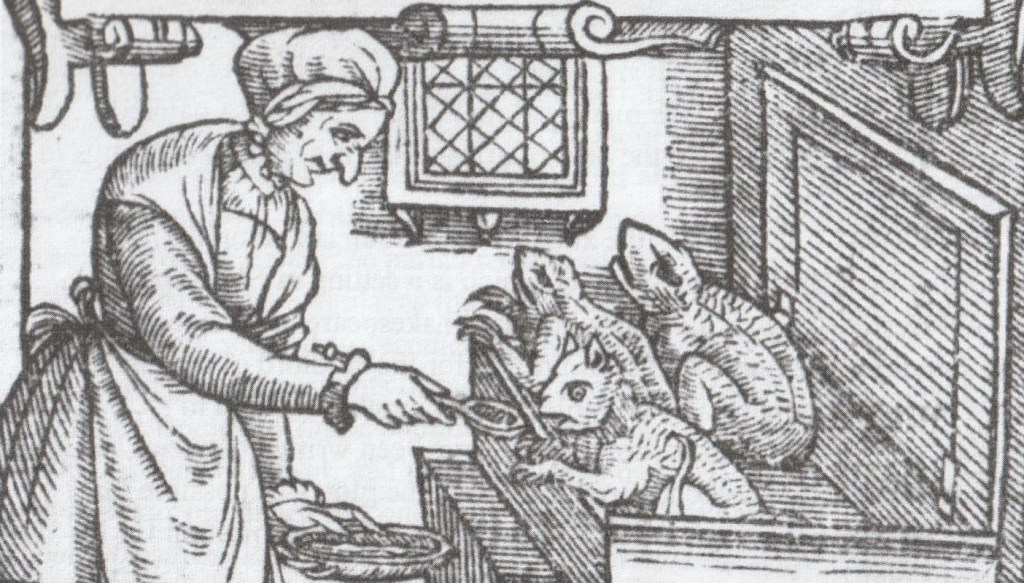
All of these women were very poor and lived on charity and in slum dwellings. The places where they lived can be identified. The manorial pound was originally in Park Street which in the 1650s was known as Pound Street. The almshouses are those which were founded in Sheet Street at Pucket’s Gate in 1503 by William Paynall, chaplain to Thomas Ryder, Mayor of New Windsor. Unfortunately the parish records for Clewer date from 1653 and do not cover the period of interest. The name Hoskins cannot be found in the available historical record.
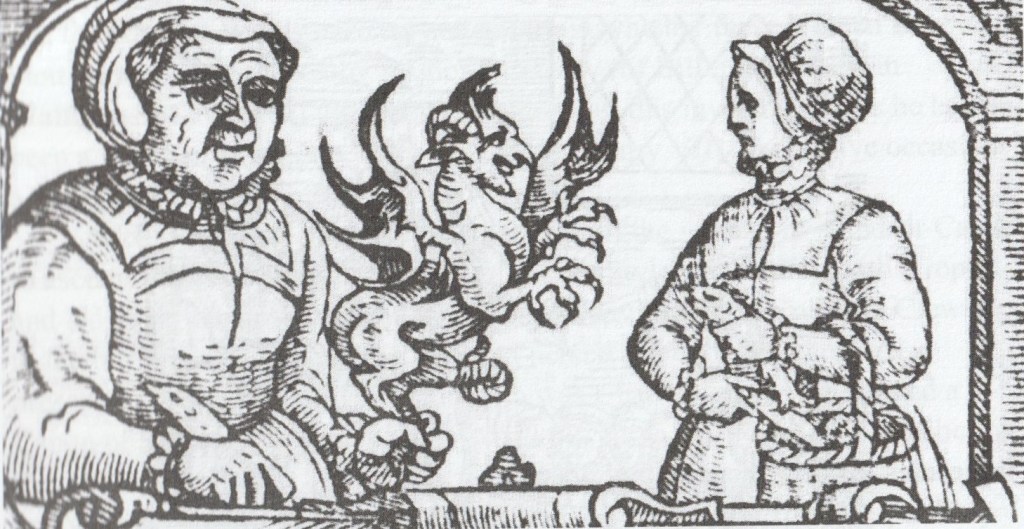
It was claimed that these women met to practise their arts in an area known as ‘the pittes’ at the back of a property owned by a Master Dodge. ‘The pittes‘ (4) can perhaps be identified with ‘Pitts Field’ which appears to have been adjacent to a field called ‘Le Worth‘ later to become Bachelor’s Acre. (It is thought that these were ‘marling’ pits where marl or chalky subsoil was extracted and then mixed with animal dung to produce a kind of fertiliser).
According to the Bodleian pamphlet the four witches had first come to attention of the magistrates as early as 1572; this pamphlet describes the illness which Richard Galis had suffered and how his brother James, when fifteen years old, had fallen out with Mother Dutton and shortly afterwards went mad. Supporting evidence is found in a document of 1603 amongst the Cecil family papers which describes James Galis as a lunatic. The pamphlet next narrates how Richard Galis, when recovered from his illness, brought Mother Dutton from Clewer to Windsor, dragging her by her arm to ‘the hall a prison in Windsor‘. He tried to get the jailor to imprison the woman until she could be seen by the magistrates, but the jailor refused as he had not had instructions from the Mayor or a justice to do so. She was later brought before the Mayor of the town, Richard Redford, but on seeing the old lady he ordered her to be released immediately.
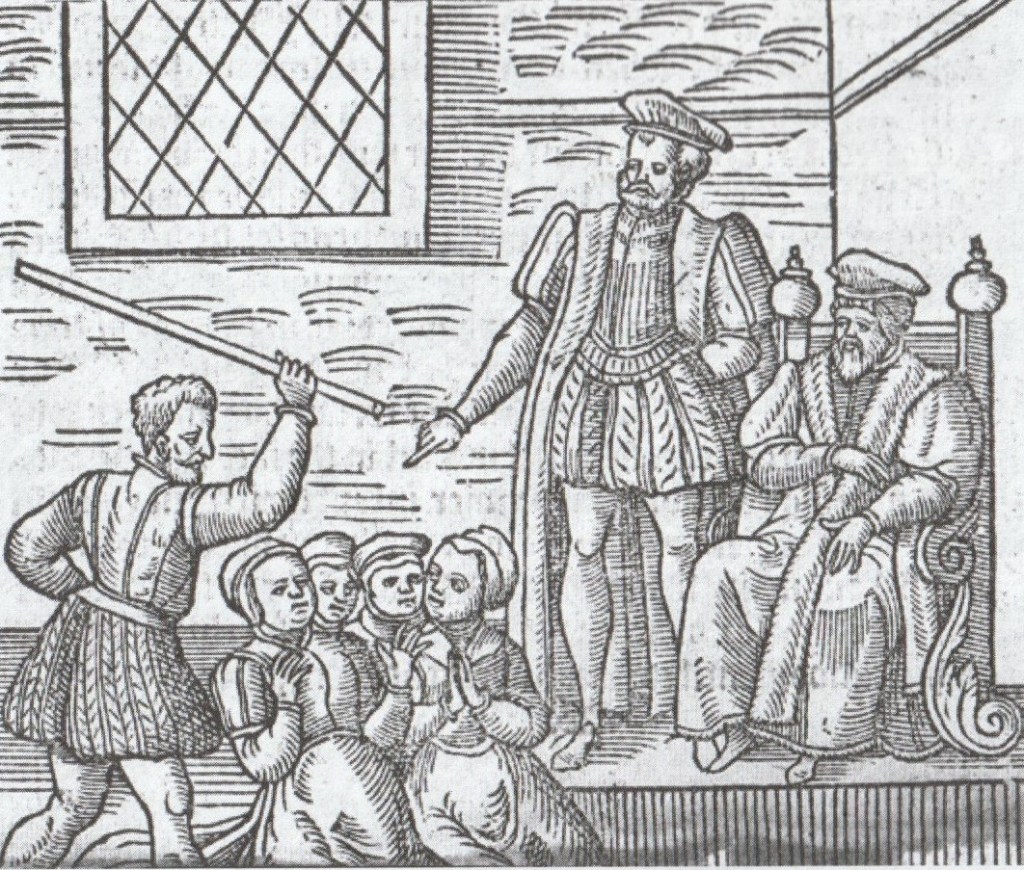
Richard had further contact with the ‘witches‘ when he brought them before a close friend Master Robert Handley who had been ‘bewitched in his limmes‘ and was unable to walk. It was believed his ailment had been brought about through witchcraft. He thought that the witches could confirm that this was the case. Also during this meeting Master Henry Bust, a student in medicine, was present and was ‘charged with holding a good cudgel over their backs‘ in case they tried to carry out some form of magic. The four women told him that they were unable to tell him what the problem was or to offer him any relief.
Some six years later the women again came to the attention of the on authorities. In 1558 three female images made of wax had been discovered on a London dung heap, with bristles stuck in the heart of each. Elizabethan society was very superstitious and it was believed that these images represented Queen Elizabeth I and two of her privy councillors. Similar wax images were found in possession of the Windsor witches.
The Privy Council asked Sir Henry Neville, a local justice of the peace and the Dean of Windsor, to try and ascertain whether these women were plotting to kill the Queen by magic. Sir Henry (of Billingbear Park in Waltham St Lawrence) was chosen to carry out this investigation as he had been a member of the Privy Chamber under Henry VIII and on five occasions a Knight of the Shire of Berkshire.
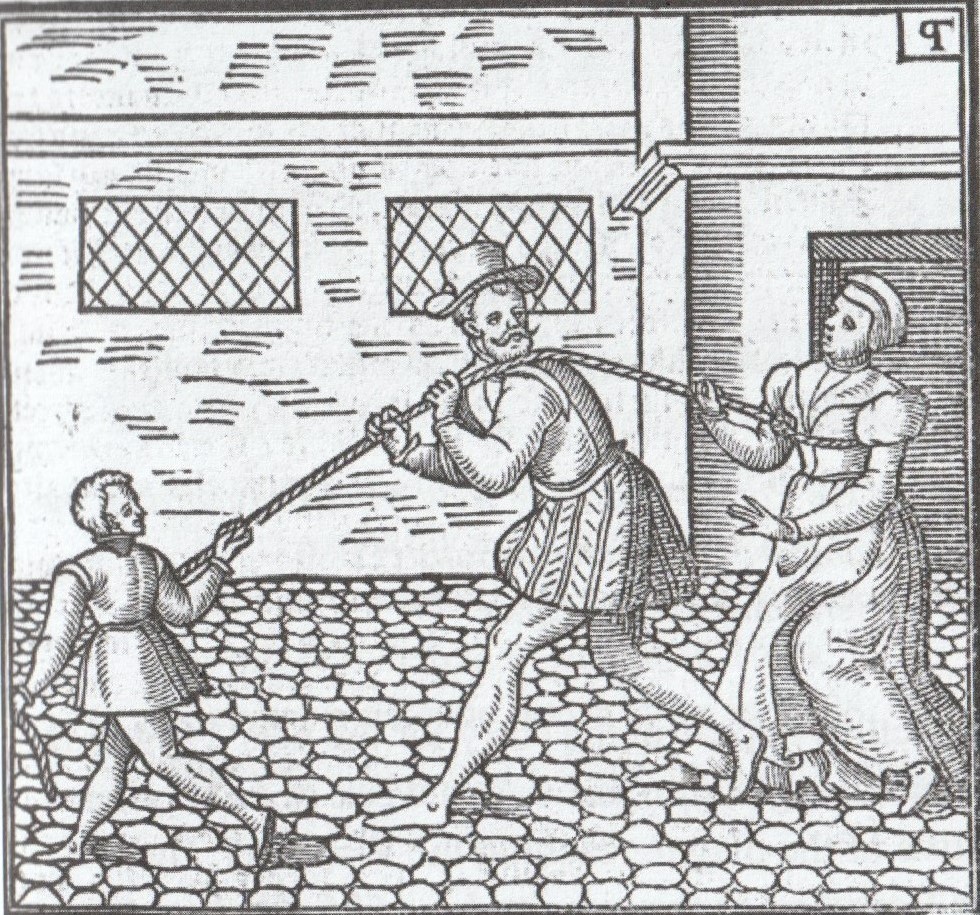
Richard Galis personally brought each of the women to Windsor Castle to ascertain their guilt or otherwise. Elizabeth Style was tied up with a rope and led along the High Street during Market day. Galis then went to Clewer to fetch Mother Dutton who had locked herself in a wooden chest. Also present were Dr William Wickham who was Chaplain to the Queen and a Canon of St George’s Chapel, John Wullard, another Canon and a member of the Stafferton family. The women were examined on their religious education and were told to attend at the parish church the next morning to be ‘publikly in presence of all men be set under the pulpit during the time of the service‘. After that they were sent to Reading to await trial.
Once locked up in Reading jail Elizabeth Style confessed in great detail to all the ‘crimes’ she had committed through witchcraft, including ‘killing‘ a number of Windsor people. Her first victim was ‘one Langford, a farmer dwelling in Windsor by the Thameside’ together with one of his maids. This was followed by ‘Master Galis, who in times past had been Mayor of Windsor‘. Finally she claimed to have murdered two butchers – one called Switcher (5) and the other Mastlin (6).
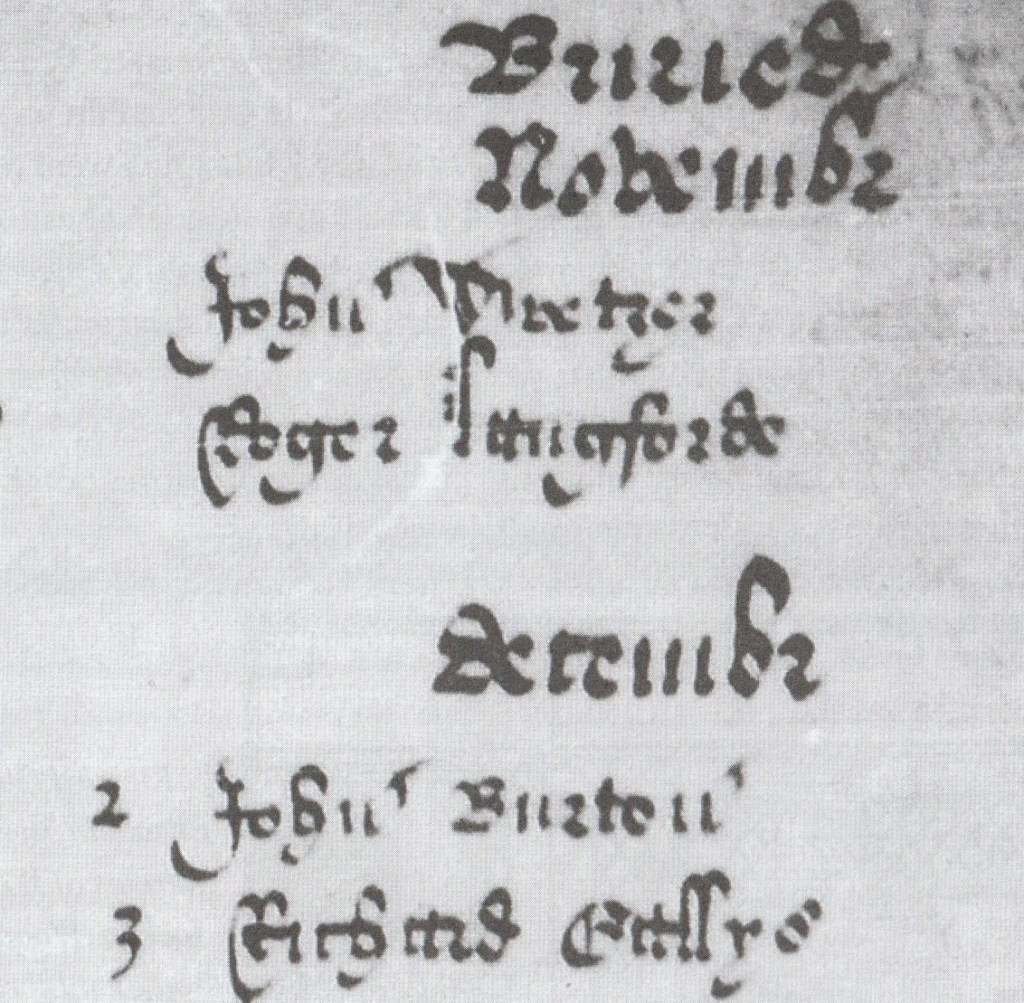
Two of the Windsor victims appear in the entry for the year 1574 in the New Windsor burials register having within just over a week of each other. Could this really be indicative of the plague reaching the Windsor? The plague was certainly rife in Berkshire at this time and in 1576 proclamations were made by the Windsor Corporation in an attempt to stop it spreading. Roger Langforde died in November of that year and his will of 24 November 1574 still exists. He owned a farm in the area near to Windsor Bridge known as the Farmyard. His death was followed by that of Richard Galis, the ex- Mayor, who is recorded as being buried in the parish church on 3 December. It is believed that the Bodleian account was partially written by Richard Galis Senior reciting his dealings (and indeed his brother’s) with the witches before his death in 1574. The tract was then continued by his son Richard to highlight the inefficiency of the local authorities in failing to bring the women to trial in 1572.
Elizabeth Style also claimed to have brought about the death of a man called Saddock’ who had not kept a promise to her. This may have possibly been Robert Saddock (7) who was Mayor of Windsor in 1550. Other acts of ‘witchcraft‘ included killing a cow, and causing illness to a number of the inhabitants of Windsor and Eton. None of the other witches would speak about their crimes but Elizabeth Style’s confession was enough to convict all four of the witches. When Sir Henry Neville had heard all the evidence the convicted women were sent to the Assizes at Abingdon for sentencing. After being found guilty of their crimes they went to their deaths by hanging on 28 February 1579.
Elias Kupferman
References
- British Library Ref: c.27.a.11
- Bodleian Library Ref: Gough Berks. I
- Gallys Road in Dedworth commemorates Richard Galis.
- An Eton College lease of 1609 records three acres situated at Le Worth which abutted land lying on the south side ‘upon the King’s Pitts‘ (ECR 60/12/3/3). In 1629 another lease to John Fishbourne (for the same piece of land) records the rental of three acres in Le Worth adjoining at one side to pits called Batchelors Acre’ (ECR 60/12/3/4). 5.
- This is probably a phonetic spelling for the surname ‘Sweetzer‘ which is commonly found in Windsor at this time. Sylvester Sweetzer is listed as Mayor in 1604.
- Richard Masleyne was Mayor in 1608.
- There is a Saddock’s Farm is in Eton Wick. The farmhouse dates
from c. 1500.
 Windsor Local History Group