
Book Review by Elias Kupfermann
© WLHG
Jim Beavis’ new book fills a niche where very little has been collated on the history of Windsor Racecourse and is part of the author’s research into the histories of a number of racecourses across the country. This publication makes a welcome addition to a comparatively unknown area of Windsor’s history and marks the 150th anniversary of the racecourse.
Racing in the Windsor area can be traced as far back as to the 14th century, when some of Edward IIII’s racehorses were sold in 1360 to pay for major building works at Windsor Castle. Racing in the area did not become a major attraction until the establishment of Ascot racecourse by Queen Anne in 1711. It was known at that time as Windsor and Ascot Heath Races.
Steeplechasing was very popular by the middle of the 19th century and led to increasingly regular military meetings. Indeed, there was a steeplechase course near Combermere Barracks which enjoyed the patronage of the Royal family.
John Frail, a Shrewsbury man and a barber, who rose from humble beginnings to managing Disraeli’s election campaigns in the Midlands, had revived the racecourse in his home town. He saw that a profit could be made in the establishment of a racecourse in Windsor, and went into partnership with John Jenner Saltmarsh who was well known in racing circles. Saltmarsh eventually found some land at Clewer, a mile west of Windsor, owned by William Vansittart MP. In August 1865, Frail and Saltmarsh leased the land for 21 years, and a substantial grandstand, capable of accommodating 2000 people, was erected for a cost of £500. The racecourse opened for business on 5 June 1866 and was well attended.
In 1888, the course was extended with an additional loop, making a figure of eight track which was used particularly for jump races. A new club stand was opened in May 1914, accommodating up to 800 people, and it was noted, it had tip-up seats. It is still in use today.
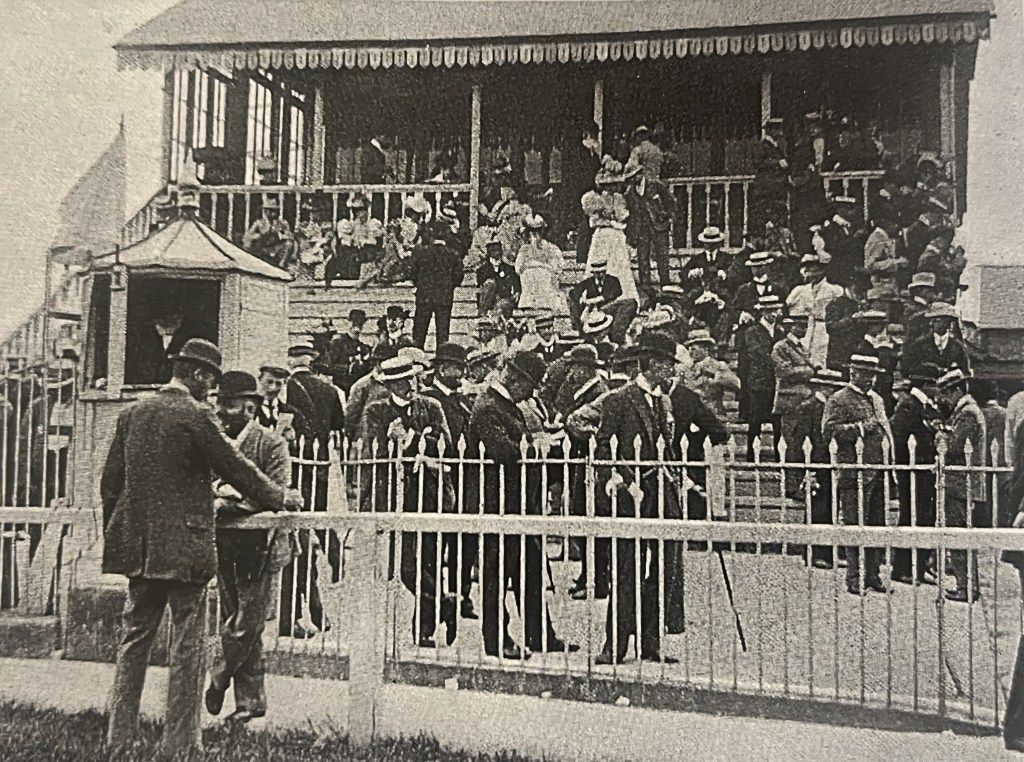
The course continued to be used during the First World, and soldiers counted for two-thirds of the spectators. The racecourse was also a great hit during the Second World War. Winston Churchill was a frequent race-goer, and he was delighted to have his own horse win in 1949.
Mr Beavis told the Windsor Observer:
I think I’ve found lots of stories about the course that haven’t been told before. I certainly hadn’t appreciated its importance during both wars, when it was one of the few courses to stay open and keep racing going. I hope the book will appeal not only to racing fans but also to those interested in the history of the town.
Today the racecourse goes from strength to strength.
To discover more, the book can be purchased from Windsor Racecourse, or through your local bookshops.
 Windsor Local History Group