
Published in Windlesora 31 (2015)
© WLHG
Between 1830 and 1880, twenty of the one hundred Military Knights admitted at Windsor, had been veterans of the Battle of Waterloo, of which six had been wounded, and nine were awarded medals for bravery. They are named here, in order of enrolment, with their enrolment number first, followed by the years they served as Military Knights in Windsor:
| 424 | 1830-1834 | Lieutenant William Jones | 50th or West Kent Regiment: served throughout the Peninsula and was wounded at Vitoria. |
| 428 | 1831-1841 | Quarter-Master Thomas Varley | Royal Horse Guards, The Blues; severely wounded at Waterloo. |
| 431 | 1835-1840 | Paymaster Alexander Strange | 15th East Riding Regiment: awarded a medal for bravery |
| 436 | 1837-1861 | Lieutenant Andrew Heartley | Royal Horse Guards, The Blues; also served throughout the Peninsula. |
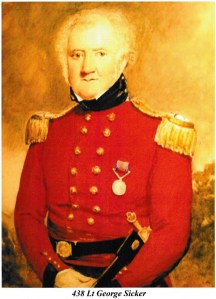
| 438 | 1838-1848 | Lieutenant George Sicker | 11th, Light Dragoons: carried the regimental standard during the Battle, they charged down the fleeing French troops, rode through the soldiers before turning around and herding them back as prisoners. |
| 442 | 1841-1864 | Major Robert Cochrane | 95th, The Rifle Brigade: was slightly wounded at Waterloo and held a war medal with two clasps. |
| 445 | 1842-1851 | Captain Tomas Cradock | 7th, Enniskilling Regiment of Foot: was seriously wounded at Waterloo, and shot through the nose. |
| 452 | 1848-1848 | Quarter-Master James Wightman | Royal Artillery: was wounded during the Peninsula campaign, lost an arm at Waterloo (as Sergeant Major), and held a war medal with seven clasps. He was known to have laid the gun which wounded Marshal Marmont at Salamanca, and caused the loss of his arm. The two men met twice in later years. |
| 453 | 1848-1852 | Lieutenant Henry Griffiths | 15th, Kings Light Dragoons: received a medal for bravery. |
| 468 | 1856-1869 | Quarter-Master Samuel Goddard | 14th or Buckinghamshire Regiment: served in India after Waterloo. |
| 472 | 1862-1865 | Captain Francis Minchin | 51st, or 2nd Yorkshire West Riding Regiment : was at the retreat to Corunna and served in the Peninsula before Waterloo. He held a war medal with four clasps. |
| 473 | 1862-1865 | Quarter-Master Alexander Hendry | Regiment unknown: fought at Quatre Bras and Waterloo. |
| 474 | 1862-1865 | Lieutenant Colonel Park Percy Neville | 30th or 1st Cambridge Regiment: served throughout the Peninsula and was wounded at Badajos. He served in India after Waterloo, and had a war medal with four clasps. |
| 475 | 1862-1876 | Lieutenant Colonel Anthony G.Sedley | 63rd, West Suffolk Regiment of Foot: he was wounded at Waterloo, and had a war medal with two clasps. He later served in Burma. |
| 480 | 1865-1866 | Major George Frederick Berkley St John | 52nd or Oxfordshire Regiment of Foot: acted as orderly officer to Lt. General Sir Henry Clinton and was responsible for supervising food supplies and cleanliness in the regiment. |
| 481 | 1865-1867 | Colonel Richard Blacklin | 3rd Bn. 1st or Royal Scots: took on the dangerous task of carrying the King’s colours, after four officers had already been killed while carrying it during the battle; he was wounded. He was one of only five surviving officers of his regiment out of 39. |
| 482 | 1865-1867 | Quarter-Master George Copeland | Scots Fusilier Guards: he fought in the Peninsula, at Quatre Bras as well as Waterloo, and held a war medal with two clasps. |
| 485 | 1866-1879 | Captain Loraine White | 55th, Westmoreland Regiment: also fought in the Peninsula before Waterloo. |
| 486 | 1866-1869 | Lieutenant Colonel William Rainforth | 35th, or Sussex Regiment: served in the West Indies afterwards. |
| 489 | 1867-1875 | Lieutenant Alexander Innes | 42nd (The Royal Highland) Regiment of Foot: also fought in the Peninsula as well as Waterloo. He had a war medal with one clasp. |
 Windsor Local History Group