
Published in Windlesora 25 (2009)
© WLHG
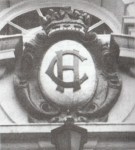
During the refurbishment of HRH Princess Christian’s Hospital in 1983 three magazines were found in an old safe. They had been published in 1899 and 1900 and edited by Miss Robins, the second Lady Superintendent, who described herself as the Editress. They were typewritten by The Misses Ball & Johnson of Tower Chambers Moorgate London EC and contain drawings, stories and news which give us an insight into the life of the time.

The issue dated January 1900 gave Miss Robins the chance to contemplate the last century:
“We are now entering the last year of the 19th century and we naturally look back to the first and think of the numerous changes that have taken place within the last 100 years.
A hundred years ago there was no such thing as a train, a journey of 100 miles was a serious undertaking. Stage coaches were in full swing and so were highwaymen. Newspapers, the penny post, telegrams and our magazines had not been thought of.
Our own manners and customs even have changed. The old courteous manners to which children addressed their parents and their natural submission to authority are just becoming things of the past and now children seem to have all their own way. The severity of our forefathers may have been rather too much of a good thing but there is no need to go to other extremes.
What a wonderful change this century has seen in women. In the good old times, which we need not wish back again, a girl was considered to need little or no education and as to leaving her parents’ rool, excepting to get married she would be lost to society for evermore if she dared do such a thing.
According to history it seems to be usual to wind up a century with war, but I sincerely hope our present war will have come to an end long belore 1900 1s out so that we can break the record and start a new century in 1901 in peace and quietness. Wishing you all a happy New Year and many of them.
I remain yours sincerely
The Editress
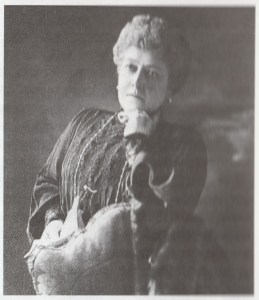
The war she refers to is the Boer War in South Africa and this was particularly important to her as many of the nurses there were part of Princess Christian’s Army Nursing Service Reserve (PCANSR) which was set up by Queen Victoria’s daughter, Princess Christian (above) the founder of Windsor’s Hospital. Some of the nurses from PCH at Windsor were out there and they were sending letters to her about their experiences and she published them in the magazine. Two of them were from Miss Margaret Whiteman who wrote:
“.. No 1. Hospital is situated amongst pine trees, there are mountains at the back of us, and the sea at our feet, words cannot describe the beauty of the scenery I have charge of 85 patients, scattered in 7 tents, so you can imagine I have plenty to do. There are two orderlies (men nurses) to help me. I trot from tent to tent with a lantern. Last night it went out, down I came all fours over the roots of a tree. The night before I lost my way, took the wrong turning, and wandered about among the pines, I was getting very frightened when I met a Tommy who kindly escorted me back. I had gone a complete circle.
The Officer’s Hospital 1s very full, several Guardsmen, and a Mr. Knight, war correspondent to the Morning Post; he has lost his right arm, right up to the shoulder, he 1s such a nice man; and an old Colonel is quite dottie, he was lying on the field for three days. I am quite disgusted with my patients, their one growl 1s, they are invalided and cannot go up to fight again. One said it was difficult to explain, but there was the greatest enjoyment in a campaign.
The food 1s not very good, butter is too vile for anything. Of course there are many inconveniences, but we fully expected that when we came. Six Canadian nurses arrived today. They are very smart looking, they were six weeks getting here. The climate is lovely, temperature about 97° in the shade.”

In another letter she reveals:
“… of course we have the Rontgen Rays here. I lost one dear fellow, he was shot in the back, I saw him laid to rest in the little cemetery here, the bugle sounded the Last Post which re-echoed from the mountains round, it was very impressive, he leaves a wife and two young children.
Sir Alfred Milner, Lord Roberts, and Sir W Mac Cormac* have all been here. The last report is that we are soon moving near the front. I’ve been out to dinner twice, one day three of us climbed Table Mountain with a party of friends. We got up at 4-30 and did not get home until 7 in the evening. The climbing was difficult in places. We simply had to crawl on all fours.”
Margaret Whiteman was one of eight nurses from Princess Christian Hospital at Windsor to be awarded a Royal Red Cross by the end of WWI. This was the highest award that could be given to a nurse. She was invested on 18 December 1902.
Other letters in the magazines were from nurses who had left PCH to work in other hospitals and patients. Initially the magazine had been free, but after five months readers were asked to subscribe 6d a month. As the total cost was 15/-, it is probable that the number of copies produced was 30. The Editress said that she would be obliged to discontinue it if the money was not paid, so perhaps there were only five magazines produced.
Kathleen M Whelan
Retired Matron HRH Princess Christian Hospital
*Sir Alfred Milner was High Commissioner for Southern Africa.
Field Marshall Lord Roberts was the immediate predecessor to Lord Kitchener.
Sir W MacCormac was Surgeon to the Prince of Wales.
For more information about the founding of the Princess Christian Hospital see Windlesora 13 which has sold out but can be consulted at Windsor Library or on this website.
For further details of nurses in South Africa see ‘Nurses on the Veldt’ by Keiron and Alison Spiers in Ancestors, June 2007.
 Windsor Local History Group