
and the loss of HMS Hampshire, 1916
Published in Windlesora 32 (2010)
© WLHG
In a bygone age, when military figures not footballers were the heroes of the day, Lord Kitchener was the best-known and most popular soldier in the service of the Empire. He had achieved fame in 1898 by defeating a much larger Mahdist army at the Battle of Omdurman and securing British control of Sudan.
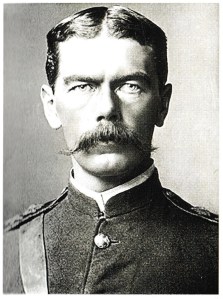
Field Marshal Horatio Herbert Kitchener, 1st Earl Kitchener of Khartoum (1850-1916), served as a British Army officer and colonial administrator in Egypt, Sudan and South \frica. At the start of the First World War he was appointed Secretary of State for War. Unlike most of his cabinet colleagues, he foresaw a war lasting years rather than months, and planned for a rapid expansion of the \rmy with the creation of ‘New Armies’ of Kitchener Battalions. His now iconic image of stern face and pointing finger is famous throughout the world, and frequently imitated.
ln Windsor, many local men rushed to join the new ‘Kitchener s Armies’ at the recruiting office at the Guildhall. Lord Kitchener spoke at the Guildhall on 9 August 1915 on the subject of recruitment and the National Registration Act. In his speech he noted:
When this registration is completed we shall anyhow be able to note the men between the ages of 19 and 40 not required for munitions or other necessary industrial work, and therefore available, if physically lit, for the fighting line… All young men who are physically fit ought \o be serving the State in some form or other…
Kitchener had arrived in Windsor earlier in the day and reported to the King at Windsor Castle before speaking at the Guildhall. He left Windsor early the following morning.
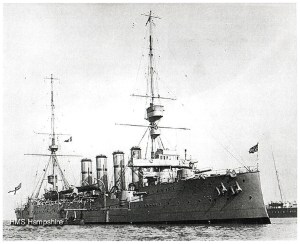
On 5 June 1916, Lord Kitchener was killed while on his way to Russia to meet Czar Nicholas II to discuss the flow of supplies between the two allies. HMS Hampshire, the warship in which he was travelling, struck a German mine during a gale-force storm and sank west of the Orkney Islands. Most of the crew of over 600 men, including Lord Kitchener and his staff, perished at sea and have no known graves. The Windsor, Eton & Slough Express noted in its editorial of 10 June 1916:
Lord Kitchener has died in the service of his country, and the British Empire has sustained one of the heaviest blows that it has been called upon to bear since the outbreak of war…The general public reposed in him unbounded trust. He was a man of iron resolution, and he realised the magnitude of the war from the outset… He was a Knight of the Most Noble Order of the Garter, and in St George’s Chapel his name-plate will remain for all time among the prominent characters in the history of our Empire.
The shock of Lord Kitchener’s sudden death was felt throughout the country and his passing was mourned in Windsor, as elsewhere, and he was remembered in sermons at St George’s Chapel and Windsor Parish Church that weekend, as reported in the Windsor, Eton & Slough Express of 17 June 1916:
Sermons were preached in churches throughout the country on Sunday last eulogising the life and work of the late Lord Kitchener, KG and at St George’s Chapel, Windsor Castle — that splendid shrine of English chivalry — the Rev E M Blackie (Vicar of Windsor and Hon Chaplain to the King) delivered an eloquent discourse at the morning service, which was attended by a large congregation… On Sunday evening [at the Windsor Parish Church], the Vicar (Rev E M Blackie) again made appropriate references to Lord Kitchener. Preaching from the text, ‘These that have turned the world upside down are come hither also’, he dwelt on the force of character in changing the world, and illustrated not only Lord Kitchener’s great vifts but his force and greatness of character that had enabled him to use those gifts aright [correctly] and so be what he had been to the country.
Lord Kitchener was nominated a Knight of the Garter in January 1915 and invested at a private investiture in June 1915; his personal banner was displayed in St George’s Chapel the following month. After his death the banner was removed but his stall plate remains – along with those of other former Knights, including the Kaiser.
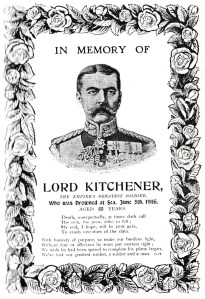
Among the crew of HMS Hampshire who died with Lord Kitchener when the British cruiser sank was Petty Officer Bernard Bates, whose parents lived in Windsor. His death was reported in the Windsor, Eton & Slough Express of 10 June 1916:
We learn with regret that Mr G Bates, of 98 Grove Road, Windsor, has lost his son, Leading Seaman Bates, aged 31, in the recent destruction of the Hampshire. It was only on Sunday last that he received a telegram from his son, telling him that both he and his brother George, who is serving on the Emperor of India, were safe alter the battle [of Jutland]. Leading Seaman Bates had 14 years’ service in the Navy and had only just passed his examination as a First Class Petty Officer. He was a deep sea diver, and in that capacity had done work in connection with the Hawke. He went through the Boxer troubles in China, and also the Somaliland Campaign. He was a prominent figure in the Naval Boxing world, being a fine pugilist and a good athlete.
Bernard Emile Bates was born in Hampstead, London on 3 December 1886 and in the 1901 Census, when he was 14, he was living with his parents at 62 West Street, Marlow. By the time of the 1911 Census, Bernard Bates had joined the Royal Navy and was serving abroad, while his parents, George and Emily Bates, were living at 100 Grove Road, Windsor. (It is not known how long he lived with his parents in Windsor.) His death was recorded in the Casualty List in the Windsor, Eton & Slough Express on 10 June 1916. His body was not recovered and he has no known grave but he is remembered on the Portsmouth Naval Memorial and the Windsor War Memorial.
The loss of HMS Hampshire and her crew was a particularly heavy blow for the Royal Navy as it came just a week after losing a large number of ships and men at the Battle of Jutland, fought off the coast of Denmark.*1 The Windsor War Memorial also contains the name of one of the many men killed at the Battle of Jutland: Seaman Gunner Frederick Robinson Haverly aged 24, who served in HMS Invincible and whose parents lived at 81 Kings Road, Windsor.
Derek Hunt
Sources
Windsor in the Great War by Derek Hunt and Dr Brigitte Mitchell, 2014
Windsor, Eton & Slough Express
Notes
1. HMS Hampshire was also present at the Battle of Jutland but did not engage directly with the German fleet and escaped damage.
Note from the Web Editor
The graves of over 160 men and officers of the Royal Navy recovered from the sea and shore lie within Lyness Royal Naval Cemetery in the Orkney island of Hoy. The bodies of Kitchener and his party were never found. In 1926 the 48ft high Kitchener Memorial was unveiled on the cliff top of Marwick Head after being built by public subscription.
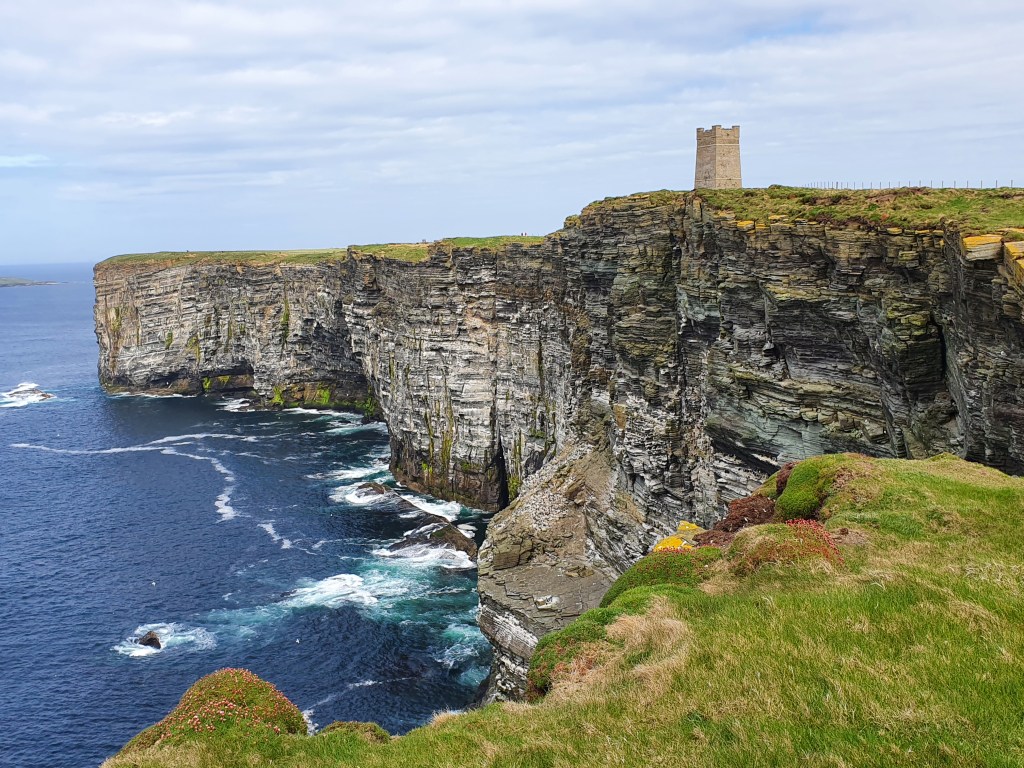
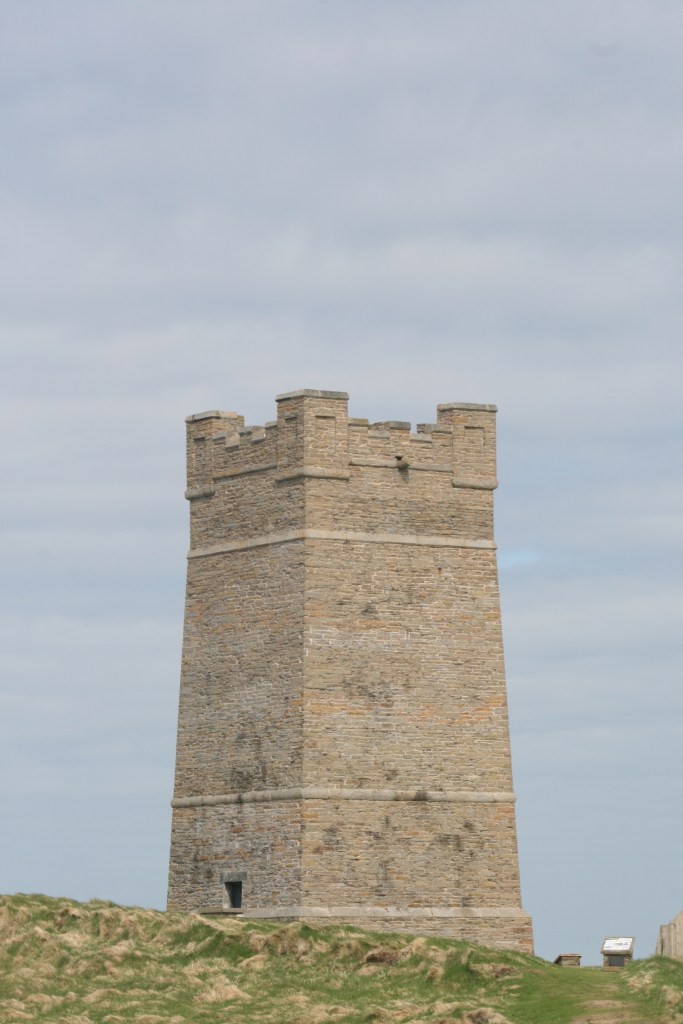
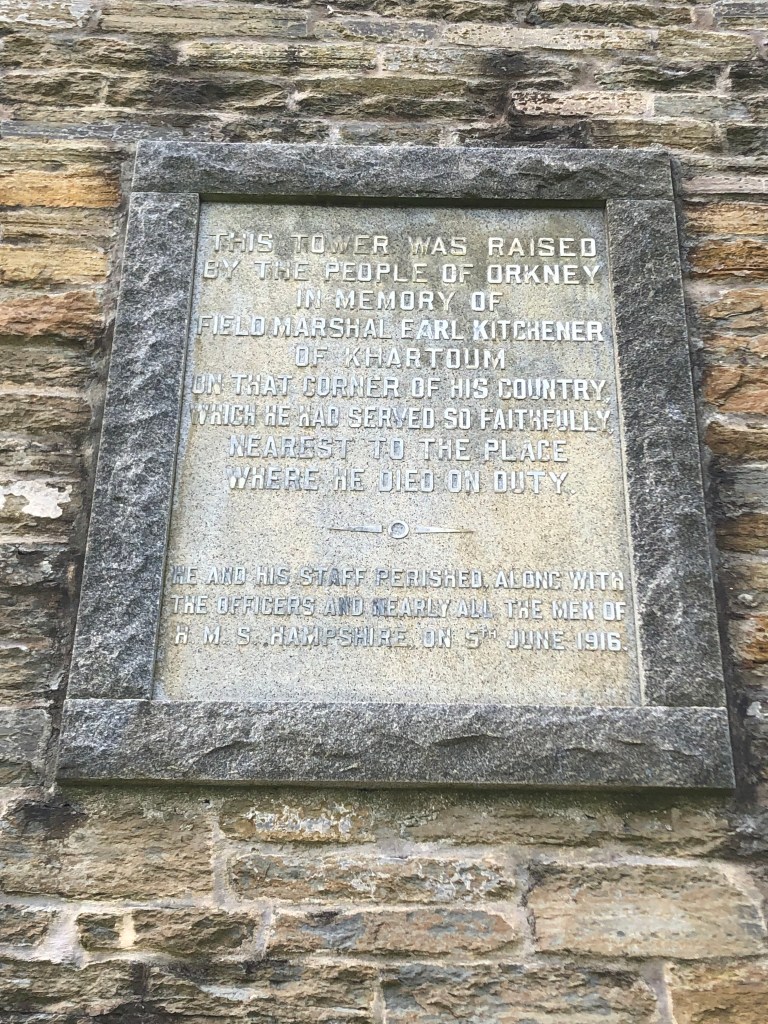
In 2016, the Orkney Heritage Society raised funds to build an arc-shaped commemorative wall at the site to better remember all the men who were killed. The wall features the names of the 737 men that died on HMS Hampshire and the nine men killed on the HM Drifter Laurel Crown.
 Windsor Local History Group