
Published in Windlesora 09 (1990)
© WLHG
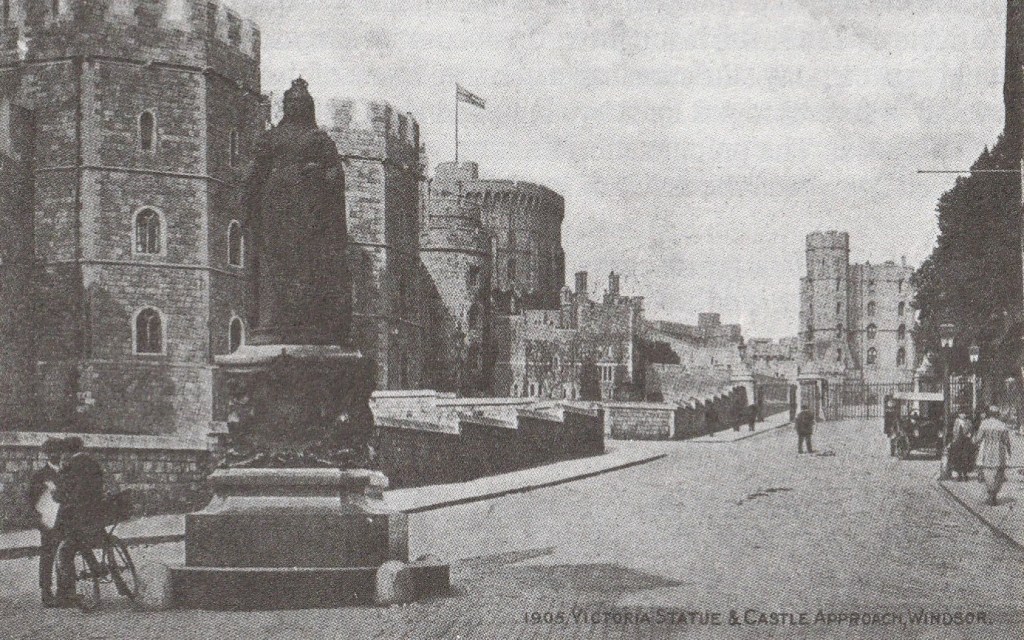
In an era without television, radio or newspapers, the proclamation and the town crier were a much used means of informing people of new laws, the King’s wishes or orders of the town council. In many towns there was a place where such proclamations were usually announced; here in Windsor it was – and still is – at the junction of Castle Hill and the High Street, close to Queen Victoria’s statue and close to the old market place which stretches from Castle Hill to the Parish Church. Broadcast on busy market days, the proclamations thus reached the widest possible audience.
Numerous royal proclamations were issued during the Tudor period, 382 in Queen Elizabeth’s reign alone. They were an integral part of the procedure of law and were aimed at magistrates, mayors of borough councils, constables and other parish officers as well as the people in general. Some were simple announcements about such subjects as new taxes, defendants who had been recently acquitted or fugitives being hunted. Many more dealt with the main clauses in laws which the King and privy council thought ought to be better observed. Royal proclamations, however, were also used to frame temporary legislation and to extend the scope of existing laws
In most cases we can never know which proclamations reached Windsor for the relevant records have not survived, but one royal proclamation at least was specifically aimed at the town. It was one of a series based on the Statute of Artificers of 1563 which sought to fix maximum wages, not minimum as we would expect today. Inflation had made wages one of the burning issues of the day and in several towns local bye laws had already put a ceiling on wages in certain trades. The proclamation limiting wages in Windsor, quoted below, may well have been the result of local initiative.
Judith Hunter
Regulating Wages in New Windsor
[London, after 12 January 1563, 5 Elizabeth I]
Imprimis, the bailiff of husbandry being a married man not to have his year’s wages above 46s 8d, and 10s for his livery; and he that is not married to have his year’s wages not above 40s, and 6s 8d for his livery.
Item, the chief carter or chief shepherd, married, not to have for his year’s wages above 46s 8d, and 10s for his livery; and he that is not married not to have above 40s for his wages, and 6s 8d for his livery.
Item, all other common servants in husbandry or laborers hired by the year being above the age of 20 years and married shall have for his wages not above 33s4d, and 6s 8d for his livery; and he that is not married shall have for his wages not above 26s 8d, and for his livery 6s 8d.
Item, all other common servants in husbandry or laborers hired by the year being within the age of 20 years shall have no wages but meat, drink, and their raiment, one apparel for the holy day, one other for the work day, and some small portion of money at every year’s end at the discretion of the master when the servant is past the age of 16 years; which money shall not be above the value of 5s.
Item, that every day laborer in whatsoever labor being no art shall have for his day’s wages from Easter unto the Feast of St Michael the Archangel not above 8d the day without meat and drink, and with meat and drink not above 4d the day, the times of corn harvest and hay harvest always excepted; and from the Feast of St Michael the Archangel unto the Feast of Easter the same person working by the day to have for his wages not above 3d the day with meat and drink, and without meat and drink not above 6d the day.
Every mower, either in grass or corn, shall have for his wages not above 12d the day without meat and drink, and with meat and drink not above 7d.
And if the mower take either grass or corn by task he shall not have above 10d for an acre of grass, and for mowing of an acre of barley not above 5d. He that repeath and bindeth the acre of wheat shall not have for the reaping and binding of the same above 2s, provided always that the judgment of the acre shall be given as the same is most commonly known to the neighbours where it lieth, be it an acre by statute measure or more or less, and one acre to go with another.
Item, the man hired by the day in time of corn harvest shall have but 4d the day with meat and drink, and without meat and drink he shall have not above 10d the day.
Item, the chief carpenter, joiner, bricklayer, plumber, and glazier hired to work by the day shall have for his wages not above 12d the day without meat and drink, and with meat and drink not above 7d the day; and every of their apprentices working with them under the age of 20 years and past the age of 13 shall have for his wages with meat and drink not above 2d the day, and without meat and drink not above 4d the day.
Other carpenters not so cunning to have wages with meat and drink not above 10d the day, and without meat and drink not above 5d, the day.
Every tiler with his man or laborer to have for their wages from the Feast of Easter unto the Feast of St Michael the Archangel not above 17d the day without meat and drink, and with meat and drink not above 10d
Item, a pair of sawyers working by the day and taking meat and drink shall have for their wages not above 12d the day, and without meat and drink not above 20d; or else they to have 18d for the sawing of every 100 feet, at the election of the sawyers.
Item, no woman servant above the age of 18 years shall have above 20s for her wages, and 6s 8d for her livery; and all other women servants under the age of 18 years shall have no manner of wages but meat and drink, and raiment, and some small portion of money yearly at the discretion of their masters when they be past the years of 13, so that the sum of money amount not above the sum of 3s 4d.
The women that worketh in hay harvest to have 2d a day with meat and drink, and without meat and drink not above 5d.
And the woman that worketh in corn harvest to have, with meat and drink, 3d the day, and without meat and drink, 6d the day and not above.
For task workers
Imprimis, for making or digging of every ditch three feet broad and two feet deep to have 3d for the pole, and so rate-like as the breadth and depth shall increase; and if it be quickset to have 2d for the pole, more to lay and trim the sets, besides the value or price of the sets.
Item, for the threshing of a quarter of clean wheat, 12d.
Item, for the threshing of a quarter of clean barley, 8d
Sources
P. L. Hughes & J. F. Larkin, Tudor Royal Proclamations (1964)
Joyce Youings, The Pelican Social History of Britian: Sixteenth Century England (1984)
Frederick Youngs, Proclamations of the Tudor Queens (1976)
 Windsor Local History Group