
The Somme
Published in Windlesora 32 (2010)
© WLHG
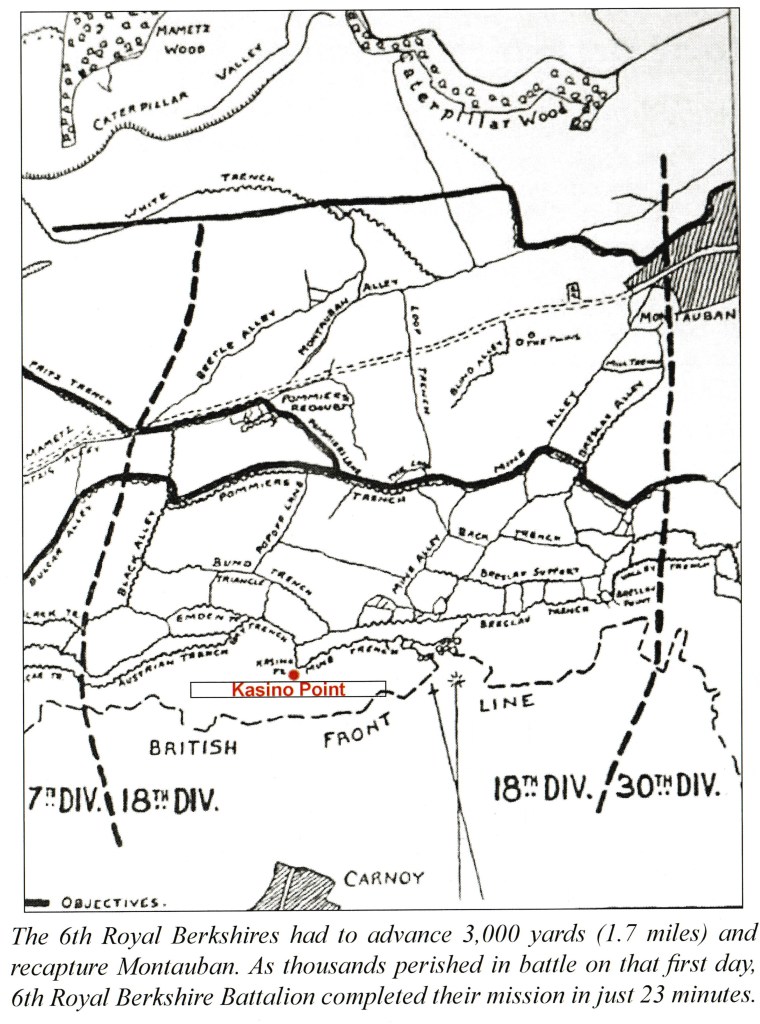
There were several strong-points in the German front-line that the British targeted as they were capable of inflicting extensive and devastating casualties. The plan was to mine beneath them and lay vast quantities of explosives, the detonation of which would wipe-out the positions and leave large craters to be occupied by the advancing British troops, giving them both a commanding view and line of fire. Detonation was to be at (7.28 hours, two minutes before the attack.
The 6th RBR were facing the machine gun nest at Kasino (Casino) Point beneath which was lain a 5000Ib mine (approximately 2268kg). While tunnelling, the miners had accidently dug into one of the German bunkers beneath which the mine was to go, resulting in the mine possibly being laid more shallowly than planned. Worse still, at 07.28 hours when the mines were to be detonated, the officer appointed to Kasino Point was horrified to see British soldiers already within range of the blast. After an agonising hesitation, he detonated, knowing that if he didn’t the machine gun at Kasino Point would inflict more devastating casualties than the detonation.
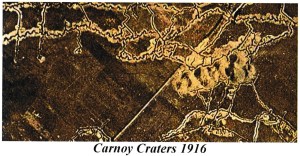
The resulting blast annihilated the position, throwing German soldiers, burning debris, and tons of earth into the air and over a wide area, and causing death and injury to the British troops nearby. Crucially however, the RBR were in possession of the crater, and the first trench around it, almost immediately.
Carol Dixon-Smith
Sources
Middlebrook, M. (1971). The First Day of the Somme. London. penguin Books.
Gilbert, M. (2007). Somme: The Heroism & Horror of War. London. John Murray.
www.westernfrontassociation.com
 Windsor Local History Group