
The Women’s Institute 1939 -1945 in Windsor Great Park
In 2015, the Federation of Women’s Institutes celebrated its centenary. Founded during World War One to give rural women a voice on social and educational issues, and pre-dating women’s right to vote, the movement had government support and recognition of its contribution to the war effort.

It was on 3rd November 1932 that a branch for the women of Windsor Great Park was proposed and founded by Mrs Elsie Tannar, wife of the Headmaster of the Royal School. The inaugural meeting was held in Cumberland Lodge on 14th December with 11 members present, and Lady Savill in the chair
This new Women’s Institute (WI) was affiliated to the Berkshire Federation, monthly meetings chaired by Lady Savill followed a set procedure. Agenda were drawn up by the elected committee, a programme of talks, competitions, debates, fund-raising plans, and tea provided a pleasant social and informative occasion for the village ladies. Talks were given by guest speakers or members with special interests, and tea was provided by the members.
Meetings commenced with singing the anthem Jerusalem by Hubert Parry which had been adopted by the WI in 1924. An annual subscription was charged, minutes taken, and an annual report sent to the County Federation. Windsor Great Park WI still has complete volumes of Minute Books in which brief hand-written records of meetings were pasted.

By September 1939, the Windsor ladies knew what jobs and work were necessary to contribute to the war effort. When war was declared on 3rd September the gates to the Great Park and Forest were closed from sunset to sunrise and the military took over. (During the war, army camps, rifle ranges, gun emplacements were established, trenches dug, and an aircraft factory built.) Blackout was enforced, evacuees arrived, some staying at Cumberland Lodge, and flower gardens converted to vegetable production when the Dig for Victory campaign was launched in October.
The first wartime meeting was held on 11th October 1939, opening with Jerusalem and with Lady Savill in the Chair. It was decided to hold future meetings from 2-3.30pm, and without tea. One hundred and thirty nine (139) garments made by members were to be sent to Queen Mary’s Needlework Guild (QMNG) plus £5.
The Institute had regularly supported this charity by sewing garments and raising money, and was nominated an Associate in 1933. King Edward’s Hospital, Windsor was also supported; garments made, gifts given to patients in Men’s and Women’s Wards, and toys sent for the children. Silver paper was collected and money raised from raffles and sales. The November meeting made plans for a Rummage Sale and the Christmas Party, held on 18th December, with invitations to the evacuees and children from the Royal Estate.
At the first meeting of 1940, it was decided to provide tea with either a slice of cake or bread and butter, and members would bring their own sugar. The banner which members had made was displayed and admired, and was later to be hung in the Royal Chapel. This year brought the war closer to Windsor, and events cast a shadow over town and Great Park alike. Dunkirk in June was followed by the Battle of Britain, with dog fights overhead and a Messerschmitt crashing in the Great Park.

In 1941, the Blitz brought high explosives and incendiaries which destroyed or damaged farms and crops. By war’s end the Great Park was a danger to walkers with craters, holes and unexploded bombs. Meetings were not affected. A debate in February on Living in a house or a bungalow was followed by a Whist Drive in March. In April a Rummage Sale raised £17.14s.5d for QMNG to be spent on material for nightdresses and pyjamas, and wool for bed-jackets. In August a letter requesting ‘no further garments until next year’ was read to the meeting, so King Edward’s hospital benefitted instead.
Instead of a Summer Outing, a visit to Virginia Water with a picnic tea was held in June 1940 costing £2, which was paid out of funds to Mrs Tannar (Tea Convener). It was declared to be a jolly afternoon in pleasant surroundings, and provided a light-hearted interlude in a month overshadowed by Dunkirk. Lady Savill’s talk in August on the evacuation, followed by her Thoughts during the War in September, emphasised the prevailing concerns as Britain stood alone against the enemy.
At the May meeting, Miss Vidal explained the National Savings Scheme and many members contributed. She collected until September 1942 when members took over individually. Funds for activities came from members’ subscriptions of 2 shillings each, (raised to 2/6 1942), as well as sales, surpluses from Whist Drives, raffles, and from ‘Trading’. At each meeting a short time was set aside for members to bring an item and sell it, a limit on price was set (1/- in 1941), this was sold at a profit which went into funds.

The Treasurer’s statement was presented at each meeting and an Annual Statement at the Annual Meeting. The Institute had always supported a number of charities either by money or gifts, now wartime needs were increasing for aid and Mrs Churchill’s Aid to Russia, the Red Cross, NSPCC, the WI Ambulance, and Queen Mary’s Hospital are recorded as recipients.
At the end of 1941 Lady Savill retired as president. A generous supporter since the Institute started, she had given crockery and a piano, together with advice and several talks. Tea was an important feature of each meeting. A cup of tea together with a slice of bread and butter or cake was provided in turn by members, and cost 3d without sugar. Tea-time was the chance to chat and relax at the end of an afternoon of a talk, competition, perhaps a debate, and demonstration. The piano accompanied the singing of Jerusalem and the National Anthem which closed each meeting, and community singing which was popular. After the war, Queen Elizabeth, the Queen Mother, provided the tea, sending her housekeeper to the York Club with sandwiches and cakes. The ladies of the Royal Family had close association with the WI movement. Queen Mary was a prominent supporter and president of Sandringham WI. When the Duke and Duchess of York (later King George VI and Queen Elizabeth) were living in Royal Lodge, the Institute gave a party for them and the little Princesses, the Prince of Wales (later Duke of Windsor) joining the party for tea. (May 1935).
An important feature of each meeting was the talk or demonstration often followed by an appropriate competition. Talks were on currently useful and interesting topics, for example Gardening, Beauty in the Home, Tanganyika (/by an ex-bishop’s wife), Two Elizabeths by Canon Crawley followed by a Shakespeare reading from his wife. (1942). Outside speakers were invited, but due to transport difficulties (petrol rationing and disruption on the railways) speakers were often local.

By 1941 talks were more relevant to the war effort. Vital to every household was food and clothing, both of which were rationed. Food rationing commenced in January 1940 with butter, sugar, and bacon, followed by meat in March, then tea and cooking fat in July. In 1941 jam, eggs, and cheese were rationed. Wartime cooking and food values, Menu for a meatless day (1941) tips and recipes were exchanged; Super soup of parsnips and Oxo, and competitions for potato salad and best home-made loaf were some classic topics. Cakes for teatime at the meetings and for prizes were provided by members. Vegetable production was encouraged by the Government through its Dig for Victory campaign. Sutton Seeds of Reading gave a talk and supplied packets of seeds for members.
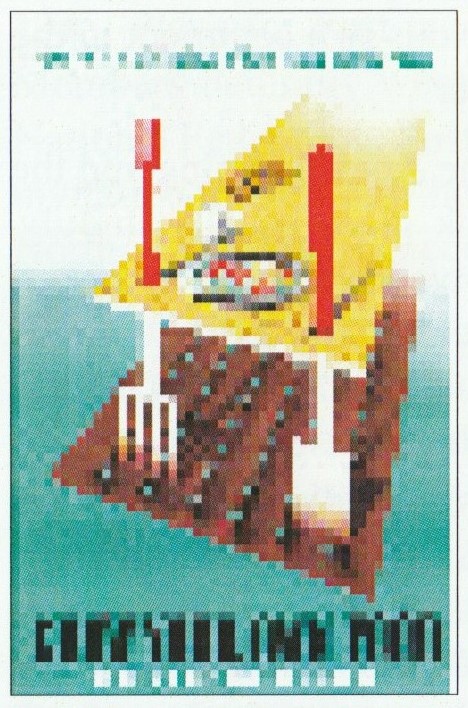
Clothes rationing was introduced in June 1941, adults were allowed 60 coupons children 70 coupons per annum. Talks on Uses of a sewing machine, Wool embroidery (1940-41), and Hand-weaving presented with a selection of scarves and gloves, Wool and origins of spinning at which pupils of the Royal School demonstrated spinning (1942). These were often followed by competitions such as Best Article from an old Shirt, Best Wool Darn in ten minutes (1940), Something new from something old (1941). In 1941, Hot-water Bottle Covers had only one entrant, and Something from Non-rationed Material in 1945, was won by a hessian apron. The WI started dress-making classes, quilting, and handcrafts; knitting became a prominent feature of meetings.
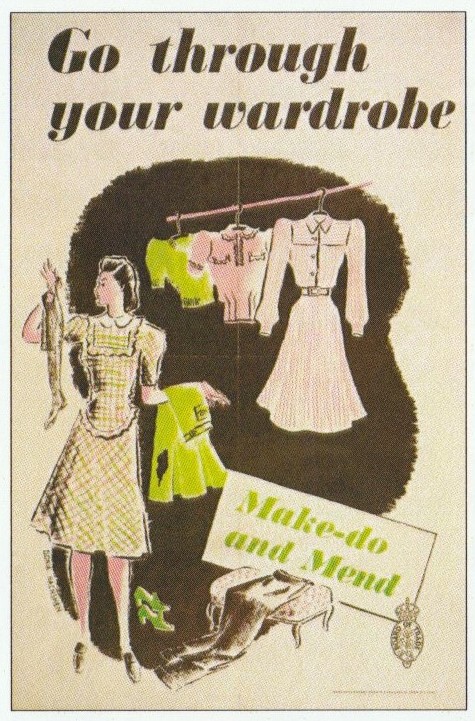
Coupon-free wool was offered by the government but the WI ladies did not avail themselves. By 1941 a Knitting Hour was introduced, hats and gloves for the troops, Home Guard, with toys and bed jackets for the hospital were knitted while listening to a book reading.
Monthly meetings gave members many opportunities to make their contribution, especially to a Roll Call session, with talks such as Things my Grandma did (1942), Learning from our surroundings – where to find the best primroses (1945), and there was the occasional debate. Games were played, Guessing feet! and card games such as whist are mentioned. A film show was a special entertainment when Fry’s chocolate manufacturers supplied films, but perhaps by January 1945 afternoon meetings had become too serious as a comment in the Minutes notes a request to make them ‘livelier’.
The major entertainments of the year were the Annual Outing and the Children’s Christmas Party. The former took place usually in July, the picnic tea at Virginia Water (1940) involved planning, transport, arrangements for tea and shelter. The 1941 steamer trip to Runnymede is recorded as ‘a very enjoyable afternoon’. In July 1942, thirty members and friends went to Theatre Royal in Windsor, for a matinee performance of Somerset Maugham’s Spring Meeting, followed by tea at The Olive Branch hosted by the President. Christmas Parties were given for the children of the Royal Estate and evacuees, games were played, competitions with prizes made or bought by members were organised. Fancy Dress was encouraged, such as The Best Head-dress (1941), An Advertisement (1942).
By June 1942 fear of air raids had subsided and a Dance and Whist Drive was held from 7pm until midnight, with 180 members and friends attending, dancing outdoors to the Fairey Dance Band. Refreshments were at 9pm, with a Raffle, and Spot Prizes for dancing. The prizes, donated by members, included a powder puff in a case, a gentleman’s clothes brush, caster sugar sifters, cigars, cigarettes, chocolates, and £20 was raised for the Red Cross.
Throughout these years the WI ladies were busy collecting a range of items for the war effort. They collected for Salvage Week, rose hips were gathered, but the County Scheme for collection of herbs and nettles for medicinal use was rejected due to difficulties in transporting to Reading H.Q.
With the Allied victories and the D-Day landings in 1944, it was a shock when the war returned to Windsor in July, with flying bombs landing in the Great Park. On 4th July a V1 landed on Snow Hill, shattering windows in Royal Lodge. On 15th July the rear of The Bells of Ousley was hit, killing two people, then later in November a V2 landed near the Cumberland Obelisk.
In January 1945, it is minuted that meetings start promptly at 2.30pm with tea at 4pm, the Trading Stall at 4.20pm, ending with the National Anthem at 4.45pm. Lighting restrictions had been lifted in September 1944 and Smith’s Lawn and Virginia Water re-opened to the public in 1945. Plans for Post-war Reconstruction were under way nationally. Members naturally were interested and ready to give advice via the National Federation. Post-war housing was an important aspect and an invitation to view new houses (probably pre- fabricated) being built in Northolt was readily accepted.
The final meeting was held on 8th May 1945. The Minutes recorded ‘the great wish of members to celebrate together’ and a ‘fervent singing of Jerusalem’. The debate which had been scheduled was Cosmetics – a good thing? and resulted in members’ approval. Cosmetics such as lipstick, face-cream, powder, and mascara like all non-essentials in wartime were in short supply, so perhaps the WI ladies anticipated some of the glamour seen in Hollywood movies, to cheer them through the postwar months.
With Make do and mend, Keep calm and carry on, together with all the slogans urging on their wartime contribution, the WI movement and the Windsor Great Park WI deserved a bright future. A future which brought increased membership, a new meeting place at the York Club, and national celebrations in their Centenary Year.
Sonia Sayed
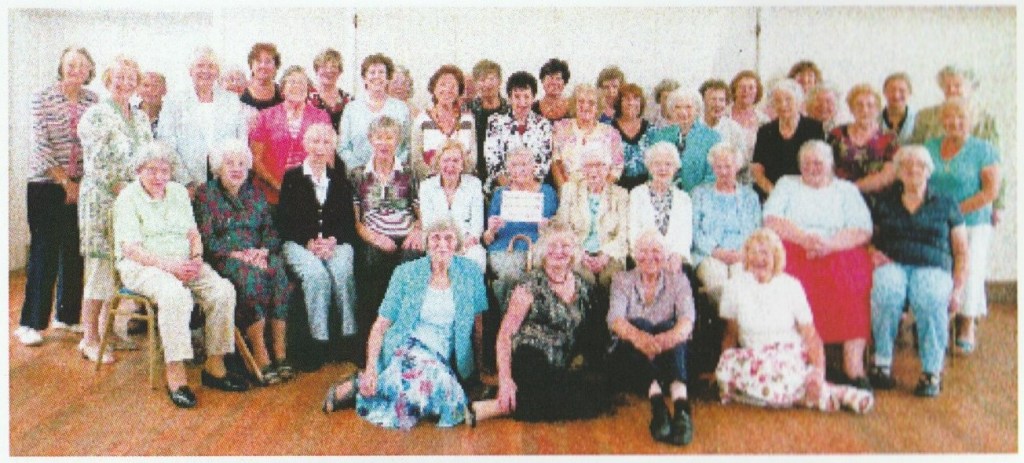
Great Park WI in the York Club celebrating the centenary.
With Thanks
I am grateful to Miss Jean Cram former President for the opportunity to view the Windsor Great Park Women’s Institute Minute books.
 Windsor Local History Group