
Published in Windelsora 02 (1982)
© WLHG
Two dignified buildings only some forty years old have recently been demolished in Windsor – Kipling Building, Alma Road, in 1981 and the Horse Hall, York Road, in 1982. Their unusual names were so familiar to residents of Windsor that they were accepted without much question but visitors to the town may not immediately have recognised the local connection. Their full names were the Rudyard Kipling Memorial Building and the King Edward Horse Hall and they were part of the Imperial Service College which was run on public school lines on the site between Alma Road, York Road and Vansittart Road. Most of the buildings associated with the school have now gone, but the lineal descendant of the school, Haileybury Junior School, is at Clewer Manor.
To trace the history of the Imperial Service College, (ISC), it is necessary to follow the development of St. Mark’s School which started as a cottage school and gradually moved up the social scale.
St. Mark’s School was founded about 1845 by Rev. Stephen Hawtrey. At the invitation of the Head Master, his cousin, he had been appointed in 1836 to teach mathematics at Eton College, where the subject had been very inadequately taught, and the new Head Master wished to make improvements. Stephen Hawtrey had first to build himself a schoolroom and then engage assistants at his own expense; he in turn was paid by the parents of any boys who took the subject.
At Eton, Stephen Hawtrey met G. A. Selwyn who, whilst continuing as private tutor to the sons of Lord Powis, had been ordained and had been engaged as Curate by the Vicar of Windsor. The Vicar lived at Datchet and appears to have left matters in the parish very much in his young curate’s hands. They were good hands – Selwyn went direct from being Curate of Windsor to be the first Bishop of New Zealand in 1841!
Dedworth was at that time a detached part of Windsor parish and Selwyn had a schoolroom built there which could be used as a chapel on Sundays. He invited Stephen Hawtrey to join those helping him voluntarily in the parish, by accepting responsibility for the services at Dedworth. Hawtrey found that the singing at the services was, as he later described it, “rude, coarse and apathetic”. In an attempt to improve the standard, he got leave to teach music to “those of the Windsor National School boys who showed a disposition to learn”. Each Sunday the boys went with him to Dedworth where there was an afternoon and an evening service. They spent the interval between the service together and “an affectionate family feeling” grew between them all.
The foundation stone of Holy Trinity Church was laid by HRH The Prince Consort on 4th April 1842 and, when the church was consecrated on 25th July, 1844, Stephen Hawtrey became the first incumbent.
The boys transferred with him and became the Holy Trinity choir. Practices had been held at Windsor National School but now some difficulty arose and Hawtrey was persuaded to open a school where the music lessons could continue in school time. A cottage at the corner of Goswell Road and Clewer Lane (Oxford Road) was rented and a school master, Mr. Charles Morgan, from St. Mark’s Training College, Chelsea was engaged. The master and his boys met at church each morning at 7 for an hour’s service and then walked together to the school where they shared breakfast before starting their lessons.
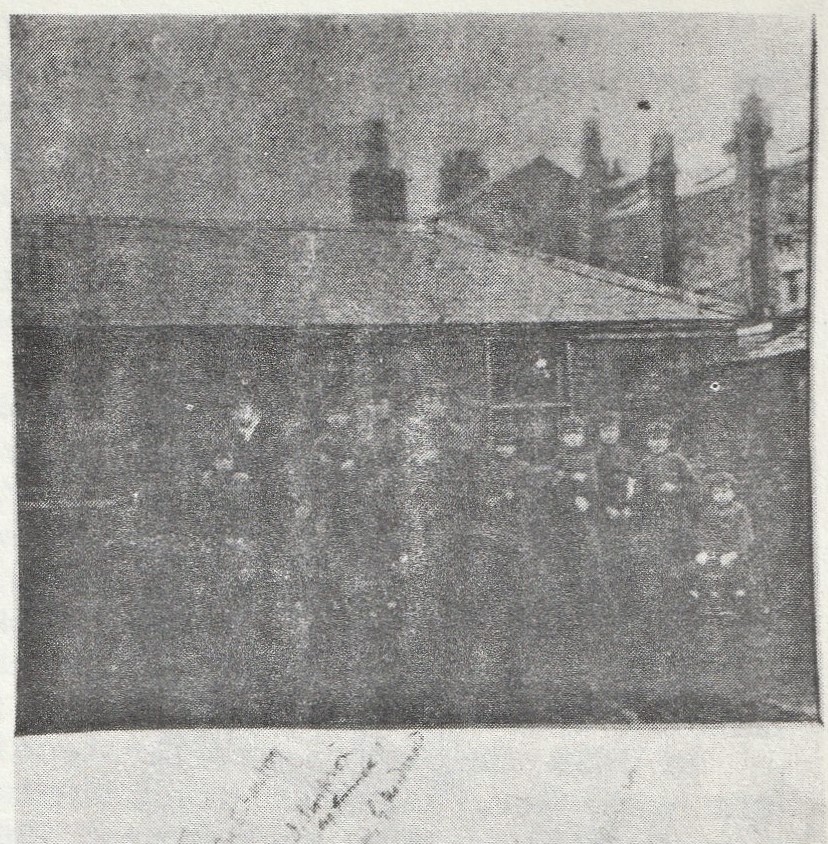
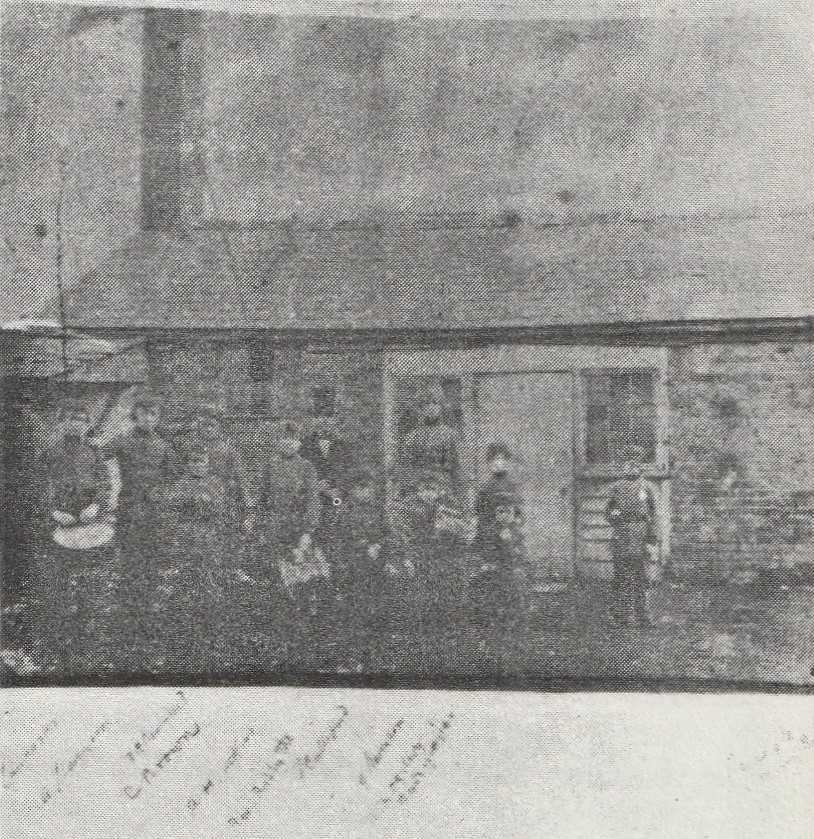
Photographs show the first school at the corner of Goswell Road and Clewer Lane (Oxford Road East) now under Ward Royal.
The school opened with nineteen pupils, but such was the demand for places that adjoining cottages were added to the original one and the number of boys was increased to fifty. When some years later the school had to leave. the cottages it was decided that proper and suitable buildings must be erected, and a subscription list was opened. Local contributions were not sought since the Vicar of Windsor was soliciting help for educational work “for a class of the of the community lower than that which is reached by St. Mark’s School”.
The list was headed by the Queen and other members of the Royal Family, the two Archbishops, followed by many other distinguished names. A considerable sum of money was raised through the subscription list but it is clear that Stephen Hawtrey made up the shortfall.
The new school was opened in Alma Road on St. Mark’s day, 25th April, 1862, with Stephen Hawtrey as Headmaster. Although a day school at the start, it was run on public school lines and the first boarding house was opened in 1870.
There is a plaque on the Parish Hall in Grove Road which reads: “St. Mark’s Middle School, 1871” and this was evidently the junior department of the school.
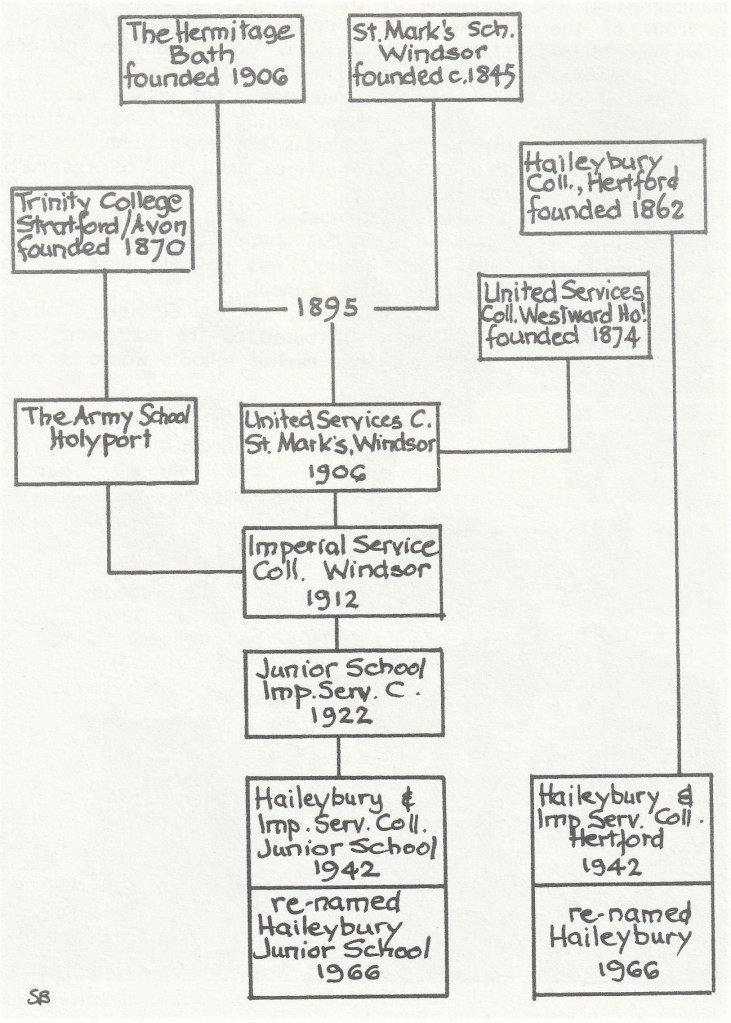
When Stephen Hawtrey retired he was succeeded in 1887 by Rev. A.W. Upcott who moved on quite soon to another post and the school’s fortunes began to sink. Then in 1894 or ’95, the Headmaster of the Hermitage School in Bath, Rev. C. N. Nagel, brought his boys with him to unite the two schools at Windsor.
In 1906 the school amalgamated with the United Services College, still with Rev. Nagel as Headmaster. The United Services College had been founded in 1874 at Westward Ho! in North Devon. Rudyard Kipling went there from January 1878 for four years and his stories in “Stalky & Co” are based on the U.S.C. The school failed in 1903 and its remaining boys had been to two other schools before arriving in Windsor.
This was a time of constant and growing financial worry for the School Governors and when in 1911 Rev. Nagel died very suddenly, they decided to approach the Imperial Service College Trust whose object included helping with the education of sons of officers of the Forces. Generous help was forthcoming and the Governors changed the name of “the school to that of the Trust which now controlled it, so that in November 1911 the school became the Imperial Service College.
The man who was to be Head Master for the next 23 years arrived in January 1912: Mr. E. G. A. Beckwith, who brought with him 24 boys from the Army School which had been for a short time at Holyport, near Maidenhead, although it was originally Trinity College, Stratford-on-Avon, founded in 1870.
In addition to being Headmaster, Mr. Beckwith at first took charge of Lawrence House which was in Alma Road, where Lawrence Court is now. It seems probable that this house was named after Sir Henry Lawrence, the soldier and statesman and defender of Lucknow in the Indian Mutiny.
The main entrance to the College was on the opposite side of the road. In 1926 the Goodhart Gates were erected there in memory of a benefactor of the school who, amongst other gifts, gave land which the College sold, College Crescent being built on it. The St. Mark’s lions on the gate pillars were reproduced from similar figures in Ripon Cathedral and they are now with Haileybury Junior School at Clewer Manor.
Inside the gateway on the right was Alexander House, the foundation stone of which is in front of the Police Station now on the site. The house was named in honour of Mr. P. Y. Alexander, an aeronaut, scientist and philanthropist, who lived locally. There is the story told by the Headmaster himself of how Mr. Alexander once entered his classroom when he was taking a form in Latin and placed in his some papers relating to the College. To the amazement of Mr. Beckwith, amongst them was a cheque for £10,000 “to be devoted to educational purposes”.

Opposite Alexander House, to the left of the gateway, was Cambridge House and beyond that was the Chapel. The stained glass, which was rescued from the Chapel, has been stored by the Borough.
To the west of the Chapel was the Dining Hall. It was a large building with the kitchens on ground level and the dining room above. It was converted in 1919 from the former gymnasium which “had been condemned for any heavy work“.
The other school houses were Camperdown House, which is still in Alma Road, and Roberts House (No. 68 Alma Road). Connaught House was what is now Upton House School in St Leonard’s Road. These houses were named after Field Marshals Lord Roberts and HRH The Duke of Connaught. Mr. Beckwith had, from his earliest days with the school, received many approaches from parents urging him to start a Junior Department. In 1920 Mr. Edmund Baines Foster died, and his property came onto the market. The ISC bought the estate which included Clewer Manor where it opened the Junior School in 1922, and Clewer Lodge which became Mr. Beckwith’s house. The gatehouse is still there, No. 364, St. Leonard’s Road. The Lodge was where Peel Close is now.
The ISC was always faced with financial problems. Even though the reputation of the school grew and more boys were sent, the terms of the Trust required that the funds could be used only to provide bursaries. The old debts were still unpaid, and new debts had been incurred. There were however generous donations from such men as Mr. F. C. Macaskie who provided the block of classrooms named after him to replace the ex-Army huts which had served previously. Goslar Way now crosses its site.

Then, in the late 1920’s the ISC was approached by the Trustees of King Edward VII’s Horse Regiment Endowment Fund. The Regiment had been founded in 1901 and was to be disbanded. The Trustees wished to give the whole of the Fund to one institution for bursaries “for the sons and other descendants of Commissioned Officers of the Regular Forces, whether in the Home, the Dominion, the Colonial or the Indian Establishments“. One part of the money was to be used to erect a Hall to the memory of King Edward’s Horse Regiment recruited from India, Australia, New Zealand, Canada and South Africa. King Edward’s Horse Hall was erected in 1931, a dignified hall built to the highest standards, which served as a School Hall for Speech days, School and Band Concerts, boxing matches and so on.
Then in 1935, the much-respected Headmaster, Mr. Beckwith, died in the middle of a service in Chapel. A statue of Ambition, erected in his memory, was placed between the Horse Hall and the Macaskie classrooms.
When a Memorial Fund was instituted to commemorate the life of Rudyard Kipling who died in 1936, it seemed appropriate that ISC, the direct descendant of his old school, United Services College, should benefit. Five Kipling Scholars were already at the school and being aided by the Fund when the Foundation Stone of the Kipling Memorial Building was laid on 6th March 1939. It was generally acknowledged that it was very inconvenient to have Connaught House and Roberts House away from the immediate environment of the School and so it was decided to put these two Houses into the new building. It was designed by Clyde Young and Bernard Engel. The completion of the new premises was pushed forward so that they could be occupied on 29th September 1939 when the winter term began, the old Connaught and Roberts Houses having been commandeered at the beginning of the war. In the centre gable on the sout front of the building was a delightful plaque by Benno Elkan depicting Jungle Book animals. Rank Hovis McDougall have included the plaque in their new headquarters, now on the site.
The School did not survive the war years but amalgamated in 1942 with Haileybury School, the senior boys joining that school at Hertford. The War Office used the various premises but from June 1949, Kipling Building became the Borough Council offices until the re-organisation of local government in March 1974.
The Junior School also amalgamated with Haileybury in 1942, becoming known as Haileybury and ISC Junior School; it remained at Clewer manor. In 1966, the name of ISC was dropped from the school’s title, becoming simply Haileybury Junior School.
The traditions of St. Mark’s School, United Services College and Imperial Service College have all contributed to the Haileybury heritage. It is a worthy successor of which those earlier schools would be proud.
Jean Kirkwood

Correction
Published in Windlesora 03 (1984)
Apologies, there is a misprint in the chart. The Hermitage School was founded in 1846, not 1906. In addition, Alexander House was named after the Chairman of the School’s Governing Body, Prince Alexander, 1st Earl of Athlone, and not what was stated in the article. It also seems probable that Lawrence House was not named after Sir Henry Lawrence as was suggested, but after his brother, Sir John Lawrence. We thank Mrs Imogen Thomas, Haileybury College’s librarian for helpful comments.
Jean Kirkwood
 Windsor Local History Group