
Published in Windlesora 33 (2016)
© WLHG 2018
On 6 November 1917, Canadian troops captured the Belgian village of Passchendaele after a bitterly-fought campaign lasting just over three months. Since then, the name Passchendaele has become synonymous with endless carnage in a sea of mud. In fact, it was not one battle, but a series of military engagements collectively known as the Third Battle of Ypres. It began with Pilckem Ridge on 31 July and ended with the Second Battle of Passchendaele on 10 November.

News from the front took time to reach home, but on 25 August, the Windsor Express was able to publish two letters containing information about the new offensive. Corporal Dowsett, in a Machine Gun Section of a Canadian Regiment, was an apprentice at the Windsor Electrical Company before the war. He described the start of the campaign:
We have been more than busy the last few weeks… at last on the 31st we got the reward of all our labours by clearing out the Germans from the ridge which they had held and fortified for three years…
I can safely say that had the rain kept off for a week or two we should have been well on the way to clear the northern parts of Belgium; but as it is, it looks as though we shall have to wait until next year. I only wish the weather would clear up, because there is no doubt that we have the upper hand now and it will only continue to get stronger as time goes on.
Private S. Lawrence of Windsor, writing to a friend at home, also mentioned the weather:
All the rest of the day we were subjected to heavy fire from machine guns and artillery, and last, but by no means least, two or three snipers. To add to our discomfort, rain began to fall, and drenched to the skin we waited till dawn when the relief party arrived. The journey out was very hard going through the mud, and it was a relief to get on to the roads once more.
The same edition of the Windsor Express carried news of the death of Private Ernest Skittles, a Windsor man who had joined the Territorial Battalion of the Royal Berkshire Regiment when he was 16. He was seriously wounded on his 20th birthday, on 31 July 1917, and died two days later. Prior to the war he was a member of the local Church Lads’ Brigade, was employed at the Royal Gardens, and lived with his parents in St Leonard’s Road. Private Skittles is buried at Lijssenthoek British Cemetery, Belgium and remembered on the Windsor War Memorial.
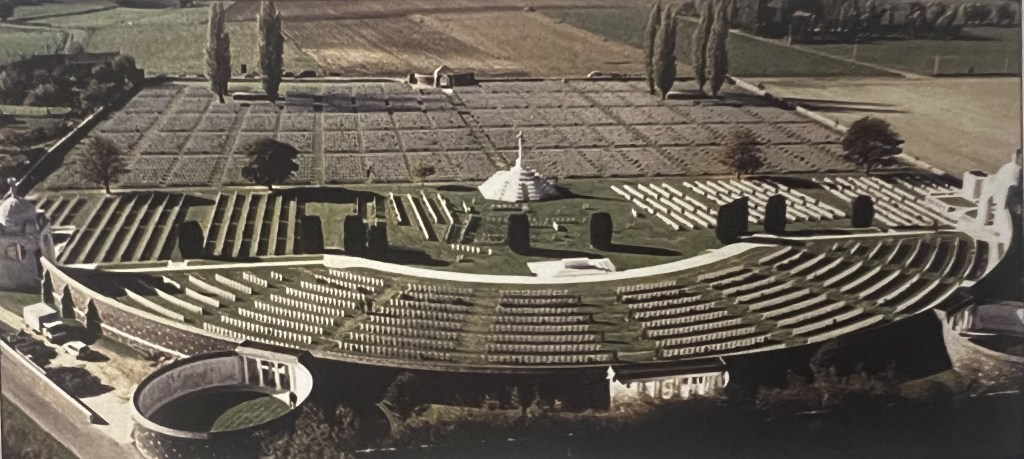
There were weekly lists of casualties and Rolls of Honour but not always with full details. Many of the servicemen killed on the Passchendaele battlefields are buried at Tyne Cot Cemetery, the largest Commonwealth war cemetery in the world. It lies to the north east of Ypres (now known as Ieper), and includes a memorial to those who have no known graves. The Roll of Honour for 1 September included Lance-Corporal John Ward, who lived at Gardner Cottages, Clewer who was killed in action on 16 August serving with the 2nd Bn South Wales Borderers. With no known grave he is remembered on the Tyne Cot Memorial to the Missing and on Clewer War Memorial.
The Third Battle of Ypres: commonly known as Passchendaele, began with an attack by British and Commonwealth troops on 31 July 1917. Field Marshal Sir Douglas Haig had planned the new offensive in Flanders to remove the Germans from their dominant positions overlooking the British salient around Ypres and, ultimately, to capture the Belgian ports used as U-boat bases. The Allied attack, however, soon ran into difficulties due to the determined German defence and the appalling weather.
In early August, the offensive was temporarily suspended in the desperate hope that the weather would improve to allow the ground to dry out, but it soon recommenced. The weather did not improve and October 1917 proved to be one of the wettest months of the war.

The Allied bombardment had destroyed the drainage system and left the landscape covered in shell holes. The unseasonal heavy rain then transformed the area into a sea of mud in which countless men, on both sides, died. Although intended as a strategic breakthrough, the Passchendaele campaign turned into a war of attrition; small territorial gains were eventually made, but at a considerable cost in human lives. It is estimated that between 60,000 and 80,000 British and Commonwealth soldiers were killed or missing, with total casualties in excess of 300,000. German casualties were around 260,000.
On 15 September the Windsor Express recorded the names of three Windsor men who had been killed in action the previous month: Sergeant William Henry Anstey of Acre Passage, Corporal Alfred Ernest Biggs of Gardner Cottages, Clewer and Private Bill Pendrey of River Street. All three were serving with the Oxfordshire & Buckinghamshire Light Infantry, have no known graves but are remembered on the Memorial to the Missing at Tyne Cot. Anstey and Biggs are also remembered on the Windsor War Memorial.
Included in the Windsor Express Roll of Honour for 22 September was Rifleman William Albert Archer of Keppel Row, serving with the King’s Royal Rifle Corps, killed in action on 16 August. His body was never recovered so he is remembered on the memorial to the missing at Tyne Cot, as well as on the Windsor War Memorial. Lance-Corporal Richard Thomas Tack’s death was recorded the following week. He lived at Victoria Cottages and was 21 when he died on 22 August, serving with the 2nd/1st (Bucks) Bn of the Oxfordshire and Buckinghamshire Light Infantry. He has no known grave and is remembered on the memorial at Tyne Cot but is not commemorated on any local war memorial.
Windsor-born Victoria Cross winner Harry Greenwood fought at Passchendaele. His battalion, 9th King’s Own Yorkshire Light Infantry, took part in an attack near Polygon Wood in early October. He survived the battle, and went on to win the VC for several daring attacks on enemy machine-gun positions in October 1918.
Sadly, it was not uncommon for parents to lose all their sons during the First World War and two tragic examples were seen in the Roll of Honour in the Windsor Express of 10 November 1917:
ASHMAN, Cyril Arthur (only surviving son of Mr & Mrs Ashman of Eton Wick) Honourable Artillery Company. Killed in action, aged 20 years. His brother was killed in the Yeomanry charge at Gallipoli.
Cyril Arthur Ashman was killed on 28 October 1917 and is buried at Tyne Cot and remembered on the Eton Wick War Memorial.
DAY, HA (Son of Mr A Day, of the Royal Mews, Windsor Castle) Pte. Royal Berkshire Regiment. Killed in action on 12 October. Mr Day has lost both sons in the present war.
Horace Day was 23 when he was killed and has no known grave. He is remembered on the Memorial to the Missing at Tyne Cot and also the Windsor War Memorial.
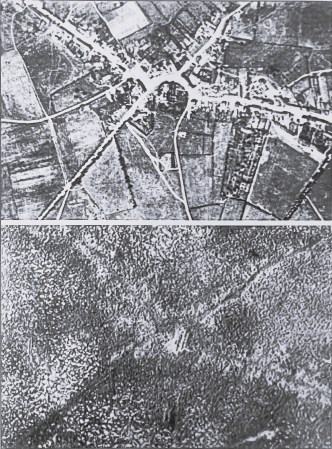
The village of Passchendaele, or what was left of it after the intense shelling, was captured on 6 November 1917 and the campaign halted four days later when it proved impossible to advance further. Since 31 July British and Commonwealth Armies had advanced just five miles, at a terrible cost.
 Windsor Local History Group