The Berkshire Yeomanry was formed as a mounted militia unit in 1794 during the wars with France. Before Britain had a regular police force, it was the army that controlled law and order. As most of the army was fighting abroad, it was the militia who took on their duties, but they also had to resist invasion by the French. They were something like the Home Guard during World War II, but with younger men. It was the local yeomanry who were initially sent in to control the crowd in Manchester, which resulted in the Peterloo massacre. In 1907 the Berkshire Yeomanry became part of the Territorial Force with three squadrons, with ‘A’ Squadron being the local Windsor unit. Militia and Yeomanry regiments were never called on to serve abroad until World War I.
On 5 August 1914, a day after England declared war on Germany, every member of ‘A’ Squadron was present at a roll call in the Windsor drill hall. They were asked if they would volunteer for foreign service if required, and nearly all answered yes. They were immediately mobilised, and on 11 August left Windsor for Reading to undergo field training. The men who regularly joined the Berkshire Yeomanry, represented the backbone of the Windsor community, tradesmen and shopkeepers, men who served on the council, sons of mayors or future mayors themselves, like the Luffs and the Dysons.
Their Commanding Officer was Major Edward Sinclair Gooch. Although he came from Bracknell, he had impeccable Windsor connections as his uncle was Sir Daniel Gooch, the railway and transatlantic cable engineer, who worked with Brunel in bringing the Great Western Railway to Windsor.
In April 1915 the Berkshire Yeomanry sailed to join the British Mediterranean force in Malta. They did not spend much time there, as during May and June a number of letters sent from Egypt were printed in the Windsor and Eton Express. Most complained about the heat, flies and bugs. In fact the flies were one of the big problems in the hot summer of Gallipoli, and one Windsor trooper reported that they were busily engaged in fighting a different foe. He wrote:
Our first exciting engagement was the wholesale slaughter of the pests usually associated with lodging-houses, the enemy lost heavily, but now we have night attacks.
Another trooper wrote from Egypt:
We are in a town (I must not say where). It is a fine place in parts, but the native quarter is the limit! In fact, some of Windsor’s back streets are ‘kings’ to it. … The things that trouble us most are the flies, which worry me to death, and get into everything.
We are now doing garrison work, so what with the extra duties and our forces to care for, you can guess what kind of time we are having. Please don’t imagine we are in anything like the two Barracks at Windsor! We have to find guards for all the public buildings, Foreign Embassy, Hospitals, war prisoners and the High Commissioner’s house. All the hospitals here are full of wounded – mostly Colonials. In talking to them they say it was awful work landing at the Dardanelles.
There were other letters that mentioned Gallipoli, this one was published on 12 June 1915:
It was good news to hear that a landing had been effected on the Gallipoli Peninsula, and the fact was emphasised by the incessant stream of motor ambulances passing through from the docks to the hospitals, but the sight of the poor fellows merely served to fire our enthusiasm…
This must have given them a foretaste of what was to come, although at this point they had no idea that they were soon to join the fighting in Gallipoli.
The Gallipoli campaign started in February 1915 and continued till 9 January 1916. Germany had given two gunships, the SMS Breslau and the SMS Goeben, to the Turks, and with these raids were made into the Black Sea, sinking several Russian ships. Russia asked Britain and France for help. Turkey, or as it was then still known, the Ottoman Empire entered the war on the German side on 31 October 1914, Britain and France returned the compliment on 5 November, after Russia had declared war on 2 November. The problem now was that Germany had control over the Dardanelles, and the Russian Fleet was denied access to the Mediterranean.
On 19 February 42 Allied warships pounded Turkish fortifications at the mouth of the Dardanelles, to put them out of action, without success. The Turks had fortified the ridges and were in a good position to bombard the British ships. On 18 March a main attack on the Dardanelles was launched with 18 battleships, supported by an array of cruisers and destroyers, some of them rather old and obsolete. They tried to clear the straits, but most were sunk. The straits were heavily mined.
It was Churchill who suggested to make a landing on the peninsula of Gallipoli, advance rapidly overland, and capture the fortifications, even Constantinople, but the campaign was badly organised from the start. The plans were rushed through, it only took 3 weeks to assemble the Allied force of the British 29th Division, the Royal Naval Division, the Australian and New Zealand Army Corps (ANZAC) and the French Oriental Expeditionary Corps. The Anzac forces had landed in Egypt on their way to the Western Front and were engaged in basic training, so they were diverted to Gallipoli at short notice.
On 25 April British and French troops came ashore at Helles on the southern end of the Gallipoli peninsula, while ANZAC troops landed further north at Ari Burnu, which has come to be known as ANZAC Cove.
Turkish troops were prepared, and were in command of the high ground overlooking the landings, a position from which to inflict continuous harassment. Soldiers had to attack up steep slopes without any shelter, and on one occasion, when ANZAC soldiers managed to reach the high ground, the Turks had fled, but there was no back up to follow through the advance. There were heavy casualties on both sides, but no breakthrough was achieved by the Allied and ANZAC troops. The ships harboured out in the bay were sitting ducks and a number of them were sunk, however, they managed to inflict much damage to the fortifications on the hills with their naval guns. It is often claimed that it was poor planning and leadership that led to the stalemate, but worse was to come.
Another attempt to break the deadlock was planned for August 1915. The newly formed British IX Corps, with some 20,000 troops landed at Suvla Bay on 6 August about five miles north of ANZAC Bay. One history of the landing stated:
The landing was in chaos, having been made in pitch darkness, which resulted in great confusion with units becoming mixed and officers unable to locate their position and their objective. Later, when the moon rose, the British troops became targets for Ottoman snipers. Attempts to capture Hill 10 failed, because no one in the field knew where Hill 10 was.
In the search for Hill 10, some 1,700 casualties were incurred. The commander in charge of the Suvla Bay landing was one Sir Frederick Stopford, a senior officer, who had no experience of command in the field. He went to bed on board ship while his men were being slaughtered. Stopford was sent home in disgrace and replaced by a commander with some battlefield experience, Henry de Beauvoir de Lisle. He planned a last-ditch attempt to achieve a breakthrough in Gallipoli with fresh troops. These were the 2nd Mounted Division from Egypt, including the Berkshire Yeomanry, without their horses. The Battle of Scimitar Hill and Hill 70 was the largest of the Gallipoli campaign, but yet another failure resulting in huge casualties.
Trooper H E Kirk, of ‘A’ Squadron Berks Yeomanry, sent home a long account of the battle, written on board a Hospital Ship, as Kirk had been wounded, and it was posted from Alexandria. The Windsor and Eton Express published it on 18 September. It gives a good account,
… Within 24 hours, we were on a route march fully equipped, and we then sympathised with the poor mules that we had so often seen heavily burdened in Egypt. We entrained the next day and were landed immediately beside the boat…when within a mile of our destination we were again transferred into small rafts holding about fifty, of which five were roped together, and a small steam tug conveyed us to a natural landing place on the beach. The Turks had spied us and tried hard with their heavy guns to send us to the bottom of the sea, but it was long-range fire and although several shells fell near enough to be unpleasant, fortunately there were no casualties. Once ashore, our ground was soon allotted to us and we immediately commenced to dig ourselves in, and with the aid of large stones, trees and bushes by night-time, many of us had made quite a respectable little home. But the enemy was gradually finding our range, so we had orders to move much further up the hill, where we were more or less out of danger…
On the following morning, two men of ‘A’ Squadron were wounded by shell-fire whilst on fatigue duty on the seashore. In the afternoon the whole Squadron were busy making a road well within range of the guns, and after our work was completed we were allowed to bathe. The booming of the guns and the whistling of the shells certainly did not interfere with a most delightful swim… It was plainly apparent that a big forward movement was to be attempted, and by five o’clock the next day everything was in readiness. Later under the cover of darkness we marched a distance of about seven miles quietly, without smoking, to the other side of the bay… In the afternoon commenced a most terrific bombardment of the enemy trenches… towards the end of the bombardment came the order for the advance. The enemy were prepared to give us a good reception and each regiment as it came into range was very heavily shelled. ‘A’ Squadron, who had been reinforced in order to make up the necessary complement of men, only sustained 11 casualties…
Before a quarter of an hour had elapsed, the Brigadier brought orders that the Berks were to attack a hill on the left flank, supported by the Dorsets, with the Bucks in reserve. There was little danger until we reached the reserve trenches of the Scottish Borderers, but on mounting the parapet we were met by a perfect hail of bullets from maxims, rifles and shrapnel. We then doubled and jumped into the advanced trenches of the Borderers. A few minutes rest and again we advanced, and then we were subjected to a hellish fire. The din and noise were so great that it was quite impossible to hear any orders. Men were falling fast. We, however, advanced steadily until reaching a gully a hundred yards or so from the crest of the hill, which afforded fairly good cover, and as we laid there we were simply smothered with dirt from the bullets hitting the bank in front of us…
Whilst we lay there one man was killed and two wounded, and without a leader we were in a dilemma as to what to do or how to act. However, when the sun had set we moved, under heavy fire, with the objective of getting in touch with our regiment or other troops. We went to the right and then forward again, along another gully, until we were quite near the enemy’s trenches. Here we found a row of dead Turks, and some of the bodies being in a state of decomposition the stench was awful…
No reinforcements arrived, so we decided to retire down the hill, and we did so until we came in touch with a party of Borderers, who were digging themselves in well up the hill.
We had had a hard day so we were relieved from digging the trenches, and we came down the hill, still under fire. The sight of the dead lying about under the light of a full moon, and the cries for stretcher-bearers and for water from the hundreds of poor fellows lying wounded, were heart-rending. The ambulance men worked hard all through the night. They were constantly under fire, especially of the snipers, and there are quite a number of Red Cross men on the Hospital Ship on which this letter is being written…
Trooper Kirk survived the war.
Tom Luff dug in at Suvla Bay, August 1915
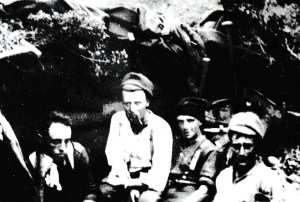
Also in the thick of the battle were the three Luff brothers, Edmund, Tom and Harry Luff, who all survived the battle, but Harry was invalided out to Malta on 8 October with dysentery, and Tom was sent home to recover from an injury. Both Edmund and Tom wrote letters home, a moving letter from Tom, to a friend in Windsor about the loss of his best pal on 21 August, was published on 16 October:
I will do my best to give you a few details I know of my lost comrade, L/Cpl H G Jeffries, known to us all as ‘Jeff’. We were in different troops in the charge, and how I came across ‘Jeff’ was like this. Evening had fallen, and all who were left of our little band were busy digging themselves in etc. Well I managed to slip away, and going to one of the poor dead fellows, took his water bottle off. Next I found four fellows very near each other all out of No.2 Troop. The four were Jeff and Wheeler, Pearce and Smith. The first two were about a dozen yards from the last two. I managed to give all four a good long drink. Jeff recognised me, for he said “Is that you Tommy?’ I can’t say for certain but I think his wound was in the leg somewhere for he would not let me touch him there. Jeff fell within thirty yards of the Turkish trench. This was the last I saw of my late pal. But the most extraordinary thing is that morning found Jeffries near Chocolate Hill. How he got there I cannot say, for from where I left him to Chocolate Hill is well over two miles. I fancy he must have got to the first aid dressing trench, and I expect he must have died while he was being taken to the base. I fancy Sgt [J] Ottery and Private [L] Howard (Scouts) were near by at his end, but I cannot say for certain. He was buried on the Western side of Chocolate Hill. Pearce was out for three nights and two days before he got to the first dressing station, it being impossible for the RAMC to get up there.
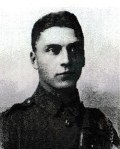
H G Jeffries
I see by the press that they talk of the ‘CHARGE UP CHOCOLATE HILL’ this is not so. The hill was already in our hands when we started our advance over the SALT LAKE. I should think we for he said had every gun trained on us, so as to take the Turks attention off the fellows who were advancing from the trenches up HILL 70. Now the point that does not seem clear is that it was only our Brigade that made the charge up Hill 70. Why reinforcements were not given I cannot say. Lord Longford was in charge of our Brigade.
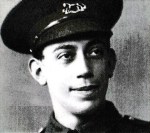
Fred Blane
I am sorry to hear about Fred Blane. I thought he was going on well, and I am surprised to hear of his death!
Some of the casualties sustained by ‘A’ squadron the Berkshire Yeomanry were listed in the Windsor and Eton Express under ‘Roll of Honour’ on 11 September. The editor wrote:1
The Berkshire and Buckinghamshire Regiments of Yeomanry received their baptism of fire on Saturday, August 21st, at Hill 70 in Gallipoli, and many brave men have given up their lives for their country, including three Windsor Yeomen. Many local lads have also been wounded and some are reported missing…
Those killed included:
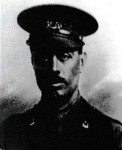
Major Edward Sinclair Gooch who was in command of Windsor ‘A’ Squadron.
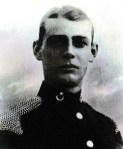
Corporal Lancelot Reginald Davenport was the youngest son of Mr and Mrs R W E Davenport, ‘Fernbank’, York Road, Windsor.
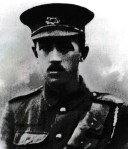
Trooper Henry Herbert Hiley was the third son of John Malcolm Hiley, the Court Postmaster. He was educated at the Windsor Boy’s School and was captain of the school football team, as well as rowing for the Eton Excelsior Rowing Club.
Lance-Corporal Harold Jefferies was the only surviving son of Mr and Mrs G Jefferies, of Queen’s Road, he went to the Windsor British School and was a member of the Eton College Choir School. He eventually became a solo boy in the Choir. He was a good all-around athlete and was well-known both in the cricket and football fields. He was an assistant reporter on the Windsor and Eton Express and was responsible for many excellent accounts of sporting events.
Trooper Alfred Blane was the youngest son of Mr W J Blane, of 1 Balmoral Villas, New Road, (now Victoria Street). He was evacuated to Egypt with serious injuries, but he died of his wounds in the hospital at Alexandria on 24 September. He was 25. Davenport, Jeffries and Hiley have no known graves and are remembered on the Helles War Memorial in Gallipoli.
Finally, one Berkshire Yeoman, but not a Windsor man, was awarded the VC for the heroic rescue of a wounded comrade in Gallipoli, under fire, although he himself had been wounded. Trooper Fred Potts came from Reading and had joined the 1/1st Berkshire Yeomanry. He was the first Yeoman to win the VC in the Great War.
The Allied attempt at securing a passage through the Dardanelles had proved unsuccessful, and the Gallipoli campaign was seen as a military disaster, however, some say that it had diverted Turkish forces away from other theatres of war. On the other hand, one could also argue that this is just as true for the Allied soldiers, who could have been employed on the Western Front.
Winston Churchill took the blame for the fiasco, as he had persuaded the War Council to open up another Front in the Dardanelles, in what he believed was the soft underbelly of Europe. Churchill resigned from the government and went to join his regiment, the Royal Scots Fusiliers, on the Western Front.
The only well-planned and organised event at Gallipoli was the evacuation in January 1916, which went off without a hitch.


 Windsor Local History Group